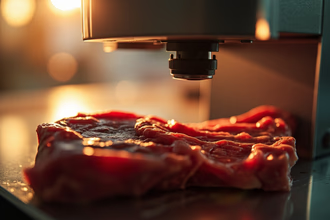
The meat industry relies on efficient and accurate analysis methods to maintain quality, ensure safety, and optimize production processes. Rapid meat analysis methods offer quick insights into various parameters, from fat and protein content to moisture levels and potential contaminants. These technologies enable producers to make informed decisions, reduce waste, and meet regulatory requirements.
This article explores the latest advancements in rapid meat analysis, highlighting technologies like Near-Infrared (NIR) spectroscopy, Mid-Infrared (MIR) spectroscopy, and biosensors. It will also cover how these methods benefit meat processors, retailers, and consumers.
Key Takeaways
- Rapid meat analysis methods like NIR, MIR, and biosensors offer faster and more efficient ways to assess meat quality and safety compared to traditional methods.
- NIR spectroscopy is used for rapid, non-destructive measurement of meat composition (fat, protein, moisture), while MIR spectroscopy provides more detailed molecular information for assessing tenderness, pH, freshness, and detecting adulteration.
- Biosensors offer high sensitivity and selectivity for detecting pathogens and spoilage indicators, enabling real-time monitoring of meat quality throughout the supply chain.
- Implementing rapid meat analysis technologies can improve production efficiency, reduce waste, enhance product quality, and ensure regulatory compliance in the meat industry.
Table of Contents
Introduction to Rapid Meat Analysis

Meat analysis is critical in the food industry for quality control and safety. Traditional analysis methods can be slow and require a lot of manual work. This can lead to delays and higher costs for meat producers. Rapid meat analysis methods offer a faster and more efficient way to assess meat quality and safety. These methods help producers to quickly identify any issues and take corrective actions.
Rapid analysis technologies, such as Near-Infrared (NIR) spectroscopy, Mid-Infrared (MIR) spectroscopy, and biosensors, provide quick results. This article will explore these methods and their benefits for the meat industry. The focus will be on how these technologies improve production efficiency and profitability for meat producers.
Near-Infrared (NIR) Spectroscopy in Meat Analysis
Near-Infrared (NIR) spectroscopy is a technique that uses the near-infrared region of the electromagnetic spectrum to analyze the composition of meat. When NIR light interacts with a meat sample, some of the light is absorbed, and some is reflected. The pattern of absorption and reflection provides information about the chemical components of the meat, such as fat, protein, and moisture content.
In meat analysis, NIR spectroscopy is used to quickly determine the composition of meat samples. This information is valuable for quality control, making sure that meat products meet specific standards. NIR instruments used in the meat industry include benchtop analyzers and portable devices that can be used directly on the production line.
One of the main advantages of NIR spectroscopy is that it is non-destructive. This means the meat sample is not altered during the analysis and can be used for further testing if needed. NIR also requires minimal sample preparation, saving time and resources. The speed of NIR analysis is another benefit, with results available in seconds.
While NIR spectroscopy is a useful tool, it does have some limitations. The accuracy of NIR analysis depends on the calibration of the instrument and the quality of the reference samples used. However, the benefits of NIR in terms of speed, ease of use, and non-destructive nature make it a valuable tool for the meat industry. Studies show that over 60% of large meat processing plants have integrated NIR technology into their quality control processes, leading to significant improvements in consistency and regulatory compliance.
How NIR Spectroscopy Works
NIR spectroscopy works by shining a beam of near-infrared light onto a meat sample. The molecules in the meat absorb some of this light at specific wavelengths. The amount of light absorbed depends on the type and quantity of molecules present, such as fat, protein, and water.
When NIR light hits the meat, it causes the molecules to vibrate. Different molecules vibrate at different frequencies, and these vibrations correspond to specific absorption patterns. By measuring the amount of light absorbed at each wavelength, a spectrum is created. This spectrum acts like a fingerprint, providing a unique profile of the meat's composition.
The instrument then compares the sample's spectrum to reference spectra of known meat compositions. This comparison allows for the rapid determination of the levels of fat, protein, moisture, and other components. Because the process relies on the interaction of light and matter, it doesn't damage the sample, making it a non-destructive method.
Applications of NIR in Meat Composition Analysis
NIR spectroscopy is widely used to measure the key components of meat, including fat, protein, and moisture. Accurate measurement of these components is vital for quality control and labeling.
In beef production, NIR is used to determine the marbling, or intramuscular fat content, which affects the meat's grade and price. For pork, NIR helps to assess the lean meat percentage and fat content, important factors for processing and consumer appeal. In poultry processing, NIR can quickly measure the moisture and protein levels to ensure product quality and consistency.
Studies have shown that NIR measurements are comparable in accuracy to traditional methods like the Kjeldahl method for protein and Soxhlet extraction for fat, but with significantly reduced analysis time. For example, a study published in the "Journal of Animal Science" found that NIR spectroscopy had a correlation of over 0.95 with traditional methods for measuring fat content in beef, with a fraction of the time and resources. This level of accuracy and efficiency makes NIR an invaluable tool for modern meat processing.
Advantages and Limitations of NIR
NIR spectroscopy offers several advantages for meat analysis. It is a rapid method, providing results in seconds, and it's non-destructive, preserving the sample for further analysis. Sample preparation is minimal, reducing labor and costs. These factors make NIR an attractive option for real-time monitoring and quality control in meat processing.
However, NIR spectroscopy also has limitations. Potential interferences from factors like particle size and temperature can affect accuracy. Proper calibration is crucial, requiring a set of reference samples analyzed by traditional methods. Skilled operators are needed to maintain and interpret the data correctly. The initial investment for NIR equipment can be higher than some other methods.
To overcome these limitations, it is important to maintain consistent sample presentation, control environmental conditions, and regularly update the calibration models. Compared to other rapid methods like MIR or biosensors, NIR often strikes a balance between cost, accuracy, and ease of use. While MIR may offer broader spectral information, NIR systems are generally more durable and easier to implement in a production environment.
Mid-Infrared (MIR) Spectroscopy for Meat Quality

Mid-Infrared (MIR) spectroscopy is another technique used to analyze meat quality. Like NIR, MIR involves shining infrared light on a sample and measuring the amount of light absorbed. However, MIR uses a different range of the infrared spectrum, which interacts with the meat sample in a different way, providing complementary information to NIR.
MIR spectroscopy can assess various meat quality parameters, including tenderness, pH levels, and freshness. It is also useful for detecting adulteration or contamination in meat products. For example, MIR can identify the presence of undeclared ingredients or detect spoilage by measuring changes in chemical composition.
Compared to NIR, MIR can provide more detailed information about the molecular structure of meat components. However, MIR instruments are often more expensive and require more complex sample preparation. NIR is generally easier to use and more suitable for rapid, on-site analysis.
The benefits of MIR for making sure of meat safety and preventing food fraud are significant. By quickly identifying potential issues, meat producers can take corrective actions to protect consumers and maintain the integrity of their products. Using MIR can also help optimize meat processing and reduce waste by providing real-time data on meat quality, leading to more efficient production and higher profitability.
MIR Technology: Key Differences from NIR
The key difference between MIR and NIR spectroscopy lies in the region of the electromagnetic spectrum they utilize. NIR spectroscopy uses light with wavelengths typically ranging from 700 to 2500 nanometers, while MIR spectroscopy uses light with longer wavelengths, typically ranging from 2500 to 25,000 nanometers.
These different wavelengths interact with molecular bonds in meat in distinct ways. NIR light primarily interacts with overtones and combinations of fundamental vibrations of molecules, such as C-H, N-H, and O-H bonds. This makes NIR useful for quantifying the bulk composition of meat, like fat, protein, and moisture content. MIR light, conversely, interacts directly with the fundamental vibrations of these bonds. This provides more detailed information about the molecular structure and composition of the meat sample.
Because MIR spectroscopy interacts directly with the fundamental vibrations, it can provide a more detailed "fingerprint" of the meat's molecular composition. This makes it useful for identifying specific compounds, detecting adulterants, and assessing subtle changes in meat quality. NIR is better suited for rapid, non-destructive measurements of major components, while MIR offers more in-depth analysis at the molecular level.
Assessing Meat Quality with MIR: Tenderness, pH, and Freshness
MIR spectroscopy is a useful tool for assessing key meat quality parameters such as tenderness, pH, and freshness. Each of these factors plays a vital role in determining the overall quality and shelf life of meat products.
MIR can assess meat tenderness by analyzing the structure of muscle fibers. The technique can detect changes in the protein composition and cross-linking within the muscle tissue, which are related to tenderness. By measuring these molecular characteristics, MIR can predict the tenderness of meat without destructive testing.
MIR spectroscopy can also measure pH levels in meat. pH is an important indicator of meat quality and affects its water-holding capacity, color, and shelf life. Rapid pH measurement with MIR helps processors to monitor the acidification process during meat aging and predict the meat's quality and shelf life.
In addition, MIR can detect indicators of freshness and spoilage. It can identify the presence of volatile compounds produced by bacterial growth, such as amines and organic acids. By monitoring these spoilage indicators, MIR can help determine the freshness of meat and predict its remaining shelf life. For example, MIR can be used to detect the build-up of lactic acid, a key indicator of spoilage in packaged meat.
MIR for Detecting Adulteration and Contamination
MIR spectroscopy is a valuable tool for detecting adulteration and contamination in meat products. Adulteration involves the addition of undeclared substances to increase volume or reduce costs, while contamination refers to the presence of harmful substances that can compromise meat safety.
MIR can detect a range of common adulterants, such as the addition of cheaper protein sources (e.g., soy or plant-based proteins) to ground meat. It can also identify the presence of excessive water or other non-meat additives. In terms of contamination, MIR can be used to detect certain types of bacteria, chemical residues, or foreign materials.
The advantages of MIR for making sure of meat safety and preventing food fraud are significant. It offers a rapid, non-destructive method for screening meat samples, allowing for quick identification of potential issues. By detecting adulteration and contamination, MIR helps to protect consumers from potentially harmful or misrepresented products.
MIR plays a critical role in maintaining the integrity of the meat supply chain. It provides producers and regulators with a tool to verify the authenticity and safety of meat products, promoting fair trade practices and consumer confidence.
Biosensors: An Advanced Approach to Meat Analysis
Biosensors represent an innovative technology for rapid meat analysis. These devices combine a biological recognition element with a transducer to detect specific substances in meat samples. The biological element, such as an enzyme or antibody, interacts with the target substance, and the transducer converts this interaction into a measurable signal.
Biosensors offer several advantages, including high sensitivity, selectivity, and portability. Their sensitivity allows for the detection of even trace amounts of target substances, while their selectivity ensures that only the intended substance is detected. The portability of some biosensors enables on-site analysis, which is useful for real-time monitoring.
Examples of biosensors used in meat analysis include those designed to detect pathogens like Salmonella and E. coli, as well as those that identify spoilage indicators. For example, biosensors can detect changes in pH, the presence of biogenic amines, or the concentration of specific gases that indicate spoilage.
Biosensors have the potential for real-time monitoring of meat quality throughout the supply chain, from production to storage and transportation. This allows for early detection of potential problems, reducing the risk of spoilage and contamination. While challenges remain, such as the need for improved stability and cost-effectiveness, biosensor technology plays a significant role in enhancing food safety and preventing foodborne illnesses.
How Biosensors Work: A Detailed Explanation
Biosensors function through a combination of biological recognition and signal transduction. A typical biosensor consists of three key components: a bioreceptor, a transducer, and a detector.
The bioreceptor is the component that interacts specifically with the target analyte in the meat sample. This analyte could be a pathogen like Salmonella, a spoilage indicator like histamine, or any other substance of interest. The bioreceptor can be an enzyme, an antibody, a nucleic acid, or even a whole cell. For example, if the target is Salmonella, the bioreceptor might be an antibody that specifically binds to Salmonella bacteria.
When the bioreceptor binds to the target analyte, a biological signal is produced. This signal is then converted into a measurable electrical signal by the transducer. The transducer can be electrochemical, optical, or piezoelectric, depending on the type of biological interaction and the desired output signal. For example, an electrochemical transducer might measure the change in current or voltage resulting from the binding event.
The detector then processes the electrical signal and displays the results in a user-friendly format. This allows for rapid and easy determination of the presence and concentration of the target analyte in the meat sample. The entire process, from biological recognition to signal detection, can occur in a matter of minutes, making biosensors a rapid and effective tool for meat analysis.
Biosensors for Pathogen Detection: Making Sure of Meat Safety
Biosensors play a crucial role in detecting pathogens in meat, including harmful bacteria such as Salmonella, E. coli, and Listeria. Rapid and accurate detection of these pathogens is critical for making sure of meat safety and preventing foodborne illnesses.
Several types of biosensors are used for pathogen detection. Immunosensors, which use antibodies as the bioreceptor, are common. These biosensors can selectively bind to specific pathogens, triggering a measurable signal. Other types of biosensors use enzymes or nucleic acids to detect pathogens. For example, a biosensor might use a specific enzyme that reacts with a component of the bacterial cell wall, producing a detectable change.
Biosensors offer high sensitivity and specificity. They can detect very low levels of pathogens, even in complex meat samples. Their specificity makes sure that they only respond to the target pathogen, minimizing false positives. Compared to traditional culture-based methods, which can take days to produce results, biosensors provide rapid pathogen detection, often in a matter of minutes.
By enabling rapid and accurate pathogen detection, biosensors contribute significantly to preventing foodborne illnesses and protecting public health. They allow for quick identification of contaminated meat products, enabling prompt corrective actions to prevent distribution and consumption of unsafe food.
Real-Time Monitoring with Biosensors: The Future of Meat Quality Control
Biosensors offer significant potential for real-time monitoring of meat quality throughout the entire supply chain. This capability represents a major advancement in meat quality control, enabling continuous assessment from production to consumption.
Biosensors can be integrated directly into meat processing equipment or incorporated into packaging materials. This allows for continuous monitoring of key quality parameters, such as temperature, pH, and the presence of spoilage indicators or pathogens. The data collected by these sensors can be transmitted wirelessly to a central monitoring system, providing real-time insights into the condition of the meat.
Real-time monitoring offers numerous benefits. It improves meat safety by enabling early detection of contamination or spoilage. It reduces waste by allowing for timely intervention to prevent product deterioration. It also optimizes production processes by providing data that can be used to fine-tune processing parameters and improve efficiency.
Implementing real-time biosensor systems in the meat industry presents some challenges. These include the need for durable and reliable sensors, the development of cost-effective monitoring systems, and the integration of sensor data into existing quality control systems. However, the opportunities for improving meat quality, safety, and efficiency make real-time monitoring with biosensors a promising direction for the future of the meat industry.
Conclusion: The Future of Rapid Meat Analysis

Rapid meat analysis methods, including NIR, MIR, and biosensors, offer significant benefits to the meat industry. These technologies are vital for making sure of meat quality, safety, and efficiency. They enable quick and accurate assessment of meat composition, detection of adulteration and contamination, and real-time monitoring of quality parameters.
The future of rapid meat analysis is likely to involve the development of more advanced sensors with improved sensitivity and specificity. Data analytics will play an increasing role, allowing for better interpretation of sensor data and more informed decision-making. Automation will also be a key trend, with the integration of rapid analysis methods into automated meat processing systems.
Companies like fossanalytics.com are leaders in providing advanced technologies for meat analysis. They offer a range of technologies and services designed to help meat producers improve their processes and improve the quality and safety of their products.
Explore how rapid meat analysis can improve your meat production processes. By adopting these technologies, you can improve product quality, reduce waste, and improve efficiency, ultimately leading to greater profitability and consumer satisfaction.
Frequently Asked Questions
- What are the primary technologies used in rapid meat analysis methods?
- The primary technologies used in rapid meat analysis methods include Near-Infrared Spectroscopy (NIR), Mid-Infrared Spectroscopy (MIR), and various biosensors. NIR is often used for non-destructive testing of meat quality and composition, while MIR can provide detailed information on chemical composition. Biosensors, on the other hand, are designed to detect specific pathogens or contaminants, ensuring safety and quality in meat production.
- How do rapid meat analysis methods improve food safety?
- Rapid meat analysis methods enhance food safety by allowing for quick detection of pathogens, contaminants, and spoilage indicators. Technologies like biosensors can provide real-time monitoring, enabling producers to address safety concerns promptly. This reduces the risk of foodborne illness outbreaks and helps maintain consumer trust in meat products.
- Are rapid meat analysis methods cost-effective for producers?
- Yes, rapid meat analysis methods can be cost-effective for producers in the long term. While the initial investment in technology may be significant, the ability to quickly identify quality and safety issues can save money by reducing waste, minimizing recalls, and improving overall product quality. Additionally, faster testing times can lead to increased efficiency in production processes.
- What role does regulatory compliance play in the implementation of rapid meat analysis methods?
- Regulatory compliance is crucial in the implementation of rapid meat analysis methods, as it ensures that meat products meet safety and quality standards set by government agencies. Producers must validate these methods to demonstrate their reliability and accuracy in detecting contaminants. Compliance not only protects consumers but also helps producers avoid legal issues and penalties.
- How can consumers benefit from rapid meat analysis methods?
- Consumers benefit from rapid meat analysis methods through increased assurance of meat quality and safety. These methods help ensure that the meat reaching the market is free from harmful pathogens and meets quality standards. As a result, consumers can have greater confidence in the products they purchase, leading to safer and healthier dietary choices.