Meat fat analysis is a key part of quality control in the meat industry. It helps to ensure products meet nutritional labeling requirements and comply with regulations. Different methods and equipment are available to analyze fat content, each with its own advantages. Getting accurate and reliable results is important for both producers and consumers.
This article will cover the importance of meat fat analysis, the methods used, and the equipment involved. It will also touch on how fossanalytics.com can help with your meat fat analysis needs.
Key Takeaways
- Meat fat analysis is crucial for quality control, ensuring taste, texture, and consumer satisfaction.
- Accurate fat analysis is essential for truthful nutritional labeling, enabling informed dietary choices and compliance with regulations.
- Various methods exist for meat fat analysis, including traditional (Soxhlet, Gerber) and modern (NIR, NMR) techniques, each with different accuracy, speed, and cost profiles.
- NIR spectroscopy offers a balance of speed, cost-effectiveness, and ease of use for real-time process control.
- NMR provides highly accurate and detailed fat composition analysis but is more complex and expensive.
- Software and data management tools enhance analytical workflows by streamlining instrument control, data acquisition, and analysis.
- Emerging trends like AI and machine learning promise to further improve the accuracy and predictive capabilities of meat fat analysis.
Table of Contents
Introduction to Meat Fat Analysis

The quality and safety of meat products are critical for consumer trust and public health. Meat fat analysis plays a vital role in maintaining these standards within the meat industry. It is the process of determining the fat content in meat and meat products. This analysis is important for several reasons, including product quality control, providing accurate nutritional information, and adhering to food safety regulations.
Accurate meat fat analysis benefits both producers and consumers. For producers, it aids in process control, supporting consistent product quality and minimizing economic losses due to variations in fat content. For consumers, it provides the information needed to make informed dietary choices.
Different methods are used for meat fat analysis, each with its own advantages and applications. These methods help to make sure that meat products meet the required standards for fat content, contributing to a safer and more transparent food supply.
Why Meat Fat Analysis Matters: Quality, Nutrition, and Regulations
Meat fat analysis is critical for maintaining the quality of meat products. The fat content directly influences the taste, texture, and overall appeal, affecting consumer satisfaction. Too much fat can make the product greasy and unappetizing, while too little can result in a dry and less flavorful experience.
Accurate nutritional labeling is also vital. Consumers rely on this information to make informed choices about their diet and health. Precise meat fat analysis ensures that the nutritional information provided on labels is correct, allowing individuals to manage their fat intake effectively.
Many regions have strict regulatory requirements for fat content labeling. For example, in the United States, the USDA mandates specific labeling standards. Similarly, the European Union has its own regulations regarding nutritional information on food products. Meat fat analysis helps companies meet these requirements, avoiding potential penalties and legal issues. Compliance with these regulations is not just a legal necessity but also a key factor in achieving business success, enhancing brand reputation, and building consumer trust.
Enhancing Meat Quality Through Fat Analysis
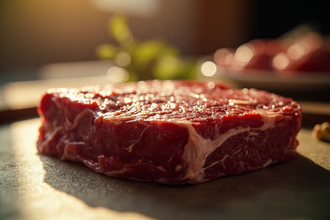
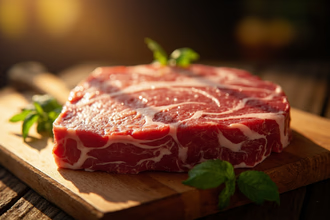
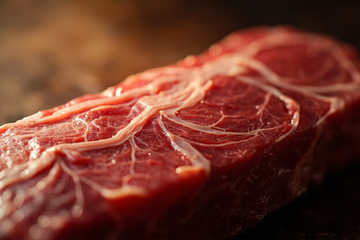
Meat fat analysis directly affects the quality of meat products by influencing key sensory attributes. The fat content in meat is closely related to its taste, texture, and juiciness. Optimal fat levels improve the overall eating experience, leading to greater consumer satisfaction. For example, a certain amount of intramuscular fat, or marbling, contributes to a more tender and flavorful cut of beef.
By analyzing fat content, producers can maintain consistency in their products. This makes sure that each batch meets the desired standards and meets consumer expectations. Consistent quality builds trust and encourages repeat purchases. Improving meat quality through precise fat analysis can lead to increased sales and stronger brand loyalty, demonstrating the commercial value of this process.
Nutritional Labeling: The Role of Accurate Fat Analysis
Accurate fat analysis is important for creating truthful and reliable nutritional labels. Consumers depend on this information to make well-informed dietary choices, particularly regarding fat intake. Incorrect labeling can have serious consequences, potentially leading to health risks for consumers who rely on the provided data to manage conditions such as heart disease or obesity.
Meat fat analysis helps make sure compliance with nutritional labeling regulations, promoting consumer trust in the accuracy of product information. By providing precise data, companies demonstrate a commitment to transparency, which is vital for building a positive brand image and encouraging long-term customer loyalty. This transparency assures consumers that the company values their health and well-being, strengthening the brand's reputation.
Regulatory Compliance with Meat Fat Analysis
The regulations for fat content in meat products are complex, with varying requirements across different regions. Regulatory bodies, such as the USDA in the United States and the EU regulations in Europe, set specific standards for fat content labeling. These regulations are designed to protect consumers and make sure that they receive accurate information about the nutritional content of meat products.
Meat fat analysis is a key tool for companies aiming to meet these regulatory requirements and avoid potential penalties. By accurately determining the fat content of their products, companies can make sure that their labeling is compliant with local and international standards. Non-compliance can result in significant financial penalties, product recalls, and damage to brand reputation. Investing in reliable analytical solutions is important for staying up-to-date with evolving regulations and reducing the risks associated with non-compliance. This forward-thinking approach can lead to cost savings and protect the company's bottom line.
Methods of Meat Fat Analysis: A Comprehensive Overview
Several methods are available for meat fat analysis, each with its own set of advantages and limitations. These methods range from traditional techniques to more modern, rapid analysis approaches.
Traditional methods include:
- Soxhlet Extraction: This involves extracting fat from a meat sample using a solvent. It is known for its accuracy but is time-consuming and requires skilled personnel.
- Gerber Method: Primarily used for dairy products, it can also be applied to meat. It involves dissolving the fat and measuring its volume. While relatively simple, it may not be as accurate as other methods.
Modern techniques offer faster and more efficient alternatives:
- Near-Infrared (NIR) Spectroscopy: This technique uses infrared light to determine the fat content of a sample. It is rapid and requires minimal sample preparation.
- NMR (Nuclear Magnetic Resonance): NMR provides a precise measurement of fat content by analyzing the magnetic properties of the sample. It is highly accurate but can be more expensive than other methods.
In terms of accuracy, NMR and Soxhlet extraction are generally considered the most reliable. However, NIR spectroscopy offers a good balance of speed, cost-effectiveness, and ease of use, making it suitable for real-time process control. The choice of method depends on the specific needs and resources of the meat processing facility.
Traditional Methods: Soxhlet and Gerber
The Soxhlet extraction method is a classic technique for meat fat analysis, with a long history of use in analytical chemistry. The process involves placing a dried meat sample in a thimble, which is then placed in a Soxhlet extractor. A solvent, such as ether or hexane, is heated and evaporates, passing through the sample and dissolving the fat. The solvent containing the dissolved fat is then collected in a flask. This process is repeated over several hours to ensure complete extraction of the fat. The solvent is then evaporated, leaving behind the extracted fat, which is weighed to determine the fat content.
Soxhlet extraction is known for its accuracy and reliability, making it a gold standard for fat determination. However, it has several limitations. The method is time-consuming, often requiring several hours to complete. It also involves the use of potentially hazardous solvents and requires skilled personnel to operate the equipment and handle the chemicals safely. The labor intensity and long analysis time make it less suitable for high-throughput analysis.
The Gerber method, primarily used in the dairy industry, can also be applied to certain meat products, particularly processed meats. This method involves dissolving the fat in a meat sample using sulfuric acid and then centrifuging the mixture to separate the fat. The volume of the separated fat is then measured using a Gerber butyrometer. While the Gerber method is relatively simple and quick, it is less accurate than Soxhlet extraction and is best suited for meat products with higher fat content.
In short, Soxhlet extraction offers high accuracy but is time-consuming and labor-intensive, while the Gerber method is faster but less accurate. These traditional methods remain relevant in smaller labs or for specific research purposes where high accuracy is paramount and throughput is not a primary concern.
Modern Techniques: NIR and NMR Spectroscopy
Near-Infrared (NIR) spectroscopy is a modern technique used for rapid and non-destructive meat fat analysis. This method involves shining near-infrared light onto a meat sample and measuring the amount of light that is absorbed or reflected. The absorption and reflection patterns are related to the chemical composition of the sample, including the fat content. By analyzing these patterns, it is possible to quickly determine the fat content without the need for extensive sample preparation.
NIR spectroscopy offers several advantages. It is fast, often providing results in a matter of seconds or minutes. It is also easy to use, requiring minimal training for operators. Also, it requires little to no sample preparation, reducing the risk of errors and saving time. However, NIR spectroscopy does have some limitations. It requires careful calibration against reference methods to ensure accuracy, and it can be affected by the matrix composition of the sample, such as moisture content and particle size.
Nuclear Magnetic Resonance (NMR) is another advanced technique for meat fat analysis. NMR works by placing a meat sample in a strong magnetic field and then applying radio waves. The nuclei of certain atoms in the sample, such as hydrogen atoms in fat molecules, absorb and re-emit the radio waves. By analyzing the frequencies and intensities of these signals, it is possible to determine the fat content and composition of the sample.
NMR offers high accuracy and can provide detailed information about the types of fat present in the sample. However, NMR instruments are typically more expensive than NIR spectrometers, and the technique can be more complex to implement and interpret.
Comparing Analysis Methods: Accuracy, Speed, and Cost
Choosing the right method for meat fat analysis depends on several factors, including the required accuracy, the need for speed, and budget constraints. Here is a comparison of the methods discussed:
| Method | Accuracy | Speed | Cost-Effectiveness | Ease of Use | Sample Preparation |
|---|---|---|---|---|---|
| Soxhlet Extraction | High | Slow | Moderate | Moderate | Extensive |
| Gerber Method | Low to Moderate | Fast | Low | Easy | Minimal |
| NIR Spectroscopy | Moderate to High | Very Fast | Moderate to High | Easy | Minimal |
| NMR | High | Moderate | High | Moderate | Minimal |
Soxhlet extraction provides high accuracy but is time-consuming and requires extensive sample preparation. The Gerber method is fast and inexpensive but offers lower accuracy. NMR is highly accurate but can be costly. NIR spectroscopy offers a good balance of accuracy, speed, and cost-effectiveness.
For real-time process control and efficiency, rapid analysis methods like NIR are particularly beneficial. They allow for quick adjustments to be made during production, reducing waste and making sure consistent product quality. The choice of method should align with the specific goals and resources of the organization.
Equipment and Technology for Efficient Meat Fat Analysis
Modern meat fat analysis relies on advanced equipment and technology to deliver rapid, accurate, and reliable results. Among these, Near-Infrared (NIR) and Nuclear Magnetic Resonance (NMR) instruments stand out for their efficiency and precision.
NIR instruments use the principle of spectroscopy to determine the fat content of meat samples. These instruments direct a beam of near-infrared light onto the sample and measure the amount of light that is absorbed or reflected. The resulting spectrum is then analyzed using sophisticated software algorithms to quantify the fat content. The advantages of NIR instruments include their speed, ease of use, and minimal sample preparation requirements.
NMR instruments, conversely, use magnetic fields and radio waves to analyze the composition of meat samples. These instruments can provide detailed information about the fat content and composition, as well as other parameters such as moisture and protein levels. While NMR instruments are more complex and expensive than NIR instruments, they offer high accuracy and versatility.
Software and data management tools play a crucial role in enhancing the analysis process. These tools allow users to collect, store, and analyze data from the instruments, as well as generate reports and track trends. They also provide features such as calibration management, quality control, and data security.
NIR Analyzers: Principles and Applications
Near-Infrared (NIR) spectroscopy is a technique that uses the near-infrared region of the electromagnetic spectrum to analyze the composition of materials. In meat fat analysis, NIR analyzers measure the absorption and reflection of near-infrared light by a meat sample to determine its fat content. The underlying principle is that different components of the sample, such as fat, protein, and moisture, absorb near-infrared light at different wavelengths. By analyzing the resulting spectrum, the analyzer can quantify the amount of each component present.
A typical NIR analyzer consists of a light source, a sample interface, a spectrometer, and a data processing unit. The light source emits a beam of near-infrared light that passes through the sample. The spectrometer measures the intensity of the light that is transmitted or reflected by the sample at different wavelengths. The data processing unit then uses sophisticated algorithms to analyze the spectrum and calculate the fat content.
NIR analyzers offer several advantages for meat fat analysis. They are fast, providing results in seconds or minutes. They are also easy to use, requiring minimal sample preparation and operator training. Also, NIR analysis is non-destructive, meaning that the sample is not altered or consumed during the analysis. NIR analyzers can also measure multiple parameters simultaneously, such as fat, protein, and moisture content, making them a versatile tool for quality control in the meat industry.
NMR Spectrometers: Advanced Fat Composition Analysis
Nuclear Magnetic Resonance (NMR) is a technique that exploits the magnetic properties of atomic nuclei to determine the physical and chemical properties of atoms or the molecules that contain them. In the context of meat fat analysis, NMR spectrometers are used to obtain detailed information about the fat composition of meat samples. This technique provides insights beyond just the total fat content, offering a breakdown of the different types of fats present.
An NMR spectrometer typically consists of a strong magnet, a radio frequency source, a detector, and a computer for data processing. The sample is placed in the magnetic field, which causes the nuclei of certain atoms, such as hydrogen, to align in specific orientations. Radio frequency pulses are then applied to excite these nuclei, and the signals they emit as they return to their equilibrium state are detected. These signals are analyzed to determine the types and amounts of different fats in the sample.
NMR spectrometers offer several advantages. They provide high accuracy and can differentiate between saturated, unsaturated, and polyunsaturated fats. They can also identify adulteration by detecting the presence of fats that are not typically found in meat. These capabilities make NMR spectrometers valuable tools for research and quality control in the meat industry.
Software and Data Management: Enhancing Analytical Workflows
Software and data management tools play a critical role in modern meat fat analysis, enhancing the efficiency and accuracy of analytical workflows. These tools provide a range of features that streamline the analysis process, from instrument control and data acquisition to data analysis and reporting.
Software packages used for instrument control allow operators to easily set up and control analytical instruments, such as NIR and NMR spectrometers. These packages provide intuitive interfaces for configuring analysis parameters, calibrating instruments, and monitoring instrument performance. They also automate many of the routine tasks associated with instrument operation, reducing the risk of errors and saving time.
Data acquisition software captures the data generated by the analytical instruments and stores it in a structured format. This software often includes features for data validation, making sure that the data is accurate and reliable. Data analysis software provides tools for processing and interpreting the data, such as spectral analysis, statistical analysis, and chemometrics. These tools allow users to extract meaningful information from the data and make informed decisions about product quality and process control.
Data security and compliance with regulatory requirements are also important considerations. Software and data management tools should provide features for data encryption, access control, and audit trails to make sure that data is protected and that all analyses are performed in compliance with relevant regulations.
Conclusion: The Future of Meat Fat Analysis
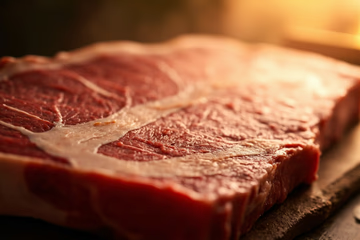
Meat fat analysis is important for maintaining quality control, providing accurate nutritional labeling, and meeting regulatory compliance. Using methods that are both accurate and efficient is critical for achieving these goals. As technology advances, the field of meat fat analysis continues to evolve.
Emerging trends, such as the integration of AI and machine learning, promise to further improve the accuracy and predictive capabilities of analytical methods. These advancements will enable meat producers to optimize their processes and deliver products that meet the highest standards of quality and safety.
To learn more about advanced meat analysis solutions and how they can benefit your operations, explore the available resources and stay informed about the latest innovations in the field.
Frequently Asked Questions
- What are the common methods used for meat fat analysis?
- Common methods for meat fat analysis include solvent extraction, where fat is separated using organic solvents; gas chromatography, which analyzes the composition of fatty acids; and near-infrared spectroscopy, allowing for rapid and non-destructive testing. Each method has its advantages and is chosen based on the specific requirements of quality control and regulatory compliance.
- How does meat fat analysis impact nutritional labeling?
- Meat fat analysis is crucial for accurate nutritional labeling as it determines the fat content and composition of meat products. This information helps manufacturers provide consumers with reliable data regarding caloric content, types of fats present, and overall nutritional value, ensuring compliance with labeling regulations.
- What regulations govern meat fat analysis in the food industry?
- Regulations governing meat fat analysis vary by region but generally include guidelines set by food safety authorities such as the USDA in the United States or EFSA in Europe. These regulations ensure that meat products meet specific quality standards and that labeling is accurate, thereby protecting consumer health and promoting fair trade practices.
- Why is it important to ensure compliance through meat fat analysis?
- Ensuring compliance through meat fat analysis is vital for maintaining product quality, consumer safety, and adherence to legal standards. Non-compliance can lead to legal repercussions, consumer mistrust, and financial losses for manufacturers. Regular analysis helps companies uphold their reputation and meet market demands for transparency.
- Can meat fat analysis help in detecting adulteration?
- Yes, meat fat analysis can be instrumental in detecting adulteration. By analyzing the fat composition and comparing it to known standards, discrepancies can be identified, indicating potential adulteration. This is particularly important for maintaining product integrity and ensuring that consumers receive what they are paying for.