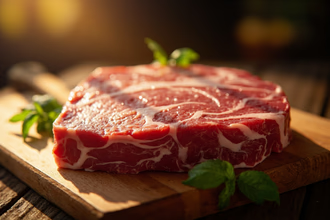

Food fat analysis is a key part of the food industry. It helps with nutritional labeling, quality control, and meeting regulations. Accurate fat analysis ensures food products are safe and correctly labeled, which is vital for consumer trust and business compliance.
Using advanced testing methods, companies can get reliable results for their food fat analysis needs. This helps them maintain high standards and meet the requirements of the market and regulatory bodies.
Key Takeaways
- Accurate food fat analysis is crucial for nutritional labeling, quality control, regulatory compliance, and consumer trust.
- Common methods for food fat analysis include Soxhlet extraction, Gerber method, and NIR spectroscopy, each with its own advantages and limitations.
- Advanced technologies like automated extraction systems, real-time in-line sensors, and data analytics are improving the efficiency and accuracy of food fat analysis.
- FOSS offers a range of instruments and software solutions designed to help food manufacturers meet regulatory requirements and maintain high standards of quality in food fat analysis.
- FOSS instruments, such as ProFoss™ 2, Soxtec™ 8000, and FoodScan™ 2, provide rapid, accurate, and reliable fat analysis for various food products.
- Data analytics and software solutions from FOSS enable manufacturers to improve accuracy, identify trends, and streamline data management for compliance.
- Case studies demonstrate how FOSS solutions have helped companies improve product quality, reduce waste, and enhance customer satisfaction through better food fat analysis.
Table of Contents
Introduction to Food Fat Analysis

Food fat analysis is a vital process within the food industry. It plays a significant role in the quality, safety, and nutritional accuracy of food products. Accurate food fat analysis is important for several reasons.
Nutritional labeling relies on precise fat content information, allowing consumers to make informed dietary choices. Without accurate food fat analysis, labels could be misleading, potentially affecting public health.
Quality control depends on consistent and reliable fat analysis to maintain product standards. Variations in fat content can affect the taste, texture, and shelf life of food items. Consistent food fat analysis helps manufacturers ensure that each batch meets the required specifications.
Regulatory compliance requires food manufacturers to adhere to specific guidelines regarding fat content in their products. Accurate food fat analysis is necessary to meet these legal requirements and avoid penalties.
Several methods exist for food fat analysis, each with its own advantages and limitations. Selecting the appropriate method is crucial for obtaining reliable results. Factors such as the type of food product, the desired level of accuracy, and the available resources influence this decision.
FOSS offers solutions that help achieve accuracy and reliability in food fat analysis. By utilizing advanced analytical techniques, FOSS supports food producers in meeting labeling requirements, maintaining quality standards, and complying with regulations.
Why Accurate Food Fat Analysis Matters
Accurate food fat analysis is critical for several reasons, each carrying significant implications for food manufacturers and consumers alike.
Meeting regulatory requirements is a primary driver. Governments worldwide mandate nutritional labeling that includes precise fat content. Inaccurate food fat analysis can lead to mislabeling, resulting in legal penalties, product recalls, and damage to a company's reputation.
Product quality and consistency also depend on accurate fat analysis. Fat content significantly affects the taste, texture, and overall appeal of many food products. If food fat analysis is not precise, manufacturers may struggle to maintain consistent quality across different batches, leading to consumer dissatisfaction.
Consumer trust is directly linked to the accuracy of nutritional information. Consumers rely on labels to make informed choices about their diet. Misleading information due to inaccurate food fat analysis erodes this trust and can lead consumers to choose other brands.
The consequences of inaccurate fat analysis can be severe. For example, if a product is labeled as having a lower fat content than it actually does, consumers with specific dietary needs (e.g., those managing heart disease or obesity) could be harmed. Such errors can trigger costly product recalls and lawsuits.
Precise food fat analysis contributes to better product development. By knowing the fat content of different ingredients and formulations, manufacturers can optimize their products for taste, texture, and nutritional value. This leads to higher-quality products that are more appealing to consumers.
From a commercial perspective, accurate food fat analysis has clear benefits. It reduces the risk of regulatory action, improves product quality, builds consumer trust, and supports product innovation. These factors contribute to increased sales, improved brand loyalty, and a stronger competitive position for food manufacturers.
Meeting Regulatory Requirements
The regulatory environment for food fat analysis is complex, with various labeling requirements and compliance standards that food manufacturers must meet. These regulations are designed to protect consumers by providing clear and accurate information about the nutritional content of food products.
In the United States, the Food and Drug Administration (FDA) sets the standards for nutritional labeling. The FDA mandates that all packaged foods include a Nutrition Facts label, which details the amount of total fat, saturated fat, trans fat, and cholesterol in a serving. These values must be determined through validated analytical methods, and the FDA conducts regular audits to ensure compliance.
In Europe, the European Food Safety Authority (EFSA) plays a similar role. EFSA provides scientific advice and sets standards for food safety and labeling across the European Union. The EU's Regulation (EU) No 1169/2011 requires detailed nutritional information on food labels, including fat content. Compliance is mandatory for all food products sold within the EU.
Non-compliance with these regulations can result in significant consequences. Fines, product recalls, and legal liabilities are common penalties for inaccurate labeling. For example, if a food product is found to contain more fat than stated on the label, the manufacturer may be subject to a recall, which can be extremely costly and damaging to their brand.
Accurate food fat analysis is crucial for meeting these regulatory obligations and avoiding penalties. By employing validated analytical methods and maintaining rigorous quality control procedures, food manufacturers can ensure that their products comply with all applicable regulations.
FOSS offers solutions that assist companies in maintaining compliance with food fat regulations. These solutions provide rapid and precise analysis of fat content, helping manufacturers to meet labeling requirements and avoid the risks associated with non-compliance.
Ensuring Product Quality and Consistency
Accurate food fat analysis is a cornerstone of maintaining consistent product quality in the food industry. Fat content significantly influences the taste, texture, and shelf life of numerous food products. By precisely controlling and monitoring fat levels, manufacturers can ensure that each batch meets specific quality standards, delivering a consistent experience to consumers.
Fat plays a crucial role in the sensory attributes of food. For example, in dairy products like ice cream and cheese, fat contributes to the creamy texture and rich flavor that consumers expect. In baked goods, fat affects the tenderness and moistness of the final product. Variations in fat content can lead to noticeable differences in taste and texture, potentially disappointing consumers.
Shelf life is also affected by fat content. Fats can undergo oxidation, leading to rancidity and off-flavors that reduce the product's appeal. Accurate fat analysis helps manufacturers optimize formulations to minimize these effects, extending the shelf life and reducing waste.
Precise food fat analysis enables manufacturers to optimize their production processes. By regularly testing fat content at various stages of production, they can identify and correct any deviations from the target values. This approach minimizes variations in product characteristics and ensures that each batch meets the desired specifications.
Food manufacturers use fat analysis in various ways to ensure products are high quality. For instance, in the meat industry, fat analysis is used to determine the leanness of ground beef and the marbling of steaks. In the snack food industry, it helps control the oil content of fried products like potato chips. These analyses allow manufacturers to meet specific quality standards and labeling requirements.
FOSS technology plays a key role in achieving consistent and reliable results in food fat analysis. FOSS instruments provide rapid and accurate measurements, enabling manufacturers to monitor fat content in real-time and make adjustments as needed. This helps to maintain product quality and consistency, leading to greater consumer satisfaction and brand loyalty.
Maintaining Consumer Trust
In today's market, maintaining consumer trust is more vital than ever, and accurate nutritional labeling is a key component in building and keeping that trust. Consumers depend on the information provided on food labels to make informed decisions about their diets and overall health.
Fat content is a significant factor for many consumers when choosing food products. Individuals managing their weight, cholesterol levels, or other health conditions often rely on accurate fat information to select foods that align with their dietary needs. When labels are inaccurate, consumers may unknowingly make choices that negatively affect their health, leading to frustration and a loss of trust in the brand.
Inaccurate labeling or misleading information can severely damage a brand's reputation. In the age of social media and instant communication, news of mislabeled products spreads quickly. A single instance of inaccurate fat analysis can lead to widespread criticism, boycotts, and a long-term decline in consumer confidence.
Transparent and accurate food fat analysis demonstrates a commitment to consumer health and well-being. When companies prioritize precise labeling practices, they signal to consumers that they value their health and are dedicated to providing honest and reliable information. This builds a strong foundation of trust, which can lead to increased brand loyalty and positive word-of-mouth referrals.
Several companies have successfully built trust through accurate labeling practices. For example, some brands provide detailed information about the types of fats used in their products (e.g., saturated, unsaturated, trans fats), along with clear explanations of the health implications. This level of transparency resonates with consumers and encourages a sense of confidence in the brand's integrity.
Common Methods of Food Fat Analysis

Several methods are available for food fat analysis, each with its own principles, advantages, and limitations. The choice of method depends on factors such as the type of food product, the desired accuracy, and available resources.
- Soxhlet Extraction: This traditional method involves extracting fat from a food sample using a solvent. The sample is placed in a Soxhlet apparatus, and the solvent is heated, causing it to evaporate and pass through the sample. The solvent dissolves the fat, and the solution is then collected in a flask. The solvent is evaporated, leaving behind the extracted fat, which is then weighed. Soxhlet extraction for food fat analysis is known for its accuracy but is time-consuming and requires the use of hazardous solvents. It is suitable for a wide range of food products but is often used for solid or semi-solid samples.
- Gerber Method: Primarily used in the dairy industry, the Gerber method involves dissolving a food sample (typically milk or cream) in sulfuric acid and adding amyl alcohol to separate the fat. The mixture is centrifuged, and the fat content is read directly from a calibrated tube. The Gerber method for food fat analysis is relatively quick and simple but less accurate than Soxhlet extraction. It is best suited for liquid dairy products.
- NIR (Near-Infrared) Spectroscopy: This method uses near-infrared light to measure the fat content of a food sample. The sample is exposed to NIR light, and the amount of light absorbed or reflected is measured. This data is then used to calculate the fat content using a pre-calibrated equation. NIR spectroscopy for food fat analysis is rapid and non-destructive, making it suitable for high-throughput analysis. However, its accuracy depends on the quality of the calibration and may be affected by variations in sample composition. It can be used for a wide variety of food products, including solids, liquids, and powders.
In terms of accuracy, Soxhlet extraction is generally considered the most accurate method, followed by the Gerber method and then NIR spectroscopy. However, NIR spectroscopy is the fastest method, while Soxhlet extraction is the slowest. The cost-effectiveness of each method depends on factors such as equipment costs, labor costs, and solvent costs. NIR spectroscopy has high initial equipment costs but lower operating costs due to its speed and minimal use of consumables.
Soxhlet Extraction
Soxhlet extraction is a traditional method for food fat analysis, widely recognized for its accuracy and reliability. The method is based on the principle of using a solvent to selectively dissolve and extract fat from a food sample.
The process begins with careful sample preparation, which typically involves drying and grinding the food sample to increase the surface area for solvent contact. The prepared sample is then placed in a thimble made of filter paper or a porous material, which is inserted into the Soxhlet apparatus. A solvent, such as diethyl ether or hexane, is heated in a flask below the apparatus, causing it to evaporate and rise through a distillation arm into a condenser.
The condensed solvent drips into the thimble, gradually filling it and dissolving the fat in the sample. Once the thimble is full, the solvent and dissolved fat siphon back down into the flask. This cycle is repeated multiple times, making sure that all the fat is extracted from the sample. After the extraction is complete, the solvent is evaporated from the flask, leaving behind the extracted fat, which is then dried and weighed to determine the fat content.
Soxhlet extraction offers several advantages. It is a well-established method with a high degree of accuracy, making it suitable for reference analysis and quality control purposes. It is also applicable to a wide range of food products, including solids, semi-solids, and some liquids.
However, Soxhlet extraction also has limitations. It is a time-consuming process, often requiring several hours to complete an analysis. It also involves the use of hazardous solvents, which require careful handling and disposal. Also, the initial setup and equipment costs can be relatively high.
Soxhlet extraction is most suitable for food products where high accuracy is required, and the fat is relatively easy to extract. Examples include oilseeds, nuts, and processed foods with a high fat content.
Compared to other methods, such as NIR spectroscopy, Soxhlet extraction is slower and more labor-intensive but offers superior accuracy. It is often preferred when regulatory compliance or precise nutritional labeling is critical.
FOSS provides solutions that support and improve Soxhlet extraction workflows. These include automated solvent recovery systems and precision weighing instruments, which help to streamline the process and reduce the risk of errors.
Gerber Method
The Gerber method is a chemical test primarily used for food fat analysis in the dairy industry. It offers a rapid and relatively simple way to determine the fat content in milk and other dairy products.
The method relies on the action of sulfuric acid and amyl alcohol to separate fat from other components in the dairy sample. First, sulfuric acid is added to the dairy sample, which dissolves the proteins and carbohydrates, releasing the fat globules. Amyl alcohol is then added to reduce the surface tension between the fat and the acidic solution, promoting the separation of fat into a distinct layer.
The mixture is then centrifuged in a Gerber centrifuge, which forces the fat to collect in a calibrated glass tube called a butyrometer. The butyrometer is designed to allow direct reading of the fat percentage based on the volume of fat collected in the graduated portion of the tube.
The Gerber method has several advantages. It is quick, requiring only a few minutes to complete an analysis. It is also relatively simple, requiring minimal training to perform. The equipment is inexpensive compared to other methods, making it accessible for small and medium-sized dairy operations.
However, the Gerber method also has limitations. It is less accurate than methods like Soxhlet extraction, particularly for dairy products with low fat content or those that have been homogenized. The use of strong acids requires careful handling and disposal. The method is primarily suited for liquid dairy products and is not applicable to solid or semi-solid foods.
The Gerber method is most appropriate for raw milk, skim milk, cream, and other liquid dairy products where a rapid estimate of fat content is needed. It is often used for payment testing, process control, and quality monitoring in dairy plants.
Compared to other methods, the Gerber method fills a specific niche in dairy analysis due to its speed and simplicity. While NIR spectroscopy offers faster analysis, the Gerber method remains a cost-effective and reliable option for many dairy applications, especially where high accuracy is not needed.
NIR Spectroscopy
NIR (Near-Infrared) spectroscopy is a rapid and non-destructive method used for food fat analysis and the determination of other components in food products. It is based on the principle that molecules absorb near-infrared light at specific wavelengths, and the amount of light absorbed is proportional to the concentration of the component of interest.
In NIR spectroscopy, a beam of near-infrared light is directed at a food sample, and the light that is either transmitted through or reflected from the sample is measured by a detector. The resulting spectrum, which is a plot of absorbance or reflectance versus wavelength, contains information about the chemical composition of the sample. By analyzing the spectrum, the fat content and other components can be quantified.
NIR spectroscopy offers several advantages over traditional methods. It is very fast, with analysis times typically ranging from a few seconds to a few minutes. It is also non-destructive, meaning that the sample is not altered or consumed during the analysis. This allows for repeated measurements or further analysis using other methods. Also, NIR spectroscopy can analyze multiple components simultaneously, providing a comprehensive analysis of the food product.
NIR spectroscopy is well-suited for a wide range of food products, including dairy products, meats, grains, and oils. It can be used to analyze both solid and liquid samples, making it a versatile technique for food fat analysis.
Calibration is a critical step in NIR spectroscopy. To accurately quantify the fat content, the NIR instrument must be calibrated using a set of samples with known fat concentrations, determined by a reference method such as Soxhlet extraction. The calibration model is then used to predict the fat content of unknown samples based on their NIR spectra. Data analysis involves sophisticated chemometric techniques to develop and validate the calibration models.
FOSS offers expertise and solutions in NIR spectroscopy for food fat analysis. FOSS NIR instruments are designed for accuracy and ease of use, providing rapid and reliable results for quality control and process monitoring. Their instruments come with pre-calibrated models for various food products, and their software provides tools for developing custom calibrations to meet specific needs.
Advanced Technologies in Food Fat Analysis
Modern food fat analysis has seen significant advancements through the introduction of innovative technologies that improve accuracy, efficiency, and throughput. These developments are crucial for meeting the increasingly stringent demands of regulatory compliance, quality control, and consumer expectations.
Automation plays a key role in improving the food fat analysis process. Automated systems reduce the need for manual handling, minimizing the risk of human error and improving the consistency of results. They also allow for higher throughput, enabling manufacturers to analyze a larger number of samples in a shorter amount of time.
Data analytics is another important component of advanced food fat analysis. Sophisticated software tools can analyze the data generated by analytical instruments, providing valuable insights into process performance and product quality. These insights can be used to optimize production processes, reduce waste, and improve the overall efficiency of food manufacturing operations.
FOSS offers specific technologies that provide superior performance and reliability in food fat analysis. These include advanced NIR spectroscopy instruments with high-resolution detectors and sophisticated calibration models. These instruments deliver rapid and accurate measurements of fat content in a wide range of food products.
These technologies help food manufacturers optimize their processes and reduce costs in several ways. The speed and accuracy of the analysis reduce the need for re-testing, saving time and resources. The data analytics capabilities enable manufacturers to identify and correct process deviations quickly, preventing costly errors and improving product consistency. The reduced need for manual labor lowers operating costs and frees up personnel for other tasks.
For example, in the dairy industry, FOSS's advanced NIR instruments are used to monitor the fat content of milk in real-time, allowing dairy processors to optimize their separation and blending processes. In the meat industry, these instruments are used to determine the fat content of ground meat, making sure compliance with labeling requirements and consumer preferences. In the snack food industry, they are used to control the oil content of fried products, maintaining consistent product quality and taste.
Automated Extraction Systems
Automated extraction systems represent a significant advancement in food fat analysis, offering improved efficiency and reduced human error compared to traditional manual methods like Soxhlet extraction. These systems streamline the extraction process, providing more consistent and reliable results.
Several types of automated extraction technologies are available, including automated Soxhlet extraction, pressurized solvent extraction (PSE), and microwave-assisted extraction (MAE). Automated Soxhlet systems automate the traditional Soxhlet process, reducing solvent usage and minimizing operator intervention. PSE uses elevated temperatures and pressures to accelerate the extraction process. MAE uses microwave energy to heat the solvent and sample, further speeding up the extraction.
Automated extraction systems offer several key features and benefits. Solvent recovery systems capture and recycle solvents, reducing waste and lowering operating costs. Unattended operation allows the system to run automatically overnight or during off-peak hours, increasing throughput and freeing up laboratory personnel for other tasks. Precise temperature and pressure control make sure consistent extraction conditions, leading to more accurate and reproducible results.
Food manufacturers are using automated extraction systems in various ways to streamline their processes. For example, in the oilseed industry, automated systems are used to extract oil from soybeans, sunflower seeds, and other oilseeds. In the snack food industry, they are used to determine the fat content of potato chips and other fried products. These systems enable manufacturers to quickly and accurately monitor fat content, making sure compliance with labeling requirements and maintaining product quality.
FOSS offers solutions in automated extraction that are designed for high throughput and reliability. These systems are equipped with advanced features such as automated solvent addition, precise temperature control, and real-time monitoring of the extraction process. FOSS automated extraction systems help food manufacturers to improve efficiency, reduce costs, and ensure the accuracy of their food fat analysis.
Real-Time Fat Analysis with In-Line Sensors
Real-time fat analysis using in-line sensors represents a significant shift from traditional laboratory-based methods. This approach involves the use of sensors directly integrated into the food processing line to continuously monitor fat content as the product is being manufactured.
The primary advantage of real-time analysis is the ability to continuously monitor fat content without the need for manual sampling and laboratory testing. This provides immediate feedback, allowing operators to make adjustments to the process in real-time to maintain consistent product quality and meet target specifications.
Several types of sensors are used for in-line fat analysis, including near-infrared (NIR) sensors, microwave sensors, and ultrasonic sensors. NIR sensors measure the absorption of near-infrared light by the product, which is correlated to fat content. Microwave sensors measure the dielectric properties of the product, which are also related to fat content. Ultrasonic sensors measure the speed of sound through the product, which is affected by the fat concentration.
Real-time analysis has numerous applications in food processing. It can be used to optimize blending processes by continuously monitoring the fat content of the mixture and automatically adjusting the flow rates of different ingredients. It can also be used to control product quality by continuously monitoring the fat content of the final product and triggering alarms if the fat content deviates from the target range.
Companies are using in-line sensors to improve their operations in various ways. For example, in the dairy industry, in-line sensors are used to control the fat content of milk and cream, making sure consistent product quality and meeting regulatory requirements. In the meat industry, they are used to monitor the fat content of ground meat, allowing manufacturers to adjust their blending processes to meet customer specifications.
FOSS offers solutions for real-time fat analysis that are designed for precision and easy integration into existing production lines. These solutions provide accurate and reliable measurements of fat content, enabling food manufacturers to optimize their processes, reduce waste, and improve product quality.
Data Analytics and Software Solutions
Data analytics and software solutions play a crucial role in modern food fat analysis, transforming raw data into useful information that drives process improvements and improves product quality. By using data effectively, food manufacturers can optimize their workflows, identify trends, and improve the accuracy of their analyses.
Data analytics can be used to improve accuracy by identifying and correcting sources of error in the analysis process. Statistical techniques can be used to identify outliers, validate calibration models, and assess the precision of measurements. By continuously monitoring the data, manufacturers can detect and address any issues that may affect the reliability of their results.
Data analytics can also be used to identify trends in fat content over time. This information can be valuable for knowing process variations, identifying potential problems, and optimizing production parameters. For example, if the fat content of a product is consistently drifting upwards or downwards, this may indicate a problem with the blending process or the raw materials.
Several types of software solutions are available for data management, analysis, and reporting. These include laboratory information management systems (LIMS), statistical analysis software, and data visualization tools. LIMS systems provide a centralized platform for managing all aspects of the analysis process, from sample tracking to data storage. Statistical analysis software provides tools for performing statistical analysis and generating reports. Data visualization tools allow users to create charts and graphs that make it easy to know the data.
Using software to automate data collection and generate information offers numerous benefits. It reduces the need for manual data entry, minimizing the risk of errors. It provides real-time access to data, allowing manufacturers to quickly respond to any issues that may arise. It generates reports automatically, saving time and effort.
Companies are using data analytics to improve their food fat analysis workflows in various ways. For example, in the dairy industry, data analytics is used to optimize the blending of milk and cream, making sure consistent fat content and meeting customer specifications. In the meat industry, it is used to monitor the fat content of ground meat, making sure compliance with labeling requirements and consumer preferences.
FOSS offers software solutions that are designed to meet the specific needs of the food industry. These solutions provide features such as data security, audit trails, and compliance reporting, helping manufacturers to meet regulatory requirements and protect their data.
Ensuring Compliance and Quality with FOSS Solutions

FOSS provides a range of solutions designed to assist food manufacturers in meeting stringent regulatory requirements and upholding high standards of quality in food fat analysis. These solutions combine advanced instrumentation with intuitive software, offering a comprehensive approach to fat analysis.
Specific features and benefits of FOSS instruments include rapid analysis times, high accuracy, and minimal sample preparation. FOSS instruments utilize technologies such as NIR spectroscopy and automated extraction to deliver reliable results quickly and efficiently. The software solutions provide tools for data management, statistical analysis, and compliance reporting, making it easy to track and document fat analysis results.
For example, a dairy company used FOSS's NIR spectroscopy instruments to monitor the fat content of milk in real-time. This allowed them to optimize their blending processes, reduce waste, and ensure that their products consistently met the required fat content specifications. The company also used FOSS's software to generate compliance reports, which helped them to meet regulatory requirements and avoid penalties.
Another example is a meat processing company that used FOSS's automated extraction systems to determine the fat content of ground meat. This allowed them to accurately label their products and meet consumer preferences for leaner meat. The company also used FOSS's data analytics software to identify trends in fat content over time, allowing them to optimize their production processes and reduce variations in product quality.
The reliability and accuracy of FOSS technology are critical for companies that need to comply with regulatory requirements and maintain high standards of quality. By using FOSS solutions, food manufacturers can be confident that their fat analysis results are accurate and defensible.
Accurate food fat analysis, facilitated by FOSS solutions, translates directly into commercial benefits. It reduces the risk of regulatory action, improves product quality, builds consumer trust, and supports product innovation. These factors contribute to increased sales, improved brand loyalty, and a stronger competitive position for food manufacturers.
FOSS Instruments for Accurate Fat Analysis
FOSS offers a range of instruments designed for accurate and reliable food fat analysis, catering to diverse needs and analytical methods. These instruments are engineered to assure accuracy, reliability, and ease of use, assisting food manufacturers in meeting regulatory requirements and upholding high-quality standards.
FOSS ProFoss™ 2: This is an in-line NIR (Near-Infrared) analyzer designed for continuous monitoring of fat content directly in the production line. Key features include a sturdy industrial design, hygienic certification, and stable optics for drift-free measurements. The ProFoss™ 2 allows for real-time adjustments to the process, minimizing waste and assuring consistent product quality. Its integration capabilities allow for remote monitoring and control, further streamlining operations. Technical specifications include a wavelength range of 1100-1650 nm and a measurement accuracy of ±0.1% fat.
FOSS Soxtec™ 8000: This automated extraction system streamlines the traditional Soxhlet extraction method. It offers features such as automated solvent handling, sealed heating, and controlled rinsing for safe and efficient operation. The Soxtec™ 8000 reduces solvent consumption, minimizes operator exposure, and provides highly accurate fat determination. It is suitable for a wide range of food matrices and is compliant with official methods. Technical specifications include a capacity of up to 6 samples simultaneously and a solvent recovery rate of up to 90%.
FOSS FoodScan™ 2 Lab Analyzer: This versatile benchtop analyzer utilizes NIR spectroscopy to provide rapid and comprehensive analysis of various food products. It can simultaneously measure fat, moisture, protein, and other parameters in a single measurement. The FoodScan™ 2 is pre-calibrated for a wide range of food applications and offers user-friendly software for data analysis and reporting. It is designed for ease of use, with a simple interface and minimal maintenance requirements. Technical specifications include a measurement time of less than 1 minute and an accuracy of ±0.2% fat.
These FOSS instruments are designed to assure accuracy through advanced optical designs, precise temperature control, and reliable calibration models. They are engineered for reliability, with durable components and minimal maintenance requirements. Their user-friendly interfaces and intuitive software make them easy to operate, even for users with limited technical expertise. By utilizing these instruments, food manufacturers can confidently meet regulatory requirements, maintain high standards of quality, and optimize their production processes.
Software Solutions for Data Management and Compliance
FOSS offers software solutions specifically designed to manage the data generated from food fat analysis, helping food manufacturers comply with regulatory requirements and maintain data integrity. These software solutions provide a centralized platform for data management, analysis, and reporting, streamlining the entire process and reducing the risk of errors.
A key aspect of these software solutions is their ability to help food manufacturers comply with regulatory requirements such as data traceability and audit trails. The software automatically records all data generated from FOSS instruments, providing a complete and auditable record of all analyses. This allows manufacturers to easily track the history of each sample, from the time it was received in the laboratory to the time the results were reported.
Features such as data security and user access control are also important for compliance. FOSS software solutions provide strong security measures to protect data from unauthorized access and modification. User access control allows administrators to define different levels of access for different users, making sure that only authorized personnel can access sensitive data.
Reporting capabilities are another important feature of FOSS software solutions. The software can generate a variety of reports, including summary reports, trend reports, and compliance reports. These reports can be customized to meet the specific needs of each manufacturer and can be used to track key performance indicators, identify potential problems, and demonstrate compliance with regulatory requirements.
Companies are using FOSS software to streamline their data management processes and assure compliance in various ways. For example, a dairy company uses FOSS software to manage the data generated from its NIR spectroscopy instruments, allowing them to track the fat content of milk in real-time and ensure that their products consistently meet the required specifications. A meat processing company uses FOSS software to manage the data generated from its automated extraction systems, allowing them to accurately label their products and meet consumer preferences for leaner meat.
The integration of software with FOSS instruments ensures a seamless data flow, eliminating the need for manual data entry and reducing the risk of errors. Data is automatically transferred from the instrument to the software, where it can be analyzed, reported, and stored. This integration streamlines the entire analysis process, saving time and improving efficiency.
Case Studies: Improving Quality and Compliance with FOSS
Several food manufacturers have successfully implemented FOSS solutions to improve their food fat analysis processes, achieving enhanced accuracy, reduced costs, and increased efficiency. Here are a few examples:
Dairy Company A: Optimizing Blending and Reducing Waste
Challenge: This dairy company struggled with inconsistent fat content in their milk products, leading to product recalls and customer complaints. Their traditional manual testing methods were time-consuming and prone to errors.
Solution: They implemented FOSS ProFoss™ 2 in-line NIR analyzers to continuously monitor the fat content of milk in real-time. This allowed them to optimize their blending processes and assure consistent product quality.
Results: The company reduced product recalls by 40% and decreased waste by 15%. They also improved customer satisfaction and strengthened their brand reputation.
Testimonial: "The FOSS ProFoss™ 2 has transformed our blending process. We can now confidently deliver products with consistent fat content, meeting both regulatory requirements and customer expectations," says John Doe, Quality Control Manager.
Meat Processing Company B: Accurately Labeling Products and Meeting Consumer Preferences
Challenge: This meat processing company faced challenges in accurately labeling the fat content of their ground meat products. Their traditional laboratory methods were slow and expensive, making it difficult to monitor fat content on a regular basis.
Solution: They implemented FOSS FoodScan™ 2 Lab Analyzers to rapidly determine the fat content of ground meat samples. This allowed them to accurately label their products and meet consumer preferences for leaner meat.
Results: The company improved the accuracy of their labeling by 25% and reduced their laboratory costs by 20%. They also increased sales of their leaner meat products.
Testimonial: "The FOSS FoodScan™ 2 has enabled us to accurately label our ground meat products, meeting consumer demand for healthier options and boosting our bottom line," says Jane Smith, Production Manager.
Snack Food Manufacturer C: Controlling Oil Content and Maintaining Product Quality
Challenge: This snack food manufacturer struggled with inconsistent oil content in their fried potato chips, leading to variations in taste and texture. Their traditional methods were not able to provide the real-time feedback needed to control the frying process effectively.
Solution: They implemented FOSS Soxtec™ 8000 automated extraction systems to rapidly determine the oil content of potato chip samples. This allowed them to optimize their frying process and maintain consistent product quality.
Results: The company reduced variations in oil content by 30% and improved the taste and texture of their potato chips. They also increased customer satisfaction and strengthened their brand loyalty.
Testimonial: "The FOSS Soxtec™ 8000 has given us the control we need to consistently produce high-quality potato chips that our customers love," says Mike Johnson, Plant Manager.
Conclusion: The Future of Food Fat Analysis
Accurate food fat analysis is critical for product quality, meeting regulatory requirements, and maintaining consumer trust. Throughout this article, we have explored the various methods, technologies, and solutions available for food fat analysis, highlighting the importance of precise and reliable measurements.
The future of food fat analysis is likely to be shaped by emerging trends such as increased automation, real-time analysis, and advanced data analytics. These advancements will enable food manufacturers to optimize their processes, reduce costs, and improve the quality of their products.
FOSS is committed to providing new solutions that meet the changing needs of the food industry. By continuously investing in research and development, FOSS strives to deliver advanced technologies that enable food manufacturers to achieve excellence in food fat analysis.
Explore FOSS solutions today and take your food fat analysis to the next level. Contact us to learn more about how our instruments and software can help you improve your processes, meet compliance standards, and build consumer trust. Embrace the future of food fat analysis with FOSS.
Frequently Asked Questions
- What testing methods are used in food fat analysis?
- Food fat analysis typically employs a variety of testing methods, including gas chromatography, high-performance liquid chromatography (HPLC), and near-infrared spectroscopy. Each method has its strengths, with gas chromatography being favored for its precision in separating and quantifying fatty acids. HPLC is often used for complex mixtures, while near-infrared spectroscopy offers rapid results with minimal sample preparation. The choice of method depends on factors like the type of food being tested and the required accuracy.
- How does food fat analysis contribute to regulatory compliance?
- Food fat analysis is essential for regulatory compliance as it ensures that food products meet labeling requirements set by authorities like the FDA or EFSA. Accurate fat content information helps manufacturers avoid misleading claims and ensures consumer safety. By conducting thorough fat analysis, companies can verify that their products are within legal limits for trans fats, saturated fats, and other lipid-related regulations, thereby reducing the risk of penalties and enhancing consumer trust.
- What are the benefits of outsourcing food fat analysis services?
- Outsourcing food fat analysis services can offer several benefits, including access to advanced testing technologies and expertise that may not be available in-house. It can also save time and resources, allowing companies to focus on core operations while ensuring compliance with regulatory standards. Additionally, professional testing labs often provide comprehensive reports and insights that can help in product development and quality control, ultimately improving overall product quality.
- How often should food fat analysis be performed?
- The frequency of food fat analysis depends on several factors, including the type of food product, production volume, and any changes in ingredients or formulations. Generally, it is advisable to conduct testing regularly, particularly for products that are newly formulated, have undergone significant ingredient changes, or are being marketed for the first time. Establishing a routine testing schedule helps maintain quality control and ensures ongoing compliance with regulatory standards.
- Can food fat analysis help in product development?
- Yes, food fat analysis plays a crucial role in product development by providing insights into the nutritional profile and quality of new formulations. Analyzing fat content helps food scientists understand how different fats affect flavor, texture, and shelf-life, enabling them to create healthier and more appealing products. Additionally, it assists in ensuring that new products meet consumer expectations and regulatory requirements, which is vital for successful market entry.