

In the food industry, quality control and safety are paramount. This relies heavily on food analysis equipment, which helps to evaluate the integrity and quality of food samples. Food analysis equipment plays a crucial role in identifying contaminants, pathogens, and other undesirable elements in food products.
This article explores the key equipment used in food analysis, highlighting their applications in maintaining safety, adhering to regulations, and high-quality food products. From basic tools to advanced analytical systems, discover how these instruments contribute to a safer food supply.
Key Takeaways
- Food analysis equipment is essential for quality control, safety, and regulatory compliance in modern food production.
- Spectroscopic instruments like NIR, UV-Vis, and fluorescence spectrometers offer rapid and accurate methods for assessing food composition and detecting contaminants.
- Chromatography systems, including HPLC and GC, are crucial for separating and quantifying individual components in complex food mixtures, ensuring food safety.
- Physical property analyzers, such as texture analyzers, viscometers, and colorimeters, measure key physical characteristics of food products, impacting consumer satisfaction.
- Selecting the right food analysis equipment requires careful consideration of analytical needs, budget, and the supplier's reliability and support.
- Proper sample preparation techniques, such as solid-phase extraction (SPE) and liquid-liquid extraction (LLE), are critical for accurate chromatographic analysis.
- Investing in advanced food analysis equipment can provide a strong return on investment by improving efficiency, accuracy, and compliance, while protecting brand reputation.
Table of Contents
Introduction to Food Analysis Equipment

In modern food production, food analysis equipment is critical for maintaining quality control and guaranteeing safety, while also adhering to regulations. This equipment helps to analyze food products for various factors, such as composition, contamination, and freshness. This article will discuss different types of equipment and guide food industry professionals in choosing the right tools for their specific needs.
Spectroscopic Instruments for Food Analysis
Spectroscopic instruments are important in food analysis, offering rapid and accurate methods for assessing food quality and safety. These instruments analyze the interaction of electromagnetic radiation with food samples to determine their composition and identify contaminants.
NIR (Near-Infrared) Spectrometers
NIR spectrometers measure the absorption of near-infrared light by food samples. Different components in food, such as moisture, protein, and fat, absorb NIR light at specific wavelengths. By analyzing the absorption patterns, NIR spectrometers can quickly assess the content of these components. For example, food analysis equipment like NIR spectrometers can rapidly determine the moisture, protein, and fat content in dairy products, meat, and grains.
UV-Vis Spectrometers
UV-Vis spectrometers measure the absorption of ultraviolet and visible light by food samples. This technique is useful for determining the concentration of various compounds, such as vitamins, pigments, and additives. It can also detect certain types of contaminants.
Fluorescence Spectrometers
Fluorescence spectrometers measure the fluorescence emitted by food samples when they are exposed to light. This method is particularly useful for detecting certain types of contaminants and for assessing the quality of oils and fats.
FOSS is a leading provider of spectroscopic solutions, offering a range of instruments designed to meet the needs of the food industry.
NIR (Near-Infrared) Spectrometers
NIR spectrometers are utilized to measure the absorption of near-infrared light by food samples. Different components in food, including moisture, protein, fat, and fiber, absorb NIR light at specific wavelengths. By analyzing these absorption patterns, NIR spectrometers can quickly determine the content of these components.
In the grain industry, NIR food analysis equipment is used to assess the moisture, protein, and oil content of grains. In the dairy industry, it helps measure the fat and protein content of milk and cheese. In the meat industry, NIR spectroscopy is applied to analyze the fat, moisture, and protein levels in meat products.
The advantages of NIR spectroscopy include its non-destructive nature, which means the sample is not destroyed during analysis, and its speed, allowing for rapid analysis of multiple samples.
FOSS offers NIR solutions designed for various food applications, providing rapid and accurate results.
UV-Vis Spectrometers
UV-Vis spectroscopy is a technique that measures the absorption of ultraviolet and visible light by a sample. The principle behind this method is that different substances absorb light at specific wavelengths, and the amount of light absorbed is proportional to the concentration of the substance. In food analysis, UV-Vis spectrometers are used to determine the concentration of various components such as vitamins, pigments, and additives.
This type of food analysis equipment can assess food quality by measuring color changes or the presence of degradation products. It is also used to detect adulteration by identifying the presence of unauthorized additives or substitutes. For example, UV-Vis spectroscopy can determine the concentration of vitamin C in fruit juices or detect the presence of artificial colors in food products.
Sample preparation for UV-Vis spectroscopy typically involves dissolving the food sample in a suitable solvent to create a clear solution. The solution is then placed in a cuvette and analyzed by the spectrometer. Data interpretation involves comparing the absorption spectrum of the sample to known standards to determine the concentration of the target compounds.
Fluorescence Spectrometers
Fluorescence spectrometers are used to measure the fluorescence emitted by a substance when it is exposed to light. The principle behind fluorescence spectroscopy is that certain compounds absorb light at a specific wavelength and then emit light at a longer wavelength. This emitted light, or fluorescence, can be used to identify and quantify these compounds.
In food analysis, this type of food analysis equipment can identify and quantify fluorescent compounds like mycotoxins and certain vitamins. For example, fluorescence spectroscopy can detect aflatoxins in nuts and grains or measure the concentration of riboflavin (vitamin B2) in milk.
Fluorescence spectrometers play a role in food safety and quality control by detecting contaminants and assessing the nutritional content of food products.
Compared to other spectroscopic techniques, fluorescence spectroscopy offers high sensitivity, making it suitable for detecting trace amounts of specific compounds. However, it is limited to substances that exhibit fluorescence, and the results can be affected by factors such as pH and temperature.
Chromatography Systems for Food Safety
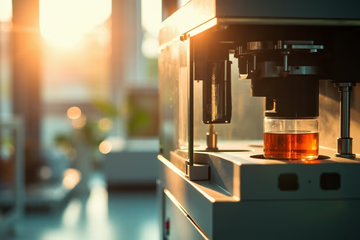
Chromatography plays a crucial role in food analysis by separating complex mixtures into their individual components. This separation allows for the detection and quantification of various substances, including contaminants that may be present in food. Techniques such as High-Performance Liquid Chromatography (HPLC) and Gas Chromatography (GC) are commonly used in this field.
HPLC is used to separate, identify, and quantify compounds that are dissolved in a liquid. It is particularly useful for analyzing non-volatile compounds such as vitamins, pigments, and certain types of toxins. GC, however, is used to separate volatile compounds. It is commonly used to analyze pesticides, flavor compounds, and fatty acids.
These chromatography systems are critical for detecting and quantifying food contaminants, including pesticides, mycotoxins, and veterinary drug residues. Accurate and reliable food analysis equipment is important for maintaining food safety standards and protecting public health.
For example, chromatography can be used to detect aflatoxins in peanuts, pesticides in fruits and vegetables, and antibiotics in meat and dairy products. These are real-world food safety issues that can be addressed using chromatography.
High-Performance Liquid Chromatography (HPLC)
High-Performance Liquid Chromatography (HPLC) is a technique used to separate, identify, and quantify individual components in a liquid mixture. The principle behind HPLC involves passing a liquid sample through a column packed with a solid stationary phase. Different components in the sample interact differently with the stationary phase, causing them to separate as they move through the column. These separated components are then detected and quantified.
In food safety analysis, HPLC systems are used to detect and quantify various food contaminants, including pesticides, mycotoxins, and food additives. For example, HPLC food analysis equipment can be used to measure the concentration of aflatoxins in corn, detect pesticide residues in fruits and vegetables, and quantify artificial sweeteners in beverages.
HPLC plays a role in compliance with food safety regulations by providing accurate and reliable data on the levels of contaminants in food products.
Different types of HPLC columns, such as reversed-phase, normal-phase, and ion-exchange columns, are used depending on the properties of the compounds being analyzed. Common detectors used in HPLC include UV-Vis detectors, fluorescence detectors, and mass spectrometers.
Gas Chromatography (GC)
Gas Chromatography (GC) is a technique used to separate, identify, and quantify volatile compounds in a sample. The principle behind GC involves vaporizing a sample and passing it through a column with a carrier gas. The components of the sample separate based on their boiling points and their interaction with the stationary phase in the column. As the separated components exit the column, they are detected and quantified.
In food safety analysis, GC systems are used to detect and quantify volatile compounds such as pesticide residues, flavor compounds, and environmental contaminants. For example, GC food analysis equipment can be used to monitor pesticide levels in fruits and vegetables, identify volatile organic compounds in drinking water, and analyze the composition of essential oils.
GC plays a role in monitoring food quality and safety by providing information on the presence and concentration of volatile compounds that may affect the taste, aroma, or safety of food products.
Different types of GC columns, such as capillary columns and packed columns, are used depending on the compounds being analyzed. Common detectors used in GC include flame ionization detectors (FID), electron capture detectors (ECD), and mass spectrometers (MS). GC coupled with mass spectrometry (GC-MS) provides improved identification and quantification capabilities.
Sample Preparation Techniques for Chromatography
Proper sample preparation is critical in chromatography-based food analysis because it directly impacts the accuracy and reliability of the results. The goal of sample preparation is to isolate the target analytes from the food matrix while removing interfering substances that could affect the chromatographic analysis.
- Solid-Phase Extraction (SPE): This technique uses a solid adsorbent material to selectively retain the target analytes while washing away unwanted components.
- Liquid-Liquid Extraction (LLE): This method involves partitioning the analytes between two immiscible liquids, allowing for separation based on their solubility.
- QuEChERS (Quick, Easy, Cheap, Effective, Rugged, and Safe): This streamlined approach involves extraction and cleanup steps to quickly prepare samples for analysis.
The selection of the appropriate sample preparation method depends on the type of food sample and the nature of the contaminants being analyzed. For example, QuEChERS is often used for pesticide residue analysis in fruits and vegetables, while SPE may be preferred for isolating mycotoxins from grains.
Effective sample preparation improves the accuracy and reliability of food analysis equipment by removing matrix interferences and concentrating the target analytes, leading to more precise and accurate results.
Physical Property Analyzers for Quality Control
Physical property analysis is important for guaranteeing food quality, texture, and overall consumer satisfaction. These analyzers measure various physical characteristics of food products, providing insights into their consistency, stability, and sensory attributes.
Several types of physical property analyzers are used in the food industry:
- Texture Analyzers: These instruments measure the mechanical properties of food, such as hardness, chewiness, and elasticity.
- Viscometers: Viscometers measure the viscosity of liquids and semi-solids, which is important for controlling the flow and consistency of products like sauces and beverages.
- Colorimeters: Colorimeters measure the color of food products, which is a critical factor in consumer acceptance.
These instruments measure parameters like hardness, viscosity, and color, which are critical for product consistency and consumer acceptance. By quantifying these physical properties, manufacturers can ensure that their products meet the desired standards and maintain batch-to-batch consistency.
This food analysis equipment contributes to maintaining the desired sensory attributes of food products, which ultimately impacts consumer perception and purchasing decisions.
Texture Analyzers
Texture analyzers are used to measure the mechanical properties of food products, providing information on their textural characteristics. The principle behind texture analysis involves applying a controlled force to a food sample and measuring its response. This response is then used to determine parameters such as hardness, chewiness, elasticity, and adhesiveness.
In food quality control, texture analyzers play a role in guaranteeing the desired texture of products like baked goods, meats, and confectionery. For example, texture analysis can determine the firmness of bread, the tenderness of meat, and the brittleness of chocolate. This food analysis equipment helps manufacturers maintain consistent product quality and meet consumer expectations.
Different types of probes and fixtures are used in texture analysis depending on the type of food product and the specific textural properties being measured. Common probes include compression plates, shear blades, and tensile grips. Fixtures are used to support and position the sample during analysis.
Viscometers
Viscometers are instruments used to measure the viscosity of fluids, which is a measure of their resistance to flow. The principle behind viscometry involves applying a force to a fluid and measuring the resulting flow rate or resistance. This information is then used to determine the viscosity of the fluid.
Viscometry is important in characterizing the flow behavior of liquid and semi-solid foods. It helps manufacturers understand how these products will behave during processing, packaging, and consumption.
Different types of viscometers are available, including:
- Rotational Viscometers: These instruments measure the torque required to rotate a spindle in a fluid.
- Capillary Viscometers: These instruments measure the time it takes for a fluid to flow through a capillary tube.
Viscometers are used to measure the viscosity of products like sauces, beverages, and dairy products. For example, viscometers can determine the thickness of ketchup, the flow rate of juice, and the consistency of yogurt. This food analysis equipment helps maintain the desired consistency and mouthfeel of food products, which are important factors in consumer acceptance.
Colorimeters and Spectrophotometers
Colorimeters and spectrophotometers are used to measure the color of food products. The principle behind colorimetry and spectrophotometry involves shining a light source onto a sample and measuring the amount of light that is reflected or transmitted. This information is then used to determine the color of the sample.
Colorimeters and spectrophotometers measure color parameters like L*, a*, and b* values. L* represents lightness, a* represents redness or greenness, and b* represents yellowness or blueness. By quantifying these color parameters, it is possible to objectively assess and compare the color of different food products.
This food analysis equipment is used to ensure color consistency and detect color changes in products like fruits, vegetables, and processed foods. For example, color measurement can determine the ripeness of tomatoes, the freshness of spinach, and the degree of browning in baked goods.
Color measurement is important in consumer perception and product appeal. Consumers often associate certain colors with specific flavors and qualities, so maintaining consistent color is critical for meeting consumer expectations.
Selecting the Right Food Analysis Equipment

Choosing the appropriate food analysis equipment requires careful consideration of several factors. The selection process should be based on the specific needs and applications of the food analysis laboratory.
Key factors to think about include:
- Type of Food Being Analyzed: Different types of food require different analytical techniques. For example, analyzing the fat content of milk requires different equipment than analyzing pesticide residues in vegetables.
- Analytes of Interest: The specific compounds or properties being analyzed will determine the type of equipment needed. For example, if the goal is to measure the concentration of vitamins, a UV-Vis spectrometer may be appropriate. If the goal is to identify volatile organic compounds, a gas chromatograph may be necessary.
- Required Level of Accuracy: The level of accuracy required will depend on the application. For regulatory compliance, high accuracy is a must. For routine quality control, a lower level of accuracy may be acceptable.
- Budget Constraints: The cost of food analysis equipment can vary widely. It is important to think about the budget when selecting equipment.
When evaluating different equipment options, it is important to consider the performance specifications, ease of use, maintenance requirements, and availability of technical support. Selecting a reliable supplier is also important to ensure that the equipment is of high quality and that technical support is available when needed.
FOSS has expertise in providing customized solutions for various food analysis needs.
Assessing Your Analytical Needs
Before selecting food analysis equipment, it's important to understand your analytical goals. This involves identifying your specific analytical requirements. Consider the following steps:
- Determine the types of food samples you need to analyze. Are you working with raw materials, finished products, or both?
- Identify the specific analytes of interest. Are you interested in nutrients, contaminants, or both?
- Determine the required level of accuracy and sensitivity. What are the regulatory requirements for your products?
To help you assess your needs, consider the following questions:
- What types of food products will you be analyzing?
- What specific components or contaminants are you interested in measuring?
- What is the required level of accuracy for your measurements?
- What is your budget for food analysis equipment?
- What is the volume of samples you expect to analyze?
- What are the regulatory requirements for your products?
By knowing your analytical goals, you can select the right equipment for your needs.
Evaluating Equipment Options and Features
Once you have identified your analytical needs, the next step is to evaluate different food analysis equipment options based on their features and specifications. Here's what to think about:
- Accuracy: How close is the measurement to the true value?
- Precision: How repeatable are the measurements?
- Sensitivity: How well can the equipment detect low levels of the analyte?
- Throughput: How many samples can the equipment analyze per unit of time?
- Ease of Use: How easy is the equipment to operate and maintain?
- Maintenance Requirements: What are the maintenance requirements for the equipment?
When comparing different models and brands, it is important to think about the equipment's suitability for your specific applications. Does the equipment meet your required level of accuracy and sensitivity? Does the equipment have the throughput you need? Is the equipment easy to use and maintain? By carefully evaluating these factors, you can select the equipment that best meets your needs.
Considering Budget and ROI
When selecting food analysis equipment, it is important to think about your budget constraints and the potential return on investment (ROI). The total cost of ownership includes the initial purchase price, maintenance costs, and operating expenses such as labor, reagents, and supplies.
Estimating the total cost of ownership involves thinking about the following factors:
- Initial Purchase Price: The cost of the equipment itself.
- Maintenance Costs: The cost of routine maintenance, repairs, and replacement parts.
- Operating Expenses: The cost of labor, reagents, supplies, and utilities.
Investing in more advanced equipment can provide benefits such as increased efficiency, improved accuracy, and reduced labor costs. For example, automated equipment can analyze more samples per unit of time, reducing labor costs and improving throughput.
To justify your investment in food analysis equipment, demonstrate its value in guaranteeing food quality, safety, and regulatory compliance. By guaranteeing food quality and safety, you can protect your brand reputation and avoid costly recalls. By complying with regulatory requirements, you can avoid fines and penalties.
Choosing a Reliable Supplier
Selecting a reliable supplier of food analysis equipment is important to ensure the long-term performance of the equipment. Here's what to think about:
- Supplier's Reputation: What is the supplier's reputation in the industry?
- Experience: How much experience does the supplier have in providing food analysis equipment?
- Technical Support: Does the supplier offer technical support?
- After-Sales Service: Does the supplier offer after-sales service?
When evaluating different suppliers, it is important to check their references and see what other customers have to say about their products and services. Choose a supplier who can provide ongoing support and maintenance to ensure the long-term performance of the equipment.
FOSS is a trusted partner known for its expertise and support.
Conclusion
Advanced food analysis equipment offers key benefits for quality control, safety, and regulatory compliance. Investing in reliable and accurate equipment helps guarantee consumer safety and maintain brand reputation.
It is important to explore available food analysis equipment options and contact experts for further assistance. FOSS is a trusted partner in food analysis solutions.
Frequently Asked Questions
- What are the key types of food analysis equipment used in quality control?
- The key types of food analysis equipment used in quality control include spectrophotometers, chromatographs, pH meters, moisture analyzers, and thermocyclers. Spectrophotometers assess the color and clarity of food products, while chromatographs are essential for separating and analyzing compounds in food. pH meters measure acidity levels, moisture analyzers determine water content, and thermocyclers are used in the analysis of DNA or RNA in food samples. Each piece of equipment plays a crucial role in ensuring that food products meet safety and quality standards.
- How does food analysis equipment contribute to regulatory compliance?
- Food analysis equipment helps ensure regulatory compliance by providing accurate and reliable data needed to meet food safety standards set by regulatory bodies, such as the FDA and USDA. This equipment can be used for various tests, including pathogen detection, nutrient analysis, and contamination screening. By regularly testing food products with this equipment, companies can demonstrate adherence to safety regulations, mitigate risks, and avoid potential legal issues related to food safety.
- What are some common applications of food analysis equipment in the industry?
- Food analysis equipment is commonly used in several applications within the food industry, including quality assurance, product development, and research. In quality assurance, it helps monitor the consistency and safety of products. For product development, it aids in formulating new recipes and improving existing ones by analyzing the nutritional content and sensory attributes. In research, food analysis equipment is used to study food properties, shelf life, and the effects of processing on food quality.
- What should companies consider when selecting food analysis equipment?
- When selecting food analysis equipment, companies should consider several factors, including the specific tests required, equipment accuracy, ease of use, maintenance needs, and budget constraints. It's also important to evaluate the manufacturer's reputation, after-sales support, and whether the equipment complies with industry standards. Additionally, companies should consider the scalability of the equipment for future needs as their operations grow.
- How often should food analysis equipment be calibrated and maintained?
- Food analysis equipment should be calibrated and maintained regularly to ensure accurate results. The frequency of calibration depends on the type of equipment and its usage. Generally, it is recommended to calibrate equipment before each use or at least once a day for high-usage items. Routine maintenance should occur as prescribed by the manufacturer, which may include cleaning, replacing parts, and running performance checks. Regular maintenance not only prolongs equipment life but also ensures compliance with safety and quality standards.