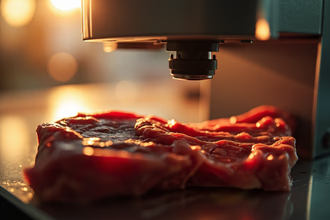
Near-Infrared (NIR) analysis is becoming a key method for assessing meat quality. It offers quick, accurate, and non-destructive ways to analyze meat composition and safety. This technology is transforming how the meat industry approaches quality control.
This guide explores how NIR analysis works, its applications in the meat industry, and its benefits. Discover how NIR spectroscopy can help improve meat quality assessment.
Key Takeaways
- NIR analysis offers a rapid, non-destructive method for assessing meat quality, determining composition and characteristics by analyzing light absorption and reflectance.
- NIR spectroscopy relies on calibration models that link NIR spectra to chemical composition, using chemometric techniques like Partial Least Squares (PLS) regression for data analysis.
- NIR applications in the meat industry include determining fat, moisture, protein, and collagen content, as well as quality grading and classification.
- Implementing NIR technology leads to cost savings through reduced lab testing, improved efficiency with faster analysis times, and enhanced quality control.
- Real-time monitoring with NIR enables data-driven decisions, optimizing production processes, improving yield, and reducing waste.
- Future trends in NIR technology involve more sophisticated models, portable instruments, and cloud-based data analytics, enhancing accuracy and accessibility.
- NIR analysis plays a crucial role in meeting consumer demands for high-quality, safe, and consistent meat products, maintaining trust and adapting to market needs.
Table of Contents
Introduction to NIR Analysis in Meat Quality Assessment

Meat quality assessment is vital in the food industry, but it faces many challenges. Traditional methods can be slow, labor-intensive, and sometimes destructive. This creates a need for faster, more efficient ways to ensure the meat products meet quality standards.
Near-Infrared (NIR) analysis offers a solution as a quick and non-destructive method for assessing meat quality. NIR analysis for meat involves shining near-infrared light on a sample and measuring the light that is reflected or absorbed. This data can then be used to determine the meat's composition and characteristics.
The meat industry is increasingly adopting NIR technology because of its speed and accuracy. NIR analysis can provide results in seconds, allowing for real-time adjustments in processing and quality control. This leads to benefits like reduced costs, improved product consistency, and better overall quality control.
Principles of Near-Infrared (NIR) Spectroscopy
NIR spectroscopy is based on how near-infrared light interacts with matter. When NIR light shines on a meat sample, the sample absorbs some of the light and reflects the rest. The pattern of absorption and reflectance creates a unique "fingerprint" or spectrum for that sample.
The spectrum is directly related to the chemical composition of the meat. For example, certain wavelengths of NIR light are absorbed by water, while others are absorbed by fat or protein. By analyzing the NIR spectrum, it's possible to determine the levels of these components in the meat.
Calibration models are important in NIR analysis for meat because they connect the NIR spectra to the actual chemical composition. These models are developed by analyzing a set of meat samples using both NIR spectroscopy and traditional reference methods. Once the model is calibrated, it can be used to predict the composition of new samples based on their NIR spectra alone.
The Electromagnetic Spectrum and NIR Region
The electromagnetic spectrum includes all types of electromagnetic radiation, from radio waves to gamma rays. The Near-Infrared (NIR) region sits between visible light and mid-infrared on this spectrum.
The NIR region typically spans wavelengths from about 780 nm to 2500 nm. This region is useful for analyzing organic materials like meat because the energy of NIR light causes molecules to vibrate. Different molecules vibrate in unique ways, and these vibrations absorb NIR light at specific wavelengths.
By measuring which wavelengths are absorbed by a meat sample, we can identify and quantify the different molecules present, such as fat, protein, and water.
How NIR Light Interacts with Meat: Absorption and Reflectance
When NIR light strikes a meat sample, it interacts with the various components such as fat, protein, and water. This interaction involves two main processes: absorption and reflectance.
Absorption occurs when the energy of the NIR light matches the vibrational frequency of specific chemical bonds within the meat molecules. For instance, bonds containing hydrogen, like O-H (in water), C-H (in fats), and N-H (in proteins), absorb NIR light at characteristic wavelengths. The amount of light absorbed is proportional to the concentration of that specific molecule.
Reflectance is the light that is not absorbed and bounces back from the sample. The reflected light also carries information about the meat's composition. By analyzing the pattern of absorption and reflectance at different NIR wavelengths, a unique spectral fingerprint is created. This fingerprint can then be used to determine the levels of fat, protein, moisture, and other components in the meat.
Calibration Models and Data Analysis in NIR for Meat
Calibration models are key for turning NIR spectra into useful information about meat composition. These models mathematically link the NIR spectra to the actual amounts of fat, protein, moisture, and other components in meat.
Creating these models involves two key steps. First, a set of meat samples is analyzed using both NIR spectroscopy and traditional reference methods (like chemical analysis). Second, the data from both methods is used to build a calibration model. This model is then validated using a separate set of samples to ensure its accuracy and reliability.
Chemometric techniques, such as Partial Least Squares (PLS) regression, are commonly used in NIR data analysis. These techniques help to extract the relevant information from the complex NIR spectra and build calibration models that are strong.
Accurate and strong calibration models are vital for reliable NIR analysis of meat. The software is used for data processing and analysis, making the process more efficient and accurate.
Applications of NIR Analysis in the Meat Industry

NIR analysis has a wide range of applications in the meat industry, offering rapid and efficient solutions for quality control and process optimization.
- Fat Content Determination: NIR analysis can quickly and accurately determine the fat content in meat samples. For example, a meat processing plant uses NIR to check the fat percentage in ground beef in real-time, making sure it meets labeling requirements.
- Moisture Analysis: Moisture levels are critical for meat quality and shelf life. NIR can measure moisture content in seconds, helping processors adjust drying or hydration processes as needed.
- Protein Measurement: Protein content is another key quality parameter. NIR provides a fast way to measure protein levels, which is important for nutritional labeling and product formulation.
- Collagen Content Assessment: Collagen affects meat tenderness. NIR can assess collagen content, helping to predict meat tenderness and optimize processing methods to improve product quality.
- Quality Grading: NIR analysis is used for quality grading of meat carcasses. By assessing various parameters simultaneously, NIR helps in sorting meat into different quality grades quickly and objectively.
NIR analysis helps with compliance with quality standards and regulations by providing accurate and consistent measurements. The speed and efficiency gains compared to traditional methods are significant, allowing for faster decision-making and improved overall quality control.
Fat Content Determination Using NIR Spectroscopy
NIR analysis is used to quickly and accurately determine fat content in different types of meat, including beef, pork, and poultry. Certain wavelengths in the NIR region are particularly sensitive to the presence of fat molecules. These wavelengths are used to create calibration models that can predict fat content based on the NIR spectra.
This information is valuable in meat processing for several reasons. It allows for real-time monitoring of fat content, which is important for quality control. Meat processors use this data to adjust their processes to meet specific fat content targets, which is important for product consistency and consumer satisfaction. Accurate fat content determination is also crucial for proper labeling, making sure that products meet regulatory requirements.
Studies have shown that NIR analysis provides fat content results comparable to traditional fat extraction methods, but in a fraction of the time. The benefits of rapid fat analysis include optimizing meat production by reducing waste, improving product quality, and lowering costs.
Moisture Analysis with NIR Technology
NIR spectroscopy is employed for moisture analysis in meat products by measuring the absorption of NIR light at specific wavelengths that are sensitive to water molecules. The moisture content in meat is a critical factor affecting its quality, texture, and shelf life. Too much moisture can promote microbial growth and spoilage, while too little can lead to dryness and reduced palatability.
The NIR spectral features associated with water content are well-defined, allowing for accurate quantification. Meat processors use moisture analysis to control drying, cooking, and storage processes. For example, by monitoring moisture levels during drying, they can prevent excessive water loss, which can negatively impact the product's texture and yield. Similarly, moisture analysis helps to ensure product consistency by verifying that each batch meets the required moisture specifications.
Compared to traditional drying methods, NIR moisture analysis offers several advantages. Traditional methods can be time-consuming and require sample preparation, while NIR analysis provides rapid, non-destructive measurements. This allows for real-time process control and faster decision-making.
Protein Measurement via NIR Analysis
NIR analysis is applied for measuring protein content in meat by analyzing the absorption and reflectance of NIR light at specific wavelengths that correlate with protein molecules. The intensity of these spectral features is directly related to the protein concentration in the meat sample.
Protein measurements are used for nutritional labeling, allowing consumers to make informed choices based on accurate nutritional information. These measurements are also used for quality assessment, as protein content is an indicator of meat quality and nutritional value. For example, NIR analysis can quickly determine the protein content in various meat products, such as beef (26%), pork (21%), and chicken (23%).
NIR analysis offers several advantages over traditional protein analysis methods like Kjeldahl. NIR is faster, requires little to no sample preparation, and is non-destructive, enabling the analysis of a large number of samples in a short amount of time. This makes it a valuable tool for process control and quality assurance in the meat industry.
Collagen Content Assessment Using NIR
NIR spectroscopy can assess collagen content in meat by analyzing the NIR spectral characteristics related to the presence of collagen molecules. Collagen content is important for meat tenderness and texture because it is a major component of connective tissue. Higher collagen content is often associated with tougher meat, while lower collagen content is associated with more tender meat.
The NIR spectral characteristics related to collagen include specific absorption bands that correspond to the vibrational modes of the collagen molecule. By measuring the intensity of these bands, it is possible to estimate the collagen content in meat samples.
Collagen content assessment is used in meat grading to classify meat based on its expected tenderness. It is also used in meat processing to optimize cooking and aging processes to improve meat tenderness. Studies have shown a correlation between NIR-measured collagen and sensory evaluation of meat tenderness, indicating that NIR spectroscopy can be a useful tool for predicting meat tenderness.
NIR Spectroscopy for Meat Quality Grading and Classification
NIR analysis is used for overall meat quality grading and classification by predicting various quality attributes, such as tenderness, juiciness, and flavor. By analyzing the NIR spectra of meat samples, it is possible to obtain a comprehensive assessment of their quality characteristics.
NIR can predict tenderness by assessing collagen content and muscle fiber structure. It can also predict juiciness by measuring moisture content and fat distribution. Flavor can be estimated by analyzing the presence of certain volatile compounds. The use of NIR in automated meat sorting and grading systems enables objective and rapid meat quality assessment.
NIR helps make sure of consistent quality and meets consumer expectations by providing a reliable and objective method for assessing meat quality. This allows meat processors to sort and grade meat based on specific quality criteria, making sure that consumers receive products that meet their expectations. The benefits of NIR for meat quality assessment include improved consistency, reduced variability, and improved consumer satisfaction.
Benefits of Implementing NIR Technology for Meat Analysis
Implementing NIR technology for meat analysis offers several key benefits in meat processing and quality control.
- Cost Savings: NIR analysis for meat reduces the need for extensive lab testing. By using NIR, meat processors can significantly lower their analytical costs.
- Improved Efficiency: NIR provides results in seconds, compared to hours for traditional methods. This faster analysis time improves efficiency and throughput in meat processing plants.
- Improved Quality Control: NIR allows for more frequent and comprehensive quality checks. This leads to improved quality control and consistency in meat products.
- Real-Time Monitoring: NIR enables real-time monitoring of meat composition during processing. This allows for immediate adjustments to maintain product quality.
- Better Decision-Making: With rapid and accurate data on meat composition, processors can make better decisions in production processes, optimizing product quality and yield.
While NIR technology offers many advantages, potential challenges include the need for proper calibration and maintenance of the equipment. These challenges can be overcome through training and adherence to best practices.
Economic Advantages: Cost Savings and ROI with NIR
Implementing NIR technology in meat analysis leads to significant cost savings. Reduced labor costs are achieved because NIR analysis requires less operator time compared to traditional methods. Lower reagent consumption is another source of savings, as NIR often requires little to no reagents. Decreased waste disposal expenses also contribute to the economic advantages, as NIR methods typically generate less waste.
A Return on Investment (ROI) calculation would consider the initial investment in NIR equipment, ongoing maintenance costs, and the long-term savings from reduced labor, reagents, and waste disposal. For example, a meat processing plant that invests \$50,000 in NIR equipment might save \$20,000 per year in reduced costs. This would result in a simple ROI of 40% per year.
Some companies have achieved significant cost reductions through NIR implementation. These reductions illustrate the potential economic benefits of NIR technology. The initial investment can be a hurdle, but strategies to overcome it include leasing options or phased implementation.
Efficiency Gains: Streamlining Meat Analysis with NIR
NIR technology improves efficiency in meat processing and quality control through faster analysis times, reduced sample preparation, and automated data processing. NIR analysis can provide results in seconds, while traditional methods often take hours to complete.
The reduced sample preparation requirements of NIR analysis also contribute to efficiency gains. Unlike traditional methods that require extensive sample preparation, NIR analysis typically requires little to no sample preparation. Automated data processing further streamlines the analysis process, reducing the need for manual data entry and calculations.
These efficiency gains translate into significant throughput improvements and reduced turnaround times. For example, a meat processing plant using NIR analysis can analyze hundreds of samples per day, compared to only a few dozen using traditional methods. NIR enables real-time monitoring of meat composition, allowing for immediate adjustments to optimize processing parameters.
Quality Control and Consistency: Making Sure of Superior Meat Products
NIR analysis makes quality control better and makes sure of consistent meat product quality. It helps to quickly find any differences from quality standards and take action to fix them. By rapidly detecting deviations, meat processors can prevent the production of substandard products and maintain high-quality standards.
NIR helps to minimize variability in meat composition and sensory attributes, such as tenderness, juiciness, and flavor. This consistency is important for meeting consumer expectations and building brand loyalty.
NIR is used to prevent product recalls by identifying potential issues before products reach the market. This preventative approach helps to maintain consumer satisfaction and protect brand reputation. NIR plays a key role in meeting regulatory requirements and industry standards by providing accurate and reliable data on meat composition and quality attributes.
Real-Time Monitoring and Data-Driven Decisions
Real-time monitoring of meat composition using NIR technology offers many benefits. Continuous data streams enable decision-making in production processes. By monitoring meat composition in real-time, processors can quickly identify and respond to any deviations from target values.
NIR data is used for process optimization, yield improvement, and waste reduction. For example, real-time monitoring of moisture content can help optimize drying processes, reducing energy consumption and improving product yield. Real-time monitoring helps prevent quality issues by allowing processors to take corrective actions before problems escalate. This improves profitability by reducing waste and preventing product recalls.
The integration of NIR data with other process control systems enables automated adjustments to maintain product quality and process efficiency.
Conclusion: The Future of Meat Quality Assessment with NIR

NIR analysis has changed meat quality assessment by improving efficiency, reducing costs, and making sure of higher quality standards. Its ability to provide rapid, accurate, and non-destructive measurements makes it a valuable tool for the meat industry.
Future trends in NIR technology include the development of more sophisticated calibration models, smaller and more portable NIR instruments, and integration with cloud-based data analytics platforms. These advancements will further improve the accuracy, efficiency, and accessibility of NIR analysis for meat.
As consumer demands for high-quality, safe, and consistent meat products continue to grow, NIR analysis for meat will play an increasing role in maintaining consumer trust and meeting evolving market demands.
Frequently Asked Questions
- What are the main benefits of using NIR analysis in meat quality assessment?
- NIR analysis offers several advantages in meat quality assessment, including rapid testing, non-destructive evaluation, and the ability to analyze multiple quality parameters simultaneously. This technology helps in ensuring consistency in meat products, enhances food safety by detecting contaminants, and improves the overall efficiency of quality control processes in the meat industry.
- How does NIR spectroscopy compare to traditional meat quality assessment methods?
- NIR spectroscopy is generally faster and requires less sample preparation compared to traditional methods such as chemical analysis or sensory evaluation. While traditional methods can provide detailed insights, they often require more time and resources. NIR spectroscopy, on the other hand, allows for real-time analysis and can be integrated into production lines, making it a more practical choice for continuous monitoring.
- Can NIR analysis be used for all types of meat?
- Yes, NIR analysis can be applied to various types of meat, including beef, pork, poultry, and lamb. However, the calibration models may need to be tailored for different meat types due to variations in composition and structure. Proper calibration ensures accurate readings for specific meat products.
- What parameters can be measured using NIR analysis in meat?
- NIR analysis can measure a range of parameters in meat, including moisture content, fat content, protein levels, tenderness, and even the presence of certain contaminants. This versatility makes it a valuable tool for assessing overall meat quality and safety.
- Are there any limitations to the use of NIR analysis in the meat industry?
- While NIR analysis is highly effective, it does have some limitations. It relies on the development of robust calibration models, which require extensive data for accuracy. Additionally, NIR spectroscopy may not provide the level of detail obtainable through traditional methods for certain quality attributes. Furthermore, environmental factors, such as temperature and humidity, can affect the readings, necessitating controlled conditions for optimal results.