Feed moisture is a critical factor in animal nutrition, influencing feed quality, animal health, and farm profitability. Managing moisture levels correctly can prevent spoilage, ensure consistent nutrient delivery, and improve animal performance. This article explores why feed moisture matters and how to manage it effectively.
Key Takeaways
- Maintaining optimal feed moisture is crucial for animal health, digestion, and nutrient absorption.
- High feed moisture can lead to digestive issues, reduced feed intake, and microbial growth, while low moisture can cause impaction and dehydration.
- Optimal feed moisture levels vary depending on the feed type (silage, hay, grains) and animal species.
- Effective moisture management involves proper harvesting, drying, and storage techniques.
- Regular moisture testing and monitoring are essential for consistent feed quality.
- Additives can help control moisture levels and prevent spoilage.
- Precise feed moisture control leads to economic benefits through reduced waste, improved animal performance, and enhanced feed quality.
Table of Contents
- Introduction to Feed Moisture
- The Impact of Feed Moisture on Animal Health and Digestion
- Optimal Feed Moisture Levels for Different Feed Types
- Strategies for Effective Feed Moisture Management
- The Economic Benefits of Precise Feed Moisture Control
- Conclusion: Securing Quality and Profitability Through Feed Moisture Management
- Frequently Asked Questions
Introduction to Feed Moisture

The right balance of feed moisture is more than just a detail; it's a cornerstone of animal nutrition. Moisture content directly influences feed quality, affecting animal health and farm profitability. Too much or too little moisture can lead to a range of problems, from reduced feed intake to spoilage during storage.
Feed moisture refers to the amount of water present in animal feed, typically expressed as a percentage of the total weight. It is a key parameter that affects the nutritional value, palatability, and preservation of feed. Maintaining optimal feed moisture levels is vital for animal well-being, minimizing waste, and maximizing productivity.
When moisture levels are not properly managed, animals may experience digestive issues, reduced nutrient absorption, and increased susceptibility to diseases. Incorrect moisture levels can also promote the growth of molds and bacteria, leading to feed spoilage and economic losses. Therefore, accurate moisture analysis is crucial for quality control and effective feed management.
Foss provides solutions for accurate and reliable feed analysis, helping farmers and feed producers optimize feed moisture levels for improved animal health and farm profitability.
The Impact of Feed Moisture on Animal Health and Digestion
Feed moisture levels play a significant role in animal digestion and nutrient absorption. The moisture content of feed affects its palatability, digestibility, and the overall health of the animal. Maintaining optimal feed moisture is crucial for supporting efficient digestion and maximizing nutrient uptake.
When feed moisture is excessively high, it can lead to several digestive issues. High moisture content can dilute digestive enzymes, reducing their effectiveness and slowing down the digestion process. This can result in reduced feed intake as animals feel full sooner, limiting the amount of nutrients they consume. In some cases, excessively moist feed can promote the growth of harmful bacteria and molds, leading to digestive upset, diarrhea, and other health problems.
Conversely, low feed moisture can also have negative consequences. Dry feed can be difficult for animals to swallow and digest, potentially causing impaction or constipation. Reduced moisture can also decrease the palatability of the feed, leading to decreased feed intake and nutrient deficiencies. Also, dry feed can increase dustiness, which can irritate the respiratory system and compromise immune function.
The optimal feed moisture level varies depending on the animal species and the type of feed. For example, dairy cows require adequate moisture in their feed to support rumen function and milk production. Poultry, for example, are more susceptible to bacterial growth in moist feed, so lower moisture levels are generally preferred. Swine also benefit from controlled moisture levels to prevent digestive issues and promote efficient growth.
Therefore, careful monitoring and management of feed moisture are vital for animal well-being and optimizing production efficiency.
Effects of High Feed Moisture on Animal Health
Excessively high feed moisture levels can create a breeding ground for health problems in animals. One of the primary concerns is the development of digestive issues. High moisture content can lead to diarrhea and bloating due to the proliferation of harmful bacteria in the gut. The increased moisture dilutes digestive enzymes, hindering their ability to break down feed effectively.
Reduced feed intake is another consequence of high feed moisture. Animals may feel full more quickly due to the increased water content, leading to a decrease in the consumption of vital nutrients. This can result in nutrient deficiencies and reduced overall health.
The impact of high feed moisture varies among different animal species. For instance, dairy cows are at an increased risk of mastitis when exposed to excessively moist feed, as the damp environment promotes bacterial growth. Poultry can experience digestive upset and reduced growth rates due to the proliferation of harmful bacteria in their feed.
High feed moisture plays a significant role in creating an environment conducive to microbial growth and toxin production. Molds and bacteria thrive in moist conditions, leading to the production of mycotoxins that can be harmful to animals. These toxins can cause a range of health problems, including liver damage, immune suppression, and reduced reproductive performance.
Consequences of Low Feed Moisture for Animal Digestion
Insufficient feed moisture can significantly impair animal digestion and overall health. One of the primary concerns is the increased risk of impaction, particularly in animals with complex digestive systems. Dry feed can compact within the digestive tract, leading to blockages and discomfort.
Dehydration is another potential consequence of low feed moisture. When animals do not receive enough moisture through their feed, they may not consume enough water to compensate, leading to dehydration and related health problems. Dehydration can negatively affect various bodily functions, including nutrient absorption and waste elimination.
Reduced nutrient availability is also a concern when feed moisture is too low. Dry feed can be more difficult for animals to digest, reducing the efficiency of nutrient extraction. This can lead to nutrient deficiencies and reduced overall health.
Low moisture levels can also affect palatability, leading to decreased feed intake. Animals may find dry feed less appealing, resulting in reduced consumption and potential weight loss. This can be particularly problematic for animals with high energy demands, such as lactating dairy cows or growing swine.
The impact of low feed moisture varies depending on the animal species. For example, dairy cows may experience reduced milk production due to decreased feed intake and impaired rumen function. Swine may exhibit poor growth rates and reduced feed efficiency when fed dry rations. Therefore, maintaining adequate feed moisture is important in promoting proper hydration, digestive function, and overall animal health.
The Role of Feed Moisture in Nutrient Absorption
Feed moisture plays a crucial role in nutrient absorption in animals. Adequate moisture levels are vital for facilitating the breakdown of feed and enabling the efficient uptake of nutrients in the digestive tract. The presence of sufficient moisture helps to dissolve and transport nutrients, making them more accessible for absorption.
When feed moisture is at optimal levels, digestive enzymes can function effectively, breaking down complex molecules into simpler compounds that can be easily absorbed. Moisture also aids in the movement of digesta through the digestive tract, allowing for maximum contact between nutrients and the absorptive surfaces of the intestines.
However, both high and low feed moisture levels can interfere with this process. Excessively high moisture can dilute digestive enzymes, reducing their effectiveness and slowing down the breakdown of feed. This can lead to reduced nutrient absorption and potential nutrient deficiencies.
Conversely, insufficient moisture can result in dry, compacted feed that is difficult to digest. This can reduce the surface area available for nutrient absorption and impair the movement of digesta through the digestive tract. As a result, animals may not be able to extract all the nutrients they need from their feed.
Moisture affects the absorption of key nutrients in various ways. For example, adequate moisture is needed for the proper digestion and absorption of protein. It helps to solubilize proteins and facilitate their breakdown into amino acids, which are then absorbed into the bloodstream. Similarly, moisture is important for the digestion and absorption of carbohydrates. It aids in the breakdown of complex carbohydrates into simple sugars, which are then absorbed and used for energy. Moisture also plays a role in the absorption of vitamins, as many vitamins are water-soluble and require moisture for their transport and uptake.
Optimal Feed Moisture Levels for Different Feed Types
The ideal feed moisture level varies significantly depending on the type of animal feed. Different feedstuffs have different compositions and storage requirements, which affect the optimal moisture range for preservation and nutritional value. Knowing these differences is crucial for maintaining feed quality and preventing spoilage.
Silage, for example, requires a relatively high moisture content to facilitate proper fermentation. The anaerobic fermentation process relies on sufficient moisture to promote the growth of beneficial bacteria, which convert sugars into lactic acid, preserving the feed. Hay, conversely, needs to be dried to a low moisture content to prevent mold growth and spoilage. Grains and compound feeds also have specific moisture requirements to maintain their quality and prevent the growth of undesirable microorganisms.
Moisture plays a vital role in preventing spoilage. High moisture levels can promote the growth of molds, yeasts, and bacteria, leading to feed spoilage and the production of harmful toxins. Low moisture levels, conversely, can lead to excessive dryness, reduced palatability, and increased dustiness.
Maintaining the correct feed moisture also helps to preserve palatability. Animals are more likely to consume feed that has a palatable moisture content. Dry, dusty feed can be unappetizing, leading to reduced feed intake and nutrient deficiencies.
Recommended Feed Moisture Ranges for Common Feedstuffs:
| Feed Type | Recommended Moisture Range (%) |
|---|---|
| Silage (Corn) | 60-70 |
| Silage (Grass) | 65-75 |
| Hay (Legume) | 15-18 |
| Hay (Grass) | 12-15 |
| Grains (Corn) | 12-14 |
| Grains (Wheat) | 13-15 |
| Compound Feeds | 10-14 |
Silage Moisture Management
Silage production relies heavily on maintaining the correct feed moisture range to ensure proper fermentation and preservation. The optimal moisture content for silage typically falls between 60% and 75%, depending on the type of forage being ensiled. This range supports the growth of beneficial lactic acid bacteria, which convert sugars into organic acids, lowering the pH and inhibiting the growth of spoilage organisms.
Moisture levels significantly affect silage quality, preservation, and palatability. When moisture is within the ideal range, silage undergoes efficient fermentation, resulting in a stable, palatable feed with minimal nutrient loss. Proper fermentation preserves the nutritional value of the forage, making it an excellent feed source for livestock.
Too much moisture in silage can lead to undesirable fermentation, resulting in the production of butyric acid and ammonia. This can cause spoilage, nutrient loss, and reduced palatability, making the silage less appealing to animals. Excessively wet silage may also be prone to seepage, leading to environmental concerns and further nutrient loss.
Conversely, too little moisture can hinder proper fermentation, resulting in a less stable and less palatable silage. Dry silage may also be more susceptible to mold growth and aerobic spoilage, reducing its nutritional value and increasing the risk of mycotoxin contamination. Reduced animal intake is a common consequence of poorly fermented or spoiled silage.
Regular moisture testing is crucial during silage making to ensure optimal fermentation. Farmers can use various methods to assess moisture content, including microwave drying, electronic moisture meters, and laboratory analysis. Adjustments to moisture levels can be made by wilting the forage before ensiling or by adding water during the ensiling process. Careful monitoring and adjustment of feed moisture are vital for producing high-quality silage that supports animal health and productivity.
Hay Moisture Considerations
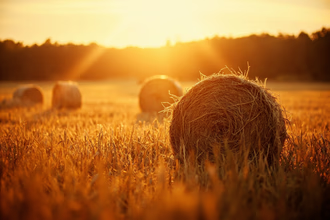
Maintaining the correct feed moisture content in hay is crucial for preventing mold growth and spontaneous combustion. The ideal moisture content for baled hay typically ranges from 12% to 18%, depending on the type of hay and the size of the bale. Proper drying and storage are vital for preserving hay quality and minimizing losses.
Moisture significantly impacts hay quality, nutrient retention, and storage stability. When hay is baled at the appropriate moisture level, it is less likely to support mold growth, which can reduce its nutritional value and palatability. Proper moisture levels also help to prevent spontaneous combustion, a dangerous phenomenon that can occur when excessively moist hay generates heat through microbial activity.
Drying hay to the appropriate moisture level requires careful management and monitoring. Farmers can use various techniques to promote drying, including tedding (spreading the hay) and windrowing (raking the hay into rows). Moisture levels should be monitored regularly using electronic moisture meters or by visually inspecting the hay for signs of dampness or mold.
Baling hay that is too wet carries several risks. Wet hay is prone to mold growth, which can reduce its nutritional value and palatability. It can also generate heat, increasing the risk of spontaneous combustion. Baling hay that is too dry can also be problematic. Dry hay can be brittle and prone to leaf shatter, resulting in nutrient loss and reduced yield. It may also be less palatable to animals.
Careful attention to feed moisture is therefore important for producing high-quality hay that is safe, nutritious, and palatable for livestock.
Grains and Compound Feeds: Moisture's Role
Maintaining the correct feed moisture levels in grains and compound feeds is important for preserving their quality and preventing spoilage. The recommended moisture content for most grains typically ranges from 12% to 15%, while compound feeds generally require moisture levels between 10% and 14%. These ranges help to ensure the stability and palatability of the feeds during storage and use.
Moisture affects the flowability, texture, and palatability of grains and compound feeds. When moisture levels are within the optimal range, grains and compound feeds flow freely, making them easier to handle and process. Proper moisture also contributes to a desirable texture, preventing the feeds from becoming too dusty or compacted. Palatability is also influenced by moisture, as animals are more likely to consume feeds that have a pleasant moisture content.
Controlling moisture during storage is crucial for preventing mold growth, insect infestation, and nutrient degradation. High moisture levels can promote the growth of molds and bacteria, leading to spoilage and the production of harmful toxins. Insects also thrive in moist environments, and their presence can further degrade the quality of the feeds. Excessive moisture can also accelerate nutrient degradation, reducing the nutritional value of the feeds over time.
Moisture levels can significantly impact the performance of different animal species fed with grains and compound feeds. For example, poultry are particularly sensitive to mold contamination in grains, which can lead to reduced growth rates and increased susceptibility to diseases. Swine may experience digestive upset and reduced feed efficiency when fed with excessively moist or dry compound feeds. Dairy cows require a balanced moisture content in their grain rations to support rumen function and milk production. Therefore, careful monitoring and control of feed moisture are important for optimizing animal health and productivity.
Strategies for Effective Feed Moisture Management

Effective feed moisture management requires a comprehensive approach that addresses all stages of feed production and storage. By implementing practical strategies and utilizing appropriate technologies, farmers and feed producers can maintain consistent feed quality and optimize animal performance.
Proper harvesting techniques are the first step in managing feed moisture. Harvesting crops at the correct stage of maturity and under favorable weather conditions can help to minimize moisture-related problems. For example, allowing forages to wilt in the field before harvesting can reduce their moisture content and facilitate proper drying.
Drying methods play a crucial role in reducing moisture levels in harvested crops. Natural drying, such as sun-drying hay, can be effective in some climates. However, artificial drying methods, such as using heated air dryers, may be necessary in other situations to achieve the desired moisture content quickly and efficiently.
Storage conditions are also important for maintaining feed moisture levels. Feeds should be stored in dry, well-ventilated areas to prevent moisture accumulation and spoilage. Proper storage structures, such as grain bins and hay sheds, can help to protect feeds from the elements and maintain their quality.
The use of additives can also help to control moisture levels in feeds. For example, mold inhibitors can be added to feeds to prevent mold growth in high-moisture environments. Absorbents, such as clay minerals, can be added to feeds to absorb excess moisture and improve flowability.
Regular moisture testing and monitoring are vital for consistent feed quality. Farmers and feed producers should use reliable moisture meters or laboratory analysis to assess the moisture content of their feeds regularly. This allows them to identify and address any moisture-related problems before they escalate.
Technology and data analysis can also aid in optimizing moisture management practices. Precision agriculture technologies, such as remote sensing and GPS, can be used to monitor crop moisture levels in the field. Data analysis tools can be used to track moisture trends and identify areas for improvement in feed production and storage processes.
Foss offers solutions for rapid and accurate moisture analysis, helping feed producers and farmers make informed decisions about feed moisture management.
Optimizing Harvesting Techniques for Moisture Control
Optimizing harvesting techniques is a vital step in managing initial feed moisture levels for different feed types. The timing of harvest, wilting duration, and the type of harvesting equipment used can all significantly impact the moisture content of the harvested feed. Careful attention to these factors can help to minimize moisture variability and ensure consistent feed quality.
For silage production, the cutting time is crucial. Harvesting forages at the correct stage of maturity, typically when they reach the late vegetative or early reproductive stage, can help to optimize both yield and quality. Allowing forages to wilt in the field for a specific duration can reduce their moisture content before ensiling. The wilting duration should be adjusted based on weather conditions, with shorter wilting times in hot, dry weather and longer wilting times in cool, humid weather.
For hay production, the goal is to dry the forage to a safe moisture level before baling. Cutting hay in the morning after the dew has dried can help to reduce initial moisture levels. Tedding the hay to spread it out and expose it to sunlight can accelerate the drying process. Windrowing the hay into narrow rows can help to concentrate the drying effort and minimize losses.
For grain harvesting, the moisture content of the grain is a critical factor in determining storage stability. Harvesting grains at the correct moisture level, typically around 12% to 15%, can help to prevent spoilage and maintain quality. Adjusting harvesting techniques based on weather conditions and crop maturity is important for achieving the desired moisture content. For example, delaying harvest in wet weather can allow the grain to dry naturally in the field.
Minimizing moisture variability during harvest is vital for consistent feed quality. This can be achieved by using properly calibrated harvesting equipment, monitoring moisture levels regularly, and adjusting harvesting techniques as needed. Careful attention to these details can help to ensure that the harvested feed has the desired moisture content and will store well over time.
Effective Drying Methods for Feed Preservation
Effective drying methods are crucial for reducing feed moisture and preventing spoilage in harvested crops. Various drying methods are available, each with its advantages and disadvantages. The selection of the appropriate drying method depends on factors such as feed type, climate, and available resources.
Natural drying, also known as sun curing, involves spreading the harvested crop in the field and allowing it to dry naturally under the sun and wind. This method is relatively low in cost and requires minimal equipment. However, it is highly dependent on weather conditions and can be slow and inefficient in humid climates. Nutrient losses can also be significant due to leaching and microbial activity during prolonged drying times.
Artificial drying, also known as forced-air drying, involves using heated air to remove moisture from the harvested crop. This method is more efficient and less dependent on weather conditions than natural drying. It also allows for better control over the drying process and can minimize nutrient losses. However, artificial drying is more expensive than natural drying due to the cost of equipment and energy.
When selecting a drying method, the specific requirements of the feed type should be considered. For example, hay is often dried using a combination of natural and artificial drying methods. It is initially wilted in the field to reduce moisture content, then further dried using a hay dryer to achieve the desired moisture level. Grains are typically dried using artificial drying methods to ensure rapid and uniform drying.
Monitoring moisture levels during the drying process is vital for preventing over-drying or under-drying. Over-drying can lead to nutrient losses and reduced palatability, while under-drying can lead to spoilage and mold growth. Moisture levels can be monitored using electronic moisture meters or by visually inspecting the crop for signs of dampness or dryness.
Storage Strategies to Maintain Optimal Moisture Levels
Proper storage strategies are important for preventing moisture gain or loss and maintaining feed moisture within the desired range. The storage environment can significantly impact feed quality, and careful attention to factors such as ventilation, temperature control, and protection from the elements is crucial.
For silage, airtight storage is important to maintain anaerobic conditions and prevent spoilage. Silage should be stored in well-sealed silos or silage bags to minimize exposure to air and moisture. Proper compaction during ensiling is also important to remove air pockets and promote fermentation.
For hay, proper ventilation is key to preventing moisture accumulation and mold growth. Hay should be stored in well-ventilated barns or sheds to allow air to circulate and remove excess moisture. Stacking hay bales loosely can also improve ventilation. Protection from rain and humidity is important to prevent spoilage.
For grains, dry storage is important to prevent mold growth and insect infestation. Grains should be stored in well-sealed bins or silos to protect them from moisture and pests. Proper ventilation is also important to prevent moisture accumulation. Temperature control can also help to prevent insect activity.
For compound feeds, storage conditions should be similar to those for grains. Compound feeds should be stored in dry, well-ventilated areas to prevent moisture gain and spoilage. Protection from pests is also important.
Storage facilities play a vital role in preserving feed quality and preventing spoilage. Well-designed and well-maintained storage facilities can help to protect feeds from the elements, control temperature and humidity, and prevent pest infestations. Investing in proper storage facilities is a worthwhile investment for any livestock operation.
The Role of Additives in Feed Moisture Management
Additives can play a valuable role in controlling feed moisture and improving feed quality. Various types of additives can be used to prevent spoilage, maintain nutrient stability, and boost the overall palatability and digestibility of feeds. However, it is important to use additives responsibly and in accordance with recommended guidelines to ensure their safety and effectiveness.
Preservatives, such as organic acids and their salts, are commonly used to inhibit the growth of spoilage organisms in high-moisture feeds. These additives work by lowering the pH of the feed, creating an unfavorable environment for bacteria, yeasts, and molds. Examples of preservatives commonly used in silage include lactic acid, acetic acid, and propionic acid.
Mold inhibitors, such as propionic acid and benzoic acid, are used to prevent mold growth in feeds that are prone to spoilage. These additives work by inhibiting the growth and reproduction of molds, preventing the production of mycotoxins. Mold inhibitors are commonly used in grains, hay, and compound feeds.
Drying agents, such as calcium chloride and silica gel, are used to absorb excess moisture from feeds and improve their flowability. These additives can be particularly useful in humid environments where moisture levels are difficult to control. Drying agents are commonly used in grains and compound feeds.
The selection of the appropriate additive depends on the feed type, moisture content, and storage conditions. It is important to follow the manufacturer's recommendations for dosage and application to ensure optimal results. Using additives responsibly and in accordance with recommended guidelines can help to improve feed quality, reduce spoilage losses, and improve animal performance.
The Economic Benefits of Precise Feed Moisture Control
Maintaining optimal feed moisture levels translates to substantial economic benefits for farmers and feed producers. Precise moisture control minimizes feed waste, improves animal performance, and improves overall feed quality, leading to increased profitability.
Reduced feed waste is a significant source of savings. When feed moisture is properly managed, spoilage and mold growth are minimized, preventing the need to discard contaminated feed. Studies have shown that effective moisture control can reduce feed waste by as much as 5-10%, resulting in considerable cost savings for livestock operations.
Improved animal performance is another key economic benefit. Animals fed with properly moistened feed exhibit better digestion, nutrient absorption, and overall health. This leads to increased growth rates, milk production, and reproductive efficiency. For example, dairy farmers who implement precise moisture control strategies can see an increase in milk yield of up to 5%, boosting their revenue.
Improved feed quality also contributes to economic gains. Properly moistened feed is more palatable and nutritious, leading to increased feed intake and better animal health. This reduces the need for supplemental feeds and veterinary care, further lowering production costs.
The return on investment (ROI) of implementing effective moisture management strategies can be substantial. The initial investment in moisture testing equipment, storage facilities, and additives is quickly offset by the savings associated with reduced feed waste, improved animal performance, and improved feed quality. Case studies have shown that farmers who implement precise moisture control strategies can achieve an ROI of 2:1 or higher within the first year.
Foss's solutions for rapid and accurate moisture analysis play a crucial role in achieving these economic gains. By providing farmers and feed producers with the tools they need to monitor and control feed moisture levels, Foss helps them to improve feed quality, minimize waste, and maximize profitability.
Conclusion: Securing Quality and Profitability Through Feed Moisture Management
Throughout this article, the importance of feed moisture in animal nutrition and farm profitability has been highlighted. Maintaining optimal moisture levels is important for animal health, maximizing nutrient absorption, preventing feed spoilage, and reducing waste. By implementing forward-thinking moisture management practices, farmers and feed producers can achieve significant economic benefits and improve the overall sustainability of their operations.
Accurate analysis is key to achieving optimal results in feed moisture management. Regular moisture testing and monitoring allow for timely adjustments to harvesting, drying, and storage techniques, making sure that feed remains within the desired moisture range. By utilizing reliable moisture meters and laboratory analysis, farmers and feed producers can make informed decisions and prevent costly mistakes.
Foss is committed to providing advanced solutions for feed analysis and quality control. Foss's rapid and accurate moisture analysis tools enable farmers and feed producers to optimize their feed moisture management strategies and achieve their economic goals.
To learn more about Foss's offerings and how they can help you improve your feed moisture management strategies, visit fossanalytics.com today. Take the first step to securing quality and profitability through precise feed moisture control.
Frequently Asked Questions
- How does moisture content in animal feed affect animal health?
- Moisture content in animal feed plays a crucial role in animal health. High moisture levels can lead to the growth of mold and bacteria, which can cause health issues such as respiratory problems and gastrointestinal disturbances in animals. Conversely, low moisture content can result in nutrient loss and reduced digestibility. Maintaining the ideal moisture level ensures that nutrients are preserved, promoting better health and performance in livestock.
- What are the ideal moisture levels for different types of animal feed?
- Ideal moisture levels vary depending on the type of feed. For example, dry feeds like grains typically should have a moisture content of around 12-14%. Silage and fresh forages can have higher moisture content, ranging from 60-70%, while hay should be kept between 15-20%. Understanding the specific moisture requirements for each feed type helps in optimizing nutrition and preventing spoilage.
- What methods can be used to manage moisture levels in feed storage?
- Effective moisture management in feed storage can be achieved through several methods. First, ensure proper ventilation in storage facilities to reduce humidity. Using moisture-absorbing materials, such as silica gel or calcium chloride, can also help. Regularly monitoring moisture levels with hygrometers and ensuring that feed is stored in clean, dry conditions will further prevent excess moisture buildup and spoilage.
- How can high moisture levels in feed impact farm profitability?
- High moisture levels in feed can significantly impact farm profitability by leading to feed spoilage, which results in wasted resources. Spoiled feed can also decrease animal performance, leading to lower growth rates and productivity. Additionally, health issues arising from poor-quality feed can increase veterinary costs. Maintaining optimal moisture levels helps ensure feed quality, thereby maximizing both animal performance and farm profitability.
- Are there specific tools or technologies available for measuring feed moisture?
- Yes, there are various tools and technologies designed for measuring feed moisture. Moisture meters, which can be handheld or integrated into larger systems, provide quick and accurate readings of moisture content. Some advanced systems use infrared or microwave technology for precise measurements. Investing in reliable moisture measurement tools can help farmers maintain optimal feed quality and enhance overall animal nutrition.