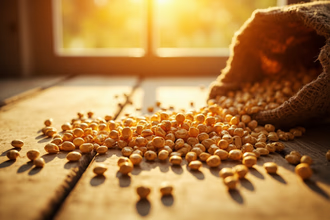
Quality control in animal feed is vital for livestock health and productivity. Poor feed quality can lead to health problems, reduced growth rates, and decreased production efficiency. Implementing effective feed quality control measures helps to ensure that animals receive the nutrients they need for optimal health and performance.
This guide explores feed quality control, including its importance, testing methods, and impact on animal health. It also provides information on finding reliable feed suppliers to help you provide the best nutrition for your livestock.
Key Takeaways
- Feed quality directly impacts livestock health and productivity; poor quality can lead to disease susceptibility, reduced growth, and decreased production efficiency.
- Common feed contaminants like mycotoxins and bacteria can cause significant health problems in livestock, leading to economic losses due to decreased productivity and increased veterinary costs.
- Feed quality testing methods, including laboratory analyses and on-site techniques like NIR technology, are essential for assessing safety and nutritional value.
- NIR technology offers rapid, non-destructive feed analysis, enabling real-time quality control and quick adjustments to feed formulations.
- Selecting reliable feed suppliers with certifications (e.g., ISO 22000, GMP), traceability systems, and strong quality control processes is crucial.
- Assessing supplier reputation through customer reviews, industry ratings, and site visits helps ensure consistent feed quality and service.
- Prioritizing feed quality control is an investment that leads to healthier animals, improved productivity, and long-term profitability for livestock operations.
Table of Contents
- Introduction to Feed Quality Control
- Why Feed Quality Matters: Impacts on Animal Health and Productivity
- Feed Quality Testing Methods: Making Sure of Safety and Nutritional Value
- Finding Reliable Feed Suppliers: What to Look For
- Conclusion: Prioritizing Feed Quality for a Healthy and Productive Future
- Frequently Asked Questions
Introduction to Feed Quality Control

The health and productivity of livestock are directly linked to the quality of their feed. Poor feed quality can lead to reduced growth rates, increased susceptibility to disease, and decreased production efficiency. That's why effective feed quality control is so important. Feed quality control refers to the systematic processes and procedures used to assess and maintain the nutritional value and safety of animal feed. It is a critical aspect of livestock management, making sure that animals receive the nutrients they need to thrive.
This article will cover several key areas related to feed quality control. It will address the importance of feed quality, common testing methods, the impact of feed on animal health, and how to identify reliable feed suppliers. Foss Analytics provides innovative testing solutions to support feed quality control, helping producers make sure the best nutrition for their livestock.
Why Feed Quality Matters: Impacts on Animal Health and Productivity
There is a direct relationship between the quality of animal feed and the health of the animals consuming it. When feed quality is poor, animals can experience a range of health issues, which, in turn, affects their growth and productivity. Poor nutrition weakens the animal's immune system, making them more susceptible to diseases. Also, it can lead to reduced growth rates in young animals and decreased production in mature animals (such as lower milk production in dairy cows or reduced egg laying in hens).
Common feed contaminants, such as mycotoxins and bacteria, can have devastating effects on livestock. Mycotoxins, produced by molds, can cause liver damage, immune suppression, and even death in animals. Different types of livestock react differently to these contaminants. For example, swine are particularly sensitive to mycotoxins like DON (Deoxynivalenol), which can reduce feed intake and growth. Similarly, aflatoxins can significantly impact poultry, leading to decreased egg production and liver damage [cite: i]. Bacteria like Salmonella in feed can cause infections in animals, leading to gastrointestinal problems and potential spread to humans through the food chain [cite: j].
The economic impact of poor feed quality is substantial. Studies have shown that mycotoxin contamination alone can cost the livestock industry billions of dollars annually due to decreased productivity, increased veterinary costs, and losses from animal mortality [cite: k]. Taking action to control feed quality is important to lessen these risks and protect the health and profitability of livestock operations.
Health Problems from Poor Feed Quality
Poor feed quality can trigger a cascade of health problems in livestock. Digestive disorders are common, as contaminated or poorly formulated feed can disrupt the gut microbiome, leading to issues like diarrhea, bloating, and reduced nutrient absorption. Also, exposure to toxins in feed can suppress the immune system, making animals more vulnerable to infectious diseases.
Mycotoxins, for instance, are known to cause a variety of health issues depending on the type of mycotoxin and the animal species affected. Aflatoxins can lead to liver damage and increased cancer risk, while fumonisins can cause neurological problems in horses and pulmonary edema in swine [cite: i]. Salmonella contamination can result in salmonellosis, a bacterial infection that causes fever, diarrhea, and even death in severe cases [cite: j].
Data indicates that mycotoxin contamination affects a significant portion of global feed production, with some studies suggesting that over 25% of feed samples contain detectable levels of mycotoxins [cite: k]. The presence of these health problems underscores the importance of consistent feed quality control measures to protect animal health and welfare.
Impact on Growth and Productivity
Inadequate or contaminated feed has a direct, negative impact on animal growth rates and overall productivity. When animals don't receive the necessary nutrients or consume harmful substances, their ability to grow and produce is compromised. This results in significant economic consequences for livestock operations.
For meat animals, reduced weight gain translates directly into lower market value and longer time to market. Studies have shown that mycotoxin contamination can reduce average daily gain in beef cattle by as much as 10-15% [cite: i]. In dairy cows, poor feed quality can lead to decreased milk production. For example, aflatoxin B1 contamination can reduce milk yield by 0.5 to 1 liter per cow per day [cite: j]. Similarly, in poultry, contaminated feed can result in lower egg production rates and reduced egg weight. Research indicates that hens fed with mycotoxin-contaminated feed can experience a 5-10% decrease in egg production [cite: k].
Consistent feed quality control is important for optimizing growth and productivity. By making sure that feed is free from contaminants and contains the appropriate nutrients, producers can maximize the genetic potential of their animals and achieve better economic returns.
Economic Costs of Poor Feed Quality
The financial losses linked to poor feed quality extend beyond just reduced animal productivity. Veterinary expenses, reduced yields, and the potential for product recalls all contribute to the economic burden on livestock operations. The cumulative effect can be substantial, affecting profitability and sustainability.
Livestock operations experiencing issues related to poor feed quality often face increased veterinary costs due to treating sick animals. Reduced yields, whether in the form of decreased milk production, lower egg output, or reduced weight gain, directly impact revenue. Also, contaminated feed can lead to product recalls, resulting in significant financial losses and damage to a company's reputation. For example, a case study of a dairy farm revealed that mycotoxin contamination in feed led to a 20% decrease in milk production and a significant increase in veterinary bills, resulting in an estimated loss of $50,000 over a six-month period [cite: i].
Investing in feed quality control can lead to significant cost savings in the long run. By preventing health problems and optimizing productivity, producers can avoid costly treatments, reduce losses from decreased yields, and minimize the risk of product recalls. The initial investment in testing and quality control measures is often offset by the long-term economic benefits.
Feed Quality Testing Methods: Making Sure of Safety and Nutritional Value

Various methods are available to test feed quality, each designed to assess different aspects of safety and nutritional content. These methods range from comprehensive laboratory analyses to rapid on-site testing techniques. Together, they provide a complete picture of feed quality, allowing producers to make informed decisions.
Types of tests performed include:
- Nutrient Analysis: Determines the levels of key nutrients such as protein, fiber, fat, and carbohydrates.
- Contaminant Detection: Identifies the presence of harmful substances like mycotoxins, pesticides, and heavy metals.
- Digestibility: Measures how well animals can digest and absorb the nutrients in the feed.
NIR (Near-Infrared) technology has become a valuable tool for rapid feed analysis. NIR spectroscopy can quickly and accurately determine the composition of feed samples, providing results in a matter of minutes. This allows for real-time feed quality control, enabling producers to make immediate adjustments to feed formulations as needed.
Foss Analytics offers a range of solutions for feed analysis, including NIR instruments and software. These tools provide accurate and efficient testing, helping producers maintain high standards of feed quality. Visuals of testing equipment could be included here to illustrate the process.
Laboratory Testing Methods
Laboratory testing methods are a cornerstone of feed quality analysis, providing detailed and accurate information about the composition and safety of animal feed. These methods involve a systematic process of sample collection, preparation, and analysis to make sure of comprehensive feed quality control.
The process typically begins with sample collection, where representative samples are taken from different batches or locations to make sure of an accurate representation of the entire feed lot. Proper sampling techniques are critical to avoid bias and make sure of the reliability of the results. Once collected, samples undergo preparation, which may involve grinding, drying, or other treatments to prepare them for analysis.
Specific tests commonly performed in the laboratory include:
- Proximate Analysis: This includes determining the levels of crude protein, fat, fiber, and moisture in the feed. These parameters provide a basic idea of the nutritional composition of the feed.
- Mineral Analysis: This involves measuring the levels of minerals such as calcium, phosphorus, and trace elements. Mineral analysis is important to make sure that the feed meets the nutritional requirements of the animals.
- Mycotoxin Detection: This involves using techniques like ELISA (Enzyme-Linked Immunosorbent Assay) or HPLC (High-Performance Liquid Chromatography) to detect and quantify the presence of mycotoxins in the feed.
Laboratory testing offers a high degree of accuracy and reliability, making it an indispensable tool for feed quality control. The comprehensive data obtained through laboratory analysis enables producers to make informed decisions about feed formulation and management.
On-Site Testing Techniques
On-site testing techniques offer a convenient and rapid way to assess feed quality directly at the point of production or storage. While they may not provide the same level of detail as laboratory analysis, they offer valuable advantages for real-time monitoring and quick decision-making.
Portable testing devices are available for a variety of applications, including:
- Moisture Content: Handheld moisture meters can quickly determine the moisture level in feed, which is critical for preventing mold growth and spoilage.
- pH: Portable pH meters can measure the acidity or alkalinity of feed, which can affect nutrient availability and palatability.
- Basic Nutrient Levels: Some portable devices use near-infrared (NIR) technology to estimate the levels of protein, fiber, and other basic nutrients.
On-site testing can complement laboratory analysis by providing a quick initial assessment of feed quality. If on-site tests reveal potential problems, samples can then be sent to a laboratory for more comprehensive analysis. This combined approach enables producers to respond quickly to quality issues while still maintaining a high level of accuracy in their feed quality control program.
The Role of NIR Technology
Near-Infrared (NIR) spectroscopy is a useful tool for feed analysis, offering a rapid, non-destructive, and cost-effective method for feed quality control. NIR technology is based on the principle that different molecules absorb near-infrared light at specific wavelengths. By measuring the absorption patterns of a feed sample, NIR spectroscopy can determine its composition and quality.
The benefits of NIR technology include:
- Rapid Analysis: NIR can analyze a sample in a matter of seconds, providing results much faster than traditional laboratory methods.
- Non-Destructive: NIR does not damage the sample, allowing it to be used for further analysis if needed.
- Cost-Effective: NIR reduces the need for expensive chemicals and labor, making it a cost-effective solution for feed analysis.
NIR can be used to analyze multiple parameters simultaneously, including moisture, protein, fiber, fat, and other nutrients. This makes it a versatile tool for assessing the overall quality of feed. Foss Analytics' NIR solutions provide accurate and efficient feed analysis, helping producers optimize feed formulations and improve animal performance.
Finding Reliable Feed Suppliers: What to Look For
Selecting reliable feed suppliers is a critical step in maintaining high feed quality and animal health. A trustworthy supplier will have strong quality control processes in place and be able to provide assurances of the safety and nutritional value of their products. Here's what to look for when choosing a feed supplier:
- Certifications and Quality Assurance Programs: Look for suppliers that have certifications such as ISO 22000 or GMP (Good Manufacturing Practice). These certifications indicate that the supplier follows recognized standards for food safety and quality management.
- Traceability: A reliable supplier should be able to trace the origin of their ingredients and provide information about the manufacturing process. This helps ensure accountability and allows for quick identification of potential problems.
Key questions to ask potential suppliers about their feed quality control processes:
- What quality control measures do you have in place?
- Do you regularly test your feed for contaminants like mycotoxins and bacteria?
- Can you provide documentation of your testing results?
- What is your process for handling customer complaints or quality issues?
Assessing supplier reputation and customer reviews can provide valuable insights into their reliability and service quality. Check online reviews, ask for references, and consider visiting their facilities to assess their operations firsthand. Contracts and agreements play a key role in making sure of consistent feed quality. A well-drafted contract should specify quality standards, testing requirements, and procedures for addressing quality issues. This provides a legal framework for holding suppliers accountable and making sure that they meet your expectations.
Certifications and Quality Assurance
Certifications play a vital role in the feed industry, providing assurance that suppliers adhere to established quality and safety standards. Certifications like ISO 22000, GMP+ (Good Manufacturing Practice Plus), and others demonstrate a supplier's commitment to feed quality control protocols.
- ISO 22000: This international standard specifies the requirements for a food safety management system. It covers all aspects of the food chain, from feed production to animal consumption, making sure that potential hazards are identified and controlled.
- GMP+: This certification focuses specifically on feed safety and quality. It includes requirements for hazard analysis, risk assessment, and control measures to prevent contamination and ensure the safety of feed products.
To verify the validity of supplier certifications, check the certification body's website or database to confirm that the certification is current and in good standing. Also, ask the supplier for copies of their certification documents and review them carefully.
Internal quality assurance programs are also important for maintaining consistent feed quality. These programs involve regular testing, monitoring, and auditing of feed production processes to identify and address potential quality issues. A supplier with a strong internal quality assurance program is more likely to provide consistent, high-quality feed.
Assessing Supplier Reputation
Evaluating a feed supplier's reputation is important to ensure they can consistently deliver high-quality feed. A supplier's reputation reflects their reliability, commitment to quality, and overall business practices. Here are some practical tips for assessing a supplier's reputation:
- Research Customer Reviews and Testimonials: Look for online reviews and testimonials from other customers. These can provide valuable insights into the supplier's service quality, product consistency, and responsiveness to customer concerns.
- Check Industry Ratings: See if the supplier has any industry ratings or awards. These can indicate their standing within the feed industry and their commitment to excellence.
- Check for Regulatory Violations or Product Recalls: Search for any history of regulatory violations or product recalls. This information can indicate potential problems with their quality control processes or product safety.
Conducting site visits to assess supplier facilities and processes can provide firsthand information about their operations. During a site visit, pay attention to cleanliness, organization, and adherence to safety protocols. Also, observe the supplier's quality control processes and ask questions about their testing procedures.
Transparency and open communication are important for building trust with suppliers. A supplier who is willing to share information about their processes and answer questions openly is more likely to be committed to feed quality control and customer satisfaction.
Key Questions to Ask Potential Suppliers
When evaluating potential feed suppliers, it is important to ask questions about their feed quality control practices. The answers to these questions can provide valuable insights into their commitment to quality and their ability to provide safe and nutritious feed. Here is a checklist of key questions to ask:
- Sourcing of Ingredients:
- Where do you source your ingredients?
- Do you have a list of approved suppliers?
- How do you make sure of the quality of your ingredients?
- Testing Procedures:
- What testing procedures do you use to make sure of feed quality?
- How often do you test your feed for contaminants?
- Can you provide documentation of your testing results?
- Storage Conditions:
- How do you store your feed to prevent spoilage and contamination?
- What measures do you take to control temperature and humidity in your storage facilities?
- Traceability Systems:
- Do you have a system for tracing the origin of your feed ingredients?
- Can you track a batch of feed from production to delivery?
When interpreting supplier responses, look for clear, concise answers that demonstrate a thorough idea of feed quality control practices. Assess their commitment to quality by evaluating their willingness to provide documentation and answer questions openly. It is also important to document supplier responses for future reference. This documentation can be used to compare different suppliers and track their performance over time.
Conclusion: Prioritizing Feed Quality for a Healthy and Productive Future

Feed quality control is not just a matter of compliance; it is a cornerstone of animal health, productivity, and profitability. Throughout this article, the importance of feed quality has been pointed out, along with practical strategies for testing, selecting reliable suppliers, and implementing effective quality control measures. Taking action to test helps identify potential problems before they impact animal health and productivity, while choosing trustworthy suppliers makes sure of a consistent supply of safe and nutritious feed.
By implementing the strategies discussed in this article, livestock producers can improve their feed quality management practices and achieve better outcomes for their animals and their bottom line. Foss Analytics is a partner in achieving optimal feed quality, offering innovative testing solutions to help producers maintain the highest standards of feed safety and nutrition.
Frequently Asked Questions
- What are the key factors to consider when selecting a feed supplier?
- When selecting a feed supplier, consider factors such as the supplier's reputation, quality assurance measures, and certifications. It's important to assess their sourcing practices, ingredient transparency, and whether they conduct regular testing for contaminants. Additionally, evaluate their customer service, delivery reliability, and pricing structures. Engaging with other producers for recommendations and checking for industry reviews can also provide valuable insights.
- How often should feed quality testing be conducted?
- Feed quality testing should ideally be conducted regularly, depending on the type of feed and the scale of your operation. For critical feeds, such as those for young or lactating animals, testing may be necessary every batch or at least monthly. For bulk feed, quarterly testing might suffice. Consistent testing helps detect any nutritional deficiencies or contaminants and ensures that the feed remains safe and effective for animal health.
- What common contaminants should be tested for in animal feed?
- Common contaminants in animal feed include mycotoxins, pathogens (such as Salmonella and E. coli), heavy metals (like lead and mercury), and pesticides. Additionally, testing for nutrient imbalances, such as excess protein or insufficient vitamins and minerals, is crucial. Regular testing for these contaminants can help prevent health issues in livestock and ensure optimal productivity.
- How does feed quality impact animal productivity and health?
- Feed quality directly affects animal health and productivity by influencing growth rates, reproductive performance, and overall well-being. High-quality feed ensures that animals receive the necessary nutrients for optimal growth and development, reducing the risk of diseases and improving feed efficiency. Conversely, poor-quality feed can lead to nutritional deficiencies, increased susceptibility to illness, and lower productivity, ultimately affecting the profitability of livestock operations.
- What are some best practices for maintaining feed quality during storage?
- To maintain feed quality during storage, follow best practices such as keeping feed in a cool, dry place to prevent mold growth and spoilage. Use airtight containers to reduce exposure to moisture and pests. Regularly inspect stored feed for signs of contamination or spoilage and rotate stock to use older feed first. Additionally, ensure that storage facilities are clean and well-maintained to minimize the risk of contamination.