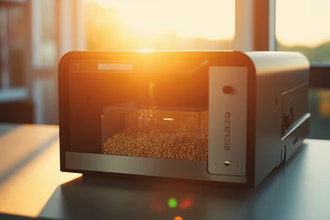

Quality control is vital in animal feed production. The right feed quality control equipment helps maintain nutritional standards and animal health. Investing in proper testing and analysis tools ensures that feed meets required specifications, contributing to healthier livestock and better yields.
This article explores key feed quality control equipment. It will cover different types of equipment and their roles in maintaining optimal animal nutrition. Knowing about these tools can help producers make informed decisions and improve feed quality.
Key Takeaways
- Feed quality control is essential for animal health, performance, and economic stability for producers.
- NIR analyzers offer rapid and accurate assessment of feed composition, including protein, fiber, fat, and moisture levels.
- Moisture meters are crucial for preventing mold growth and nutrient degradation by accurately measuring moisture content in feed.
- Mycotoxin testing equipment, such as ELISA, lateral flow assays, and HPLC, is vital for detecting and quantifying toxic compounds in feed, ensuring animal safety.
- Choosing the right feed quality control equipment depends on factors like budget, required accuracy, sample volume, and specific needs of the operation.
- Investing in feed quality control leads to improved animal welfare, better product quality, and a more sustainable and profitable operation.
- Regular calibration and maintenance of feed quality control equipment are necessary to ensure accurate and reliable results.
Table of Contents
Introduction to Feed Quality Control

Feed quality control is critical for maintaining animal nutrition and health. Poor feed quality can lead to reduced animal performance, increased susceptibility to diseases, and economic losses for producers. Selecting the appropriate feed quality control equipment is critical for identifying and mitigating potential issues before they impact livestock.
A variety of feed quality control equipment is available, each designed to assess different aspects of feed composition and safety. These tools range from basic visual inspection aids to sophisticated laboratory instruments. Choosing the right equipment depends on the specific needs and resources of the operation.
This article will explore some of the top feed quality control equipment options available for optimal feed quality. By investing in the right tools, producers can safeguard animal health, improve production efficiency, and maximize profitability. This is in line with fossanalytics.com's mission of providing solutions for optimal animal nutrition.
NIR Analyzers for Rapid Feed Analysis
NIR (Near-Infrared) analyzers are valuable feed quality control equipment used to assess the composition of animal feed. These instruments use near-infrared light to measure the absorption and reflectance properties of a feed sample. By analyzing these properties, NIR analyzers can quickly determine the levels of key components such as protein, fiber, fat, and moisture.
NIR analysis offers several benefits. It is a rapid method, providing results in a matter of seconds or minutes, compared to traditional wet chemistry methods that can take hours or even days. The accuracy of NIR analysis is also high, providing reliable data for feed formulation and quality control. Also, NIR analysis is non-destructive, meaning the sample remains intact and can be used for further testing if needed.
Different types of NIR analyzers are available to suit various feed types and analysis needs. Portable NIR devices are suitable for on-site analysis in feed mills or farms, while benchtop models offer higher precision and are typically used in laboratories. Examples of NIR analyzer models include the FOSS NIRS™ DS2500 and the Bruker MPA II, both known for their accuracy and versatility.
By providing rapid and accurate information on feed composition, NIR technology helps ensure consistent feed quality and nutritional content. This leads to efficiency gains and cost savings by allowing for real-time adjustments to feed formulations, minimizing waste, and optimizing animal performance.
How NIR Analyzers Work: A Technical Overview
Near-Infrared (NIR) spectroscopy is based on the principle that molecules absorb electromagnetic radiation in the near-infrared region of the spectrum (typically 780 nm to 2500 nm). When NIR light interacts with a feed sample, certain wavelengths are absorbed by the molecules present, while others are reflected or transmitted. The specific wavelengths absorbed depend on the vibrational modes of the molecular bonds within the sample, such as C-H, N-H, and O-H bonds, which are characteristic of proteins, fats, and carbohydrates.
NIR analyzers direct a beam of near-infrared light onto the feed sample. The reflected or transmitted light is then collected by a detector. The detector measures the intensity of light at each wavelength, creating a spectrum that represents the sample's unique absorption pattern. This spectrum is then compared to calibration models developed using reference methods (e.g., wet chemistry) on a set of samples with known compositions.
These calibration models are mathematical relationships that correlate the NIR spectrum to the concentration of specific nutrients. Sophisticated algorithms, such as partial least squares (PLS) regression, are often used to build these models. Once a calibration model is established, the NIR analyzer can rapidly predict the nutrient composition of unknown samples based on their NIR spectra.
In the context of feed quality control equipment, NIR analyzers provide a fast and reliable way to assess nutrient content without the need for extensive sample preparation or chemical reagents. This technical capability translates into practical benefits, such as timely adjustments to feed formulations, reduced laboratory costs, and improved animal feeding efficiency.
Types of NIR Analyzers: Benchtop, Portable, and Online
NIR analyzers come in several forms, each designed for specific applications within feed analysis. The main types are benchtop, portable, and online models.
- Benchtop NIR Analyzers: These are laboratory-based instruments that offer high precision and accuracy. They are typically used for comprehensive feed analysis and calibration development.
- Advantages: High accuracy, versatile, suitable for a wide range of feed types.
- Disadvantages: Higher cost, not suitable for on-site analysis.
- Examples: FOSS NIRS™ DS2500, Bruker MPA II.
- Portable NIR Analyzers: These handheld devices are designed for on-site analysis in feed mills, farms, or storage facilities. They offer rapid results and convenience but may have slightly lower accuracy than benchtop models.
- Advantages: Portable, easy to use, provides rapid results in the field.
- Disadvantages: Lower accuracy compared to benchtop models, limited analytical capabilities.
- Examples: Perten DA7250, Thermo Scientific microNIR.
- Online NIR Analyzers: These are installed directly in the feed production line to continuously monitor feed composition in real-time. They provide immediate feedback for process control and quality assurance.
- Advantages: Real-time monitoring, automated analysis, improved process control.
- Disadvantages: High initial investment, requires integration with production line.
- Examples: NDC Technologies InfraLab, Bran+Luebbe Quatro.
Choosing the right type of feed quality control equipment depends on the specific needs. If high accuracy and versatility are required, a benchtop analyzer is the best choice. For rapid on-site analysis, a portable analyzer is more suitable. If continuous monitoring and process control are needed, an online analyzer is the most effective solution.
Benefits of NIR Analysis in Feed Quality Control
NIR analysis offers several tangible benefits for feed quality control, translating to significant improvements in operational efficiency and profitability.
- Speed: NIR analyzers can provide results in seconds, compared to traditional wet chemistry methods that can take hours or days. This rapid turnaround allows for quick decision-making and adjustments to feed formulations. Accuracy: Modern NIR analyzers offer high accuracy, providing reliable data for nutrient analysis. This accuracy ensures that feed formulations meet the required nutritional standards for optimal animal performance.Cost Savings: By reducing the need for labor-intensive wet chemistry methods, NIR analysis can significantly lower laboratory costs. The non-destructive nature of NIR also reduces sample waste.Improved Decision-Making: The real-time data provided by NIR analyzers enables feed producers to make informed decisions about ingredient selection, formulation adjustments, and process control. This leads to more consistent feed quality and improved animal performance.
For example, a feed mill using NIR analysis was able to reduce its protein variability by 30%, resulting in more consistent animal growth rates and reduced feed costs. Another producer implemented NIR to monitor incoming raw materials, rejecting substandard ingredients before they entered the production process, preventing costly recalls and maintaining product quality.
Investing in NIR feed quality control equipment offers a strong return on investment (ROI) through reduced costs, improved efficiency, and better product quality. The ability to rapidly and accurately assess feed composition allows producers to optimize their operations and maximize profitability.
Moisture Meters for Accurate Feed Moisture Measurement

Moisture control is a critical aspect of animal feed production. Improper moisture levels can lead to a range of problems, including mold growth, nutrient degradation, and reduced feed palatability. Excess moisture promotes the growth of harmful microorganisms, while insufficient moisture can cause feed to become dusty and unpalatable, leading to reduced animal intake.
Moisture meters are feed quality control equipment used to measure the moisture content of feed samples. These devices work by measuring the electrical conductivity, capacitance, or resistance of the feed material. Different types of moisture meters are available, including handheld, portable, and online models.
- Handheld Moisture Meters: These are portable devices that provide quick spot checks of moisture levels in feed ingredients or finished feed.
- Online Moisture Meters: These are installed directly in the feed production line for continuous monitoring of moisture content during processing.
When selecting a moisture meter for feed quality control, several features are important. Accuracy is paramount, as even small variations in moisture content can impact feed quality. Ease of use is also important, as the meter should be simple to operate and provide clear readings. Durability is key for meters used in harsh environments.
Examples of moisture meter models include the DICKEY-john MiniGAC plus and the Kett Electric Moisture Meter. These meters offer accurate and reliable moisture measurements for a variety of feed types.
Accurate moisture measurement contributes to consistent feed quality by preventing spoilage and making sure that feed meets the required moisture specifications. This prevents waste and spoilage, leading to significant cost savings for feed producers. Properly managed moisture levels also help maintain the nutritional integrity of the feed, supporting optimal animal health and performance.
Why Moisture Matters: The Impact of Incorrect Levels
Maintaining proper moisture levels in animal feed is critical for preserving its quality and supporting animal health. Both excessive and insufficient moisture can lead to significant problems.
- Excessive Moisture: High moisture levels create an environment conducive to mold and bacterial growth. Mold produces mycotoxins, which are toxic compounds that can cause a range of health issues in animals, including reduced immunity, organ damage, and even death. High moisture also accelerates nutrient degradation, particularly of vitamins and enzymes, reducing the nutritional value of the feed. Also, excessive moisture can cause feed to clump and spoil, making it unpalatable and difficult to handle. Insufficient Moisture: Low moisture levels can result in dusty feed, which is unpalatable to animals and can cause respiratory problems. Dry feed is also more prone to segregation, where different particle sizes separate, leading to inconsistent nutrient delivery. In addition, very dry feed can be difficult to pellet or compact, increasing handling and storage costs.
For example, a study found that corn stored at 18% moisture had a 50% higher risk of mold contamination compared to corn stored at 14% moisture. Another study showed that dry feed with a moisture content below 10% resulted in a 15% reduction in feed intake by cattle.
Accurate moisture measurement, using appropriate feed quality control equipment, is therefore vital for preventing these problems and maintaining the quality and safety of animal feed. By monitoring and controlling moisture levels, producers can minimize spoilage, preserve nutrient content, and make sure of optimal animal health and performance.
```Types of Moisture Meters: Handheld vs. Online Systems
Moisture meters are key feed quality control equipment, and they come in two primary types: handheld and online systems. Each type offers distinct advantages and disadvantages, making them suitable for different applications and scales of operation.
- Handheld Moisture Meters: These are portable, battery-operated devices designed for on-the-spot moisture measurements.
- Advantages:
- Portability: Can be easily carried and used in various locations, such as fields, storage facilities, and feed mills.
- Convenience: Simple to operate and provide quick readings, making them ideal for rapid assessments.
- Cost-Effective: Generally less expensive than online systems, making them accessible to smaller operations.
- Disadvantages:
- Lower Accuracy: May have slightly lower accuracy compared to online systems due to variations in sampling and environmental conditions.
- Manual Operation: Requires manual sampling and measurement, which can be time-consuming for large-scale operations.
- Limited Integration: Cannot be directly integrated into production processes for real-time monitoring and control.
- Examples: DICKEY-john MiniGAC plus, Kett Electric Moisture Meter.
- Ideal Applications: Small to medium-sized farms, feed stores, and quality control checks of incoming ingredients.
- Advantages:
- Online Moisture Meters: These are installed directly into the feed production line to continuously monitor moisture levels in real-time.
- Advantages:
- High Accuracy: Provide precise and consistent moisture measurements due to controlled sampling and measurement conditions.
- Real-Time Monitoring: Enable continuous monitoring of moisture levels throughout the production process, allowing for immediate adjustments.
- Automated Control: Can be integrated with automated control systems to maintain optimal moisture levels and prevent spoilage.
- Disadvantages:
- Higher Cost: More expensive than handheld meters, requiring a significant initial investment.
- Complex Installation: Requires professional installation and integration with the production line.
- Limited Portability: Cannot be easily moved or used in different locations.
- Examples: NDC Technologies InfraLab, MoistTech IR-3000.
- Ideal Applications: Large-scale feed mills, processing plants, and operations requiring continuous moisture monitoring and control.
- Advantages:
The choice between handheld and online moisture meters depends on the specific needs and scale of operation. Handheld meters are suitable for smaller operations requiring portability and cost-effectiveness, while online systems are ideal for larger facilities needing high accuracy, real-time monitoring, and automated control.
```Key Features to Look for in a Feed Moisture Meter
Selecting the right moisture meter is critical for effective feed quality control. Several key features should be considered to make sure of accurate and reliable moisture measurements.
- Accuracy: The most important feature is the meter's ability to provide accurate moisture readings. Look for meters with a specified accuracy range (e.g., ±0.5%) and calibration options to maintain accuracy over time. Accurate measurements are vital for preventing spoilage and consistent feed quality.
- Resolution: Resolution refers to the smallest increment that the meter can display (e.g., 0.1%). A higher resolution allows for more precise measurements, which can be important for certain feed types or critical applications.
- Measurement Range: The meter should have a measurement range that covers the expected moisture levels in the feed materials being analyzed. Consider the typical moisture content of different feed ingredients and finished feeds when selecting a meter.
- Ease of Calibration: Regular calibration is necessary to maintain the accuracy of the moisture meter. Look for meters with simple and straightforward calibration procedures. Some meters offer automatic calibration features, which can save time and reduce the risk of errors.
- Durability: Feed mills and farms can be harsh environments, so the moisture meter should be durable and able to withstand dust, moisture, and temperature variations. Look for meters with rugged housings and sealed components.
- Data Logging Capabilities: Some moisture meters offer data logging capabilities, allowing you to store and track moisture measurements over time. This can be useful for monitoring trends, identifying potential problems, and documenting compliance with quality control standards.
For example, a moisture meter with data logging can help track moisture levels in stored grain over time, alerting you to potential spoilage issues before they become serious. A meter with a wide measurement range can be used to analyze both dry ingredients and high-moisture silage.
By considering these key features, you can make an informed decision when choosing feed quality control equipment for moisture analysis, making sure of accurate and reliable measurements that support optimal feed quality and animal health.
Mycotoxin Testing Equipment for Feed Safety
Mycotoxins are toxic compounds produced by molds that can contaminate animal feed. These toxins pose a significant threat to animal health, reducing performance, causing illness, and even leading to death. Mycotoxin contamination can result in substantial economic losses for feed producers and livestock farmers.
Regular mycotoxin testing is critical for identifying and mitigating the risks associated with these contaminants. A variety of mycotoxin testing methods and equipment are available, each with its own advantages and disadvantages.
- ELISA Tests (Enzyme-Linked Immunosorbent Assay): These tests are relatively quick and easy to use, making them suitable for on-site screening. ELISA tests are cost-effective but may have lower accuracy compared to more sophisticated methods.
- Lateral Flow Assays (LFAs): These are rapid, portable tests that provide results in minutes. LFAs are simple to use and require minimal training, but their accuracy may be limited, and they are typically used for qualitative or semi-quantitative analysis.
- HPLC Systems (High-Performance Liquid Chromatography): HPLC is a highly accurate and sensitive method for mycotoxin analysis. HPLC systems are more expensive and require skilled technicians, but they provide precise quantification of multiple mycotoxins simultaneously.
Examples of mycotoxin testing equipment include the Romer Labs AgraQuant ELISA kits, the Charm Sciences ROSA lateral flow strips, and the Waters ACQUITY UPLC system. These tools are used to detect and quantify various mycotoxins, such as aflatoxins, DON, fumonisins, and zearalenone.
As feed quality control equipment, mycotoxin testing plays a vital role in feed safety. By regularly testing feed ingredients and finished feed for mycotoxins, producers can identify contaminated batches and take corrective actions to protect animal health. This forward-thinking approach prevents health issues, reduces veterinary costs, and minimizes economic losses associated with reduced animal performance and mortality.
Mycotoxins: Types and Risks
Mycotoxins are a diverse group of toxic compounds produced by various molds that can contaminate animal feed, posing significant health risks to livestock. Different types of mycotoxins have varying effects on animal health, depending on the species, age, and exposure level. Knowing these risks is critical for implementing effective feed quality control measures.
- Aflatoxins: Produced by Aspergillus species, aflatoxins are among the most potent mycotoxins. They primarily affect the liver and immune system. In poultry, aflatoxins can cause reduced growth rates, decreased egg production, and increased susceptibility to diseases. In swine, aflatoxins can lead to liver damage, reduced feed efficiency, and reproductive problems. Dairy cattle are also susceptible, with aflatoxins being excreted in milk as aflatoxin M1, posing a risk to human health.
- Deoxynivalenol (DON): Also known as vomitoxin, DON is produced by Fusarium species. It primarily affects the gastrointestinal tract, causing feed refusal, vomiting, and reduced weight gain, particularly in swine. Poultry are relatively resistant to DON, but high levels can still cause reduced feed intake.
- Zearalenone: Also produced by Fusarium species, zearalenone has estrogenic effects, primarily affecting the reproductive system. In swine, zearalenone can cause hyperestrogenism, leading to reproductive disorders such as vulvovaginitis and reduced fertility. Dairy cattle can also experience reproductive problems, and poultry may exhibit reduced egg production.
- Fumonisins: Produced by Fusarium species, fumonisins primarily affect the nervous system and liver. In swine, fumonisins can cause porcine pulmonary edema (PPE), a life-threatening respiratory disease. Horses are also highly susceptible, with fumonisins causing equine leukoencephalomalacia (ELEM), a neurological disorder. Poultry are relatively resistant, but high levels can still cause liver damage.
The specific health risks associated with each mycotoxin highlight the importance of investing in feed quality control equipment for mycotoxin detection. By accurately identifying and quantifying mycotoxins in feed, producers can take appropriate measures to protect animal health, prevent economic losses, and make sure of the safety of the food supply.
Mycotoxin Testing Methods: ELISA, Lateral Flow, and HPLC
Several methods are available for mycotoxin testing, each with its own strengths and weaknesses. The three main methods are ELISA (Enzyme-Linked Immunosorbent Assay), lateral flow assays, and HPLC (High-Performance Liquid Chromatography).
- ELISA (Enzyme-Linked Immunosorbent Assay):
- Principle: ELISA is an antibody-based method that detects and quantifies mycotoxins based on their specific binding to antibodies. The sample is mixed with an antibody specific to the target mycotoxin. If the mycotoxin is present, it will bind to the antibody. An enzyme-linked secondary antibody is then added, which binds to the mycotoxin-antibody complex. A substrate is added, and the enzyme converts it into a colored product. The intensity of the color is proportional to the concentration of the mycotoxin.
- Advantages: Relatively quick, easy to use, cost-effective, suitable for high-throughput screening.
- Disadvantages: Lower accuracy compared to HPLC, potential for cross-reactivity with other compounds, requires specialized equipment (microplate reader).
- Ideal Applications: Screening large numbers of samples, on-site testing, preliminary assessment of mycotoxin contamination.
- Lateral Flow Assays (LFAs):
- Principle: LFAs are immunochromatographic assays that use antibodies to detect mycotoxins. The sample is applied to a test strip containing antibodies specific to the target mycotoxin. If the mycotoxin is present, it will bind to the antibodies and migrate along the strip. A colored line appears on the strip, indicating the presence of the mycotoxin.
- Advantages: Rapid, portable, simple to use, requires minimal training, no specialized equipment needed.
- Disadvantages: Lower sensitivity and accuracy compared to ELISA and HPLC, typically used for qualitative or semi-quantitative analysis, limited to single mycotoxin detection per strip.
- Ideal Applications: Rapid on-site screening, qualitative assessment of mycotoxin contamination, quick confirmation of positive results.
- HPLC (High-Performance Liquid Chromatography):
- Principle: HPLC is a chromatographic technique that separates, identifies, and quantifies mycotoxins based on their physical and chemical properties. The sample is injected into a column filled with a stationary phase. A mobile phase (liquid solvent) carries the sample through the column. Different mycotoxins interact differently with the stationary phase, causing them to separate. A detector measures the concentration of each mycotoxin as it elutes from the column.
- Advantages: High accuracy and sensitivity, capable of quantifying multiple mycotoxins simultaneously, can be used for confirmatory analysis.
- Disadvantages: More expensive, requires skilled technicians, time-consuming sample preparation, specialized equipment needed (HPLC system with appropriate detectors).
- Ideal Applications: Confirmatory analysis, quantification of multiple mycotoxins, research and regulatory purposes, accurate determination of mycotoxin levels for risk assessment.
The choice of mycotoxin testing method and associated feed quality control equipment depends on the specific needs and resources. LFAs are suitable for rapid on-site screening, ELISA is appropriate for high-throughput screening, and HPLC is recommended for confirmatory analysis and accurate quantification of multiple mycotoxins.
Choosing the Right Mycotoxin Testing Equipment
Selecting the appropriate mycotoxin testing equipment requires careful consideration of several factors. The best choice depends on the specific needs, resources, and goals of the feed producer or testing laboratory.
- Type of Mycotoxins: Different testing methods are more suitable for certain mycotoxins. For example, ELISA and lateral flow assays are commonly used for aflatoxins, DON, and zearalenone, while HPLC is often preferred for fumonisins and more complex mycotoxin profiles.
- Required Sensitivity: The required level of sensitivity depends on regulatory limits and the susceptibility of the target animal species. If very low detection limits are needed, HPLC is generally the best option. ELISA and lateral flow assays may be sufficient for screening purposes when regulatory limits are less stringent.
- Sample Volume: The number of samples being analyzed per day or week will influence the choice of equipment. For high-throughput screening, ELISA is a good option due to its ability to process large numbers of samples quickly. Lateral flow assays are suitable for smaller sample volumes and rapid on-site testing. HPLC is typically used for lower sample volumes requiring accurate quantification.
- Budget: The available budget is a significant consideration. Lateral flow assays are the least expensive option, followed by ELISA. HPLC systems require a substantial initial investment and ongoing maintenance costs.
- Ease of Use: Consider the level of training and expertise required to operate the equipment. Lateral flow assays are the easiest to use, requiring minimal training. ELISA requires some technical skill, while HPLC requires highly trained technicians.
- Maintenance Requirements: Different testing methods have varying maintenance requirements. Lateral flow assays require minimal maintenance, while ELISA and HPLC systems require regular maintenance and calibration.
- Data Management: Consider the data management capabilities of the equipment. ELISA and HPLC systems typically offer software for data analysis and reporting. Lateral flow assays may require manual data recording and interpretation.
Specific Recommendations:
- Small Farms and Feed Stores: Lateral flow assays are a cost-effective and convenient option for rapid on-site screening of common mycotoxins.
- Medium-Sized Feed Mills: ELISA is a good choice for high-throughput screening of incoming ingredients and finished feed.
- Large-Scale Feed Producers and Testing Laboratories: HPLC is recommended for confirmatory analysis, accurate quantification of multiple mycotoxins, and compliance with regulatory requirements.
By carefully considering these factors, feed producers and testing laboratories can select the appropriate feed quality control equipment for mycotoxin testing, making sure of the safety and quality of animal feed.
Conclusion: Investing in Feed Quality Control

Investing in feed quality control equipment is a strategic decision that offers numerous benefits for animal producers. By using the right tools to monitor and manage feed quality, producers can make sure of optimal animal nutrition and health, leading to improved performance, reduced health issues, and increased profitability.
Selecting the appropriate equipment is critical, and it depends on specific needs, budget constraints, and the types of analyses required. Whether it's NIR analyzers for rapid nutrient assessment, moisture meters for preventing spoilage, or mycotoxin testing equipment for feed safety, the right tools can make a significant difference.
The long-term value of investing in feed quality control extends beyond immediate cost savings. It encompasses improved animal welfare, better product quality, and a more sustainable and profitable operation. By prioritizing feed quality, producers can protect their investments and contribute to a healthier and more efficient livestock industry.
Explore the range of feed quality control solutions available to find the equipment that best fits your needs. Contact fossanalytics.com for expert advice and support in selecting and implementing the right solutions for your operation. Together, we can work to achieve optimal animal nutrition and a more sustainable future for livestock production. Discover our feed quality control equipment options today and take the first step to a more profitable and sustainable future.