Key Takeaways
- Feed composition analysis is crucial for animal health, productivity, and informed dietary decisions.
- Proper sampling techniques are essential for accurate feed analysis, ensuring the sample represents the entire feed batch.
- Laboratory analysis methods, including proximate analysis, mineral analysis, and vitamin analysis, provide quantitative data on feed components.
- NIR spectroscopy offers rapid and cost-effective feed analysis, enabling real-time quality control and optimization.
- Interpreting feed analysis results involves understanding key nutritional parameters like protein, energy, fiber, and mineral content.
- Balanced diets are formulated by comparing feed nutrient content to animal requirements, addressing deficiencies or imbalances.
- Consulting with animal nutritionists and utilizing resources like fossanalytics.com can further optimize feed management practices.
Table of Contents
Introduction to Feed Composition Analysis

Analyzing feed composition is vital for animal health and maximizing productivity. Knowing what animals consume enables informed decisions about their diets, leading to better health outcomes and efficient growth.
Feed composition analysis involves determining the nutritional content of animal feed. This includes identifying the levels of key components such as protein, fiber, fat, and moisture. Accurate analysis is a crucial aspect of animal nutrition because it allows for the creation of optimized feed formulations suited to the specific needs of different animal types and life stages.
This article will cover key aspects of feed analysis, starting with proper sampling techniques to get representative samples. It will then explore various laboratory analysis methods used to measure nutrient content. Finally, it will provide guidance on how to interpret the results of these analyses to make informed decisions about feed formulation and animal management.
By implementing accurate feed analysis, producers can formulate diets that meet the precise nutritional requirements of their animals. This leads to improved animal performance, reduced feed waste, and improved profitability. Companies like fossanalytics.com offer solutions that support feed analysis, helping to assure quality and consistency in animal feed production.
Sampling Techniques for Accurate Feed Analysis
Accurate feed analysis starts with proper sampling techniques. The goal is to collect a representative sample that reflects the overall composition of the feed. Improper sampling can lead to skewed results, resulting in incorrect feed formulations and potentially affecting animal health and productivity.
Sampling Methods Based on Feed Type
Different types of feed require different sampling methods:
- Grains: For bulk grains in storage, use a grain probe to collect samples from multiple locations and depths. Combine these samples to create a composite sample. For bagged grains, sample a sufficient number of bags (e.g., every tenth bag) and combine portions.
- Forages (Hay, Silage): For hay, use a core sampler to take samples from multiple bales. For silage, collect samples from different areas of the silo face during unloading. Ensure that the samples represent the variability within the forage.
- Mixed Feeds: For mixed feeds in bags or bins, take samples from several locations. If the feed is flowing on a conveyor, collect samples at regular intervals.
Importance of Proper Sampling
Proper sampling is crucial because analysis results are only as good as the sample. If the sample does not accurately represent the feed, the analysis will be misleading. For example, if sampling hay and only taking samples from the outer layers of the bales, the results may not reflect the true nutrient content of the entire bale, as the outer layers are subject to weathering.
Sample Size, Handling, and Storage
Collect a sufficient sample size to allow for thorough analysis. A general guideline is to collect at least one pound (approximately 450 grams) of sample. Handle samples carefully to avoid contamination. Use clean containers and equipment. Store samples in a cool, dry place to prevent degradation. For some analyses, freezing the sample may be necessary to preserve its integrity.
Consequences of Incorrect Sampling
Incorrect sampling can have significant consequences. For instance, if a dairy farmer underestimates the protein content of their silage due to poor sampling, they may supplement the diet with too much protein, leading to increased feed costs and potential metabolic issues in the cows. Similarly, overestimating nutrient content can lead to under-supplementation, resulting in reduced animal performance and health problems.
General Sampling Guidelines
Regardless of the type of feed being sampled, some general guidelines should be followed to ensure the accuracy and reliability of the analysis.
- Use Clean Equipment: Always use clean and dry sampling equipment to avoid contamination. Contamination can introduce errors into the analysis, leading to incorrect results.
- Avoid Contamination: Take precautions to prevent contamination from foreign materials, such as dirt, dust, or other feeds. Sample in a clean environment and avoid handling the sample with bare hands.
- Ensure Representative Sample: The sample must be representative of the entire batch of feed. This means taking multiple samples from different locations within the batch and combining them to create a composite sample.
- Proper Mixing and Dividing: Thoroughly mix the collected samples to ensure uniformity. Then, divide the mixed sample using a sample divider or by coning and quartering to obtain a representative subsample for analysis.
- Sample Size Requirements: Collect an adequate sample size to perform all necessary analyses. The required sample size will depend on the specific tests being conducted, but a general guideline is to collect at least one pound (approximately 450 grams) of sample.
- Standardized Sampling Protocols: Follow standardized sampling protocols whenever possible. These protocols provide detailed instructions on how to collect representative samples and minimize errors.
- Clear Labeling and Documentation: Clearly label all samples with the date, time, location, and any other relevant information. Maintain detailed records of the sampling process, including the number of samples taken, the sampling method used, and any observations made during sampling.
Sampling Specific Feed Types
Different feed types require specific sampling approaches to assure representative samples are collected. Here’s a breakdown of techniques for grains, forages, and mixed feeds:
Grains
Sampling grains accurately depends on the storage method:
- Trucks: Use a grain probe at multiple points in the truck bed, making sure to reach different depths. A W-shaped pattern across the top is a good approach.
- Storage Bins: Employ a grain probe to draw samples from various depths and locations. If possible, sample while the bin is being filled or emptied for a more representative sample.
- Bags: Select bags randomly (e.g., every tenth bag). Use a probe to sample each selected bag, and combine the samples.
Forages (Hay, Silage)
Forages present unique sampling challenges due to variability:
- Bales: Use a core sampler to take core samples from the ends of multiple bales. The number of bales to sample depends on the lot size, but sampling 10-20% is a good starting point.
- Stacks: Sample at different heights and locations on the stack using a core sampler or by hand. Be cautious of spoilage on the outer layers.
- Silos: Sample during unloading, collecting portions at regular intervals. This helps account for variations throughout the silo. Be aware of potential fermentation byproducts and take safety precautions.
Mixed Feeds
Sampling mixed feeds requires attention to the mixing process:
- Mixing Process: Sample at different points during the mixing process to make sure all ingredients are properly incorporated.
- Finished Feed (Bags or Bins): Use a probe to sample from multiple locations in bags or bins. If the feed is on a conveyor, collect samples at regular intervals as it moves.
Challenges and Considerations:
- Grains: Moisture content can vary, affecting nutrient concentration. Make sure the probe is long enough to reach representative depths.
- Forages: Variability is high, especially in hay. Proper core sampling is crucial. Silage can undergo fermentation, altering its composition over time.
- Mixed Feeds: Ingredient segregation can occur. Make sure thorough mixing and sample from multiple points to account for potential variations.
Sample Handling and Storage
Proper handling and storage of feed samples are critical to maintain their integrity and ensure accurate analysis results. Degradation or contamination of samples can significantly skew the analytical data, leading to incorrect feed formulations and potentially affecting animal health.
- Appropriate Containers: Use clean, dry, and airtight containers to store feed samples. Plastic bags or containers are generally suitable, but ensure they are food-grade and free from any contaminants. For samples that need to be frozen, use freezer-safe containers.
- Temperature Control: Store samples at a temperature that minimizes degradation. Cool temperatures are generally preferred. For some analyses, such as those measuring volatile compounds, freezing the sample may be necessary. Avoid exposure to direct sunlight or heat.
- Storage Duration: Analyze samples as soon as possible after collection to minimize changes in composition. If immediate analysis is not possible, store samples properly and for the shortest duration necessary. Follow the laboratory's guidelines for maximum storage times.
- Protection from Moisture, Light, and Pests: Protect samples from moisture to prevent mold growth and nutrient degradation. Store samples in a dark place to prevent light-induced changes. Keep samples away from pests, such as rodents and insects, which can contaminate or consume the sample.
- Transportation Guidelines: When transporting samples to the laboratory, use insulated containers to maintain temperature control. Pack samples securely to prevent damage during transit. Clearly label each container with the sample name, date, and any other relevant information.
Improper handling and storage can lead to inaccurate analysis results. For example, allowing a feed sample to become wet can promote mold growth, which can alter the nutrient composition and affect the accuracy of mycotoxin analysis. Similarly, exposing a sample to high temperatures can degrade certain vitamins and amino acids, leading to an underestimation of their levels. Always follow recommended handling and storage procedures to ensure the reliability of your feed analysis data.
Laboratory Analysis Methods: A Detailed Overview
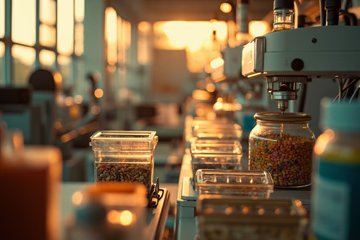
Laboratory analysis methods are key for determining the nutritional composition of animal feed. These methods provide quantitative data on key components, allowing for informed decisions about feed formulation and animal nutrition. Several analytical techniques are used to assess different aspects of feed composition.
Proximate Analysis
Proximate analysis is a fundamental set of procedures used to determine the major components of feed:
- Crude Protein (CP): Determined using the Kjeldahl method, which measures the total nitrogen content and converts it to protein using a nitrogen-to-protein conversion factor.
- Crude Fat (Ether Extract): Measures the fat content by extracting the feed sample with ether.
- Crude Fiber (CF): Determines the fiber content by sequentially digesting the feed sample with dilute acid and alkali.
- Ash: Measures the total mineral content by burning the feed sample at high temperature and weighing the residue.
- Moisture: Determined by drying the feed sample in an oven and measuring the weight loss.
These methods are relatively simple and inexpensive but have limitations. For example, crude fiber does not accurately represent all fiber fractions, and ether extract may include non-nutritive components.
Mineral Analysis
Mineral analysis involves determining the concentration of specific minerals in feed, such as calcium, phosphorus, potassium, and trace minerals. This is typically done using:
- Atomic Absorption Spectrophotometry (AAS): Measures the absorption of light by free atoms in the gaseous state.
- Inductively Coupled Plasma Atomic Emission Spectrometry (ICP-AES): Measures the emission of light by excited atoms in a plasma.
These methods are accurate and sensitive but require specialized equipment and skilled technicians.
Vitamin Analysis
Vitamin analysis is more complex and often involves:
- High-Performance Liquid Chromatography (HPLC): Separates and quantifies individual vitamins based on their physical and chemical properties.
- Microbiological Assays: Measures the growth response of microorganisms to specific vitamins.
Vitamin analysis is crucial because vitamins play vital roles in animal metabolism and health.
Quality Control and Standardization
Quality control and standardization are vital to assure the accuracy and consistency of laboratory analysis. This includes using certified reference materials, regularly calibrating equipment, and participating in proficiency testing programs.
Advanced Analytical Techniques
Advanced techniques like Near-Infrared (NIR) spectroscopy offer rapid and cost-effective feed analysis. NIR uses the absorption of near-infrared light to predict the composition of feed samples. It requires minimal sample preparation and can analyze multiple components simultaneously. Companies like fossanalytics.com provide NIR solutions for rapid and reliable feed analysis, helping to optimize feed formulations and improve animal performance.
Proximate Analysis: Determining Basic Nutritional Components
Proximate analysis is a cornerstone in feed evaluation, providing a basic yet key breakdown of the major nutritional components in a feed sample. It is a set of chemical procedures designed to estimate the content of crude protein, crude fat, crude fiber, ash, and moisture. While it has limitations, it serves as a foundational step in assessing feed quality and nutritional value.
- Crude Protein (CP): This estimates the total protein content in feed. The most common method is the Kjeldahl method, which involves digesting the sample with sulfuric acid, neutralizing the digest, distilling the ammonia, and titrating it. The nitrogen content is then multiplied by a factor (typically 6.25 for most feeds) to estimate the crude protein content.
- Crude Fat (Ether Extract): This measures the total fat content, also known as ether extract. The Soxhlet extraction method is commonly used, where the sample is extracted with ether, a solvent that dissolves fats. The ether is then evaporated, and the remaining residue is weighed to determine the crude fat content.
- Crude Fiber (CF): This estimates the fiber content of the feed. The sample is sequentially digested with dilute acid and alkali solutions. The remaining undigested residue is considered crude fiber. However, this method does not accurately represent all fiber fractions, as some soluble fibers are lost during the process.
- Ash: This represents the total mineral content of the feed. The sample is burned in a furnace at high temperatures (e.g., 550°C) until all organic matter is completely combusted. The remaining inorganic residue is the ash content.
- Moisture: This determines the water content of the feed. The sample is dried in an oven at a specific temperature (e.g., 105°C) until a constant weight is achieved. The weight loss represents the moisture content.
Proximate analysis is important because it provides a quick and relatively inexpensive way to assess the overall nutritional composition of feed. It helps in formulating balanced diets for animals and in evaluating the quality of feed ingredients. However, it has limitations. For example, crude protein does not differentiate between true protein and non-protein nitrogen, and crude fiber does not accurately represent all fiber fractions. Therefore, more advanced techniques, such as amino acid analysis and neutral detergent fiber (NDF) and acid detergent fiber (ADF) analysis, are often needed for a more complete nutritional profile.
Mineral Analysis: Assessing Key Mineral Content
Mineral analysis plays a crucial role in determining the nutritional adequacy of animal feed. Minerals are inorganic elements that are vital for various physiological functions, including bone development, enzyme activity, and immune function. Deficiencies or imbalances in mineral intake can lead to reduced animal performance, health problems, and economic losses. Therefore, accurate mineral analysis is key for formulating diets that meet the specific mineral requirements of animals.
Several methods are used for mineral analysis, including:
- Atomic Absorption Spectroscopy (AAS): AAS is a technique used to measure the concentration of specific minerals in a sample by measuring the absorption of light by free atoms in the gaseous state. The sample is first digested to release the minerals, then aspirated into a flame or graphite furnace. The amount of light absorbed is proportional to the concentration of the mineral in the sample.
- Inductively Coupled Plasma (ICP) Spectroscopy: ICP spectroscopy is a more advanced technique that can measure multiple minerals simultaneously. The sample is introduced into an inductively coupled plasma, which is a high-temperature ionized gas. The atoms in the plasma emit light at specific wavelengths, and the intensity of the emitted light is proportional to the concentration of the mineral in the sample.
Key minerals and their roles in animal nutrition:
- Calcium (Ca): Important for bone and teeth development, muscle contraction, and nerve function.
- Phosphorus (P): Works with calcium in bone development and is involved in energy metabolism.
- Magnesium (Mg): Involved in enzyme activity, muscle function, and nerve transmission.
- Potassium (K): Important for maintaining fluid balance, nerve function, and muscle contraction.
Consequences of mineral deficiencies or imbalances:
- Calcium Deficiency: Can lead to rickets in young animals and osteomalacia in adults.
- Phosphorus Deficiency: Similar to calcium deficiency, can cause bone problems and reduced growth.
- Magnesium Deficiency: Can result in grass tetany in grazing animals.
- Potassium Deficiency: Can cause muscle weakness and heart problems.
Interpreting Mineral Analysis Results:
Mineral analysis results are typically reported as concentrations (e.g., ppm or mg/kg) of each mineral in the feed. These values are then compared to the animal's requirements to determine if the diet is adequate. For example, if a mineral analysis reveals that a feed contains 0.5% calcium and the animal requires 0.8% calcium, the diet needs to be supplemented with a calcium source. Similarly, if a feed contains excessive levels of a particular mineral, the diet may need to be adjusted to avoid toxicity. Mineral analysis helps nutritionists fine-tune feed formulations to optimize animal health and performance.
Vitamin Analysis: Measuring Vitamin Levels in Feed
Vitamin analysis is of great importance in animal feed assessment, as vitamins are key organic compounds needed in small amounts for various metabolic functions, growth, and overall health. Since animals cannot synthesize most vitamins in sufficient quantities, they must obtain them from their diet. Adequate vitamin levels in feed are vital to prevent deficiencies that can lead to impaired growth, reduced immunity, and various health disorders.
Vitamins are broadly classified into two groups:
- Fat-Soluble Vitamins: These include vitamins A, D, E, and K. They are absorbed along with fats in the diet and can be stored in the body.
- Vitamin A: Important for vision, immune function, and cell growth.
- Vitamin D: Key for calcium and phosphorus metabolism and bone development.
- Vitamin E: Acts as an antioxidant, protecting cells from damage.
- Vitamin K: Necessary for blood clotting.
- Water-Soluble Vitamins: These include the B vitamins (e.g., thiamin, riboflavin, niacin, pantothenic acid, pyridoxine, biotin, folate, and cobalamin) and vitamin C. They are not stored in the body to a great extent and need to be supplied regularly in the diet.
- B Vitamins: Involved in various metabolic processes, including energy production and nerve function.
- Vitamin C: Acts as an antioxidant and is involved in collagen synthesis.
Analytical Methods for Vitamin Analysis:
Several analytical methods are employed to measure vitamin concentrations in feed. One of the most common techniques is High-Performance Liquid Chromatography (HPLC). HPLC is a separation technique that can separate, identify, and quantify individual vitamins in a complex mixture. The sample is dissolved in a solvent, passed through a chromatography column, and the separated vitamins are detected using various detectors, such as UV-Vis detectors or mass spectrometers.
Challenges of Vitamin Analysis:
Vitamin analysis presents several challenges due to the instability of some vitamins. Vitamins can be degraded by light, heat, oxygen, and pH. Therefore, proper sample handling and storage are crucial to maintain the integrity of the sample and obtain accurate results. Samples should be protected from light, stored at cool temperatures, and analyzed as soon as possible after collection. Antioxidants may be added to the sample to prevent vitamin degradation. Despite these challenges, accurate vitamin analysis is key for formulating nutritionally balanced diets that promote optimal animal health and productivity.
Advanced Techniques: NIR Spectroscopy for Rapid Feed Analysis
Near-Infrared (NIR) spectroscopy is an advanced analytical technique that offers rapid and non-destructive analysis of feed composition. Unlike traditional wet chemistry methods that can be time-consuming and labor-intensive, NIR spectroscopy provides quick results with minimal sample preparation. This makes it a valuable tool for real-time feed quality control and optimization.
Principles of NIR Spectroscopy:
NIR spectroscopy is based on the principle that molecules absorb near-infrared light at specific wavelengths. The absorption pattern is unique to each molecule and is related to its chemical composition. When a feed sample is exposed to NIR light, certain wavelengths are absorbed by the molecules in the sample. By measuring the amount of light absorbed at different wavelengths, it is possible to predict the concentration of various feed components, such as protein, fiber, fat, and moisture.
Advantages of NIR Spectroscopy:
- Speed: NIR spectroscopy provides results in a matter of seconds or minutes, compared to hours or days for traditional wet chemistry methods.
- Cost-Effectiveness: NIR spectroscopy reduces the need for expensive chemicals and labor, making it a cost-effective alternative to wet chemistry methods.
- Minimal Sample Preparation: NIR spectroscopy requires minimal sample preparation, reducing the risk of errors and saving time.
- Non-Destructive: NIR spectroscopy does not destroy the sample, allowing for further analysis if needed.
- Simultaneous Analysis: NIR spectroscopy can predict multiple feed components simultaneously, providing a comprehensive analysis of feed composition.
Calibration and Validation:
To ensure accurate and reliable results, NIR spectroscopy requires proper calibration and validation. Calibration involves developing a mathematical relationship between the NIR spectra and the known concentrations of feed components. This is typically done using a set of reference samples that have been analyzed using traditional methods. Validation involves testing the accuracy of the calibration model by analyzing a set of independent samples and comparing the predicted values to the actual values. Regular calibration and validation are key to maintaining the accuracy of NIR spectroscopy.
Companies like fossanalytics.com offer NIR solutions for feed analysis, providing tools for fast and reliable assessment of feed quality. These solutions enable feed producers to monitor feed composition in real-time, optimize feed formulations, and improve animal performance.
Interpreting Feed Analysis Results: Knowing Nutritional Values
Knowing feed analysis reports is key for formulating balanced diets that meet the nutritional needs of animals. Feed analysis provides valuable information about the nutritional composition of feedstuffs, allowing producers to make informed decisions about feed selection and supplementation. This section guides you on how to interpret feed analysis results and use this information to optimize animal nutrition.
Key Parameters and Their Significance:
- Protein Content: Protein is a key nutrient for animal growth, maintenance, and reproduction. Feed analysis reports typically provide the crude protein (CP) content, which estimates the total protein in the feed. The CP value is used to determine if the feed meets the animal's protein requirements.
- Energy Value: Energy is needed to fuel various bodily functions. Feed analysis reports may provide information on the energy value of the feed, such as total digestible nutrients (TDN) or net energy (NE). These values are used to assess if the feed provides enough energy to meet the animal's needs.
- Fiber Content: Fiber affects digestibility and gut health. Feed analysis reports typically provide the crude fiber (CF), neutral detergent fiber (NDF), and acid detergent fiber (ADF) content. These values are used to evaluate the fiber content of the feed and its impact on animal performance.
- Mineral Levels: Minerals are inorganic elements that are vital for various physiological functions. Feed analysis reports provide the concentration of key minerals, such as calcium, phosphorus, magnesium, and potassium. These values are used to determine if the feed meets the animal's mineral requirements.
Formulating Balanced Diets:
To formulate balanced diets, compare the nutrient content of the feed to the animal's requirements. Nutrient requirements vary depending on the animal species, age, production stage, and other factors. Several resources are available to determine the nutrient requirements of animals, such as the National Research Council (NRC) publications.
Identifying Nutrient Deficiencies or Imbalances:
Feed analysis results can help identify nutrient deficiencies or imbalances. For example, if the protein content of the feed is lower than the animal's requirement, the diet needs to be supplemented with a protein source. Similarly, if the calcium-to-phosphorus ratio is imbalanced, the diet needs to be adjusted to correct the imbalance.
Consulting with Animal Nutritionists:
Formulating balanced diets can be complex, and it is often best to consult with a qualified animal nutritionist. Animal nutritionists have the expertise to interpret feed analysis results, assess animal requirements, and formulate diets that optimize animal health and performance. They can also provide guidance on feed management practices to make sure that animals receive the nutrients they need.
Knowing Key Nutritional Parameters
Feed analysis reports contain several key nutritional parameters that provide insights into the quality and nutritional value of feedstuffs. Knowing these parameters is crucial for formulating balanced diets and optimizing animal nutrition. Here's an explanation of some of the most common parameters:
- Crude Protein (CP): CP estimates the total protein content of the feed. It is determined by measuring the nitrogen content and multiplying it by a factor (typically 6.25). CP is important for animal growth, maintenance, and reproduction. Typical ranges vary widely depending on the feed type:
- Grains: 8-15%
- Legumes: 15-25%
- Forages: 6-20%
- Acid Detergent Fiber (ADF): ADF measures the cellulose and lignin content of the feed. It is related to the digestibility of the feed, with higher ADF values indicating lower digestibility. ADF is particularly important for ruminant animals. Typical ranges:
- High-Quality Forages: 30-35%
- Low-Quality Forages: >45%
- Neutral Detergent Fiber (NDF): NDF measures the hemicellulose, cellulose, and lignin content of the feed. It is related to the intake potential of the feed, with higher NDF values indicating lower intake. NDF is also important for ruminant animals. Typical ranges:
- High-Quality Forages: 40-50%
- Low-Quality Forages: >60%
- Total Digestible Nutrients (TDN): TDN is an estimate of the total energy value of the feed. It represents the sum of the digestible protein, digestible fiber, digestible nitrogen-free extract, and digestible fat (multiplied by 2.25). TDN is commonly used to formulate diets for livestock. Typical ranges:
- High-Quality Forages: 65-70%
- Grains: 75-85%
- Net Energy (NE): NE is a more precise measure of the energy value of the feed. It represents the energy available to the animal for maintenance, growth, and production after accounting for energy losses due to digestion and metabolism. NE is typically expressed as NE for maintenance (NEm), NE for growth (NEg), and NE for lactation (NEl). Typical values vary widely depending on the feed type and animal species.
Estimating Energy Value:
TDN is often used to estimate the energy value of feed. It can be calculated from the proximate analysis components using various equations. NE values are more difficult to estimate and often require more detailed analysis or prediction equations. These parameters are used to make sure that the animal receives adequate energy to meet its requirements for maintenance, growth, and production.
Identifying Nutrient Deficiencies and Imbalances
Feed analysis results are invaluable for identifying potential nutrient deficiencies and imbalances in animal diets. Recognizing these issues early can help prevent health problems, optimize animal performance, and reduce economic losses. Here's how to use feed analysis data to spot common nutrient problems:
- Protein Deficiency: If the crude protein (CP) content of the feed is below the animal's requirement, it indicates a protein deficiency. Symptoms may include reduced growth, poor muscle development, decreased milk production, and impaired immune function. For example, if a growing calf requires 16% CP in its diet and the feed analysis shows only 12%, supplementation with a protein-rich feedstuff is necessary.
- Mineral Deficiency: Mineral deficiencies can have various effects depending on the mineral involved. Common examples include:
- Calcium Deficiency: Can lead to rickets in young animals and osteomalacia in adults.
- Phosphorus Deficiency: Similar to calcium deficiency, can cause bone problems and reduced growth.
- Trace Mineral Deficiencies (e.g., selenium, copper, zinc): Can result in impaired immune function, reproductive problems, and reduced growth rates.
- Energy Deficiency: While feed analysis reports may not directly provide energy deficiency information, low TDN or NE values, combined with poor animal performance, can suggest an energy deficiency.
Calculating Nutrient Ratios:
Certain nutrient ratios are important for animal health. One of the most critical is the calcium-to-phosphorus (Ca:P) ratio. The ideal Ca:P ratio varies depending on the animal species and production stage but generally falls within the range of 1:1 to 2:1. To calculate the Ca:P ratio, divide the calcium concentration by the phosphorus concentration. For example, if a feed contains 0.8% calcium and 0.4% phosphorus, the Ca:P ratio is 2:1, which is within the recommended range.
Considering Animal-Specific Needs:
It's crucial that you consider the animal's species, age, and production stage when interpreting feed analysis results. Nutrient requirements vary widely depending on these factors. For instance, a lactating dairy cow has much higher protein and energy requirements than a dry cow. Similarly, growing animals require more protein and minerals than mature animals. Always consult with animal nutrition guidelines or an animal nutritionist to determine the specific nutrient requirements for your animals.
Formulating Balanced Diets Based on Feed Analysis
Formulating balanced diets based on feed analysis is key to optimizing animal health, productivity, and profitability. This process involves using feed analysis data to determine the appropriate amounts of different feed ingredients needed to meet the specific nutritional requirements of animals. Here are practical guidelines to help you formulate balanced diets:
- Determine Nutrient Requirements: The first step is to determine the specific nutrient requirements of the animal. These requirements vary depending on the animal species, age, production stage (e.g., growth, lactation, gestation), and desired level of performance. Consult with animal nutrition guidelines, such as those published by the National Research Council (NRC), or work with an animal nutritionist to establish these requirements.
- Evaluate Available Feed Ingredients: Next, evaluate the nutrient composition of available feed ingredients using feed analysis reports. Consider the nutrient content, digestibility, and palatability of each ingredient. Also, consider the cost and availability of different feed ingredients, as these factors can significantly impact the overall cost of the diet.
- Calculate Diet Formulation: Use the nutrient requirements and feed analysis data to calculate the amount of each feed ingredient needed to achieve the desired nutrient levels in the diet. Several methods can be used for diet formulation, including:
- Pearson Square Method: A simple method for balancing two feed ingredients to meet a specific nutrient requirement.
- Trial and Error: A method that involves adjusting the amounts of different feed ingredients until the desired nutrient levels are achieved.
- Computerized Diet Formulation: Software programs that use linear programming to formulate diets that meet nutrient requirements at the lowest cost.
- Consider Cost and Availability: The cost and availability of different feed ingredients can vary significantly. Always consider these factors when formulating diets to minimize feed costs and ensure a consistent supply of feed.
Examples of Diet Formulations:
- Dairy Cows: A typical diet for lactating dairy cows may include corn silage, alfalfa hay, corn grain, soybean meal, and mineral supplements. The specific amounts of each ingredient will depend on the cow's milk production level and stage of lactation.
- Beef Cattle: A typical diet for growing beef cattle may include grass hay, corn silage, and corn grain. The specific amounts of each ingredient will depend on the cattle's age, weight, and desired rate of gain.
- Poultry: A typical diet for broiler chickens may include corn grain, soybean meal, and vitamin and mineral supplements. The specific amounts of each ingredient will depend on the chicken's age and growth rate.
- Swine: A typical diet for growing pigs may include corn grain, soybean meal, and vitamin and mineral supplements. The specific amounts of each ingredient will depend on the pig's age and growth rate.
Conclusion: Optimizing Animal Nutrition Through Feed Analysis
Throughout this guide, the importance of feed composition analysis for optimizing animal nutrition and health has been highlighted. By knowing the nutritional content of animal feed, producers can make informed decisions that lead to improved animal performance, reduced feed waste, and improved profitability. Accurate sampling techniques, reliable laboratory analysis methods, and proper interpretation of results are all vital components of effective feed management.
Accurate sampling assures that the analysis results are representative of the feed being evaluated, while reliable laboratory analysis provides precise data on key nutritional parameters. Proper interpretation of these results allows producers to identify nutrient deficiencies or imbalances and formulate balanced diets that meet the specific needs of their animals.
By implementing the knowledge gained from this article, readers can improve their feed management practices and achieve better animal health and productivity. Companies like fossanalytics.com offer solutions that support accurate and efficient feed analysis, helping to optimize animal production and feed quality. These tools enable producers to monitor feed composition in real-time, make data-driven decisions, and maximize the return on their feed investment.
To further improve your feed management practices, explore additional resources and consider contacting animal nutrition experts for personalized assistance. By continuously improving your knowledge and skills in feed analysis, you can assure the long-term health and success of your animal production operations.
Frequently Asked Questions
- What are the common sampling techniques used for feed analysis?
- Common sampling techniques for feed analysis include grab sampling, composite sampling, and systematic sampling. Grab sampling involves taking a single sample from a specific location, while composite sampling combines multiple samples from different locations to create a representative sample. Systematic sampling involves selecting samples at regular intervals from a batch. Each method has its own advantages and is chosen based on the objectives of the analysis and the type of feed being examined.
- How can I ensure the accuracy of laboratory analysis results?
- To ensure the accuracy of laboratory analysis results, it is crucial to follow proper sampling techniques, maintain sample integrity during transportation, and use accredited laboratories with quality control measures in place. Additionally, utilizing standardized methods for analysis and regularly calibrating equipment can help improve the reliability of results. It’s also beneficial to consult with laboratory professionals to understand the specific requirements for the feed type being analyzed.
- What factors should I consider when interpreting feed analysis results?
- When interpreting feed analysis results, consider the nutritional requirements of the animals, the specific components analyzed (such as protein, fiber, and minerals), and the context of the results in relation to your feeding goals. Additionally, compare the results to established nutritional standards or guidelines for the specific species being fed. Understanding the limitations of the analysis and the potential impact of environmental factors on feed composition is also important.
- How often should I conduct feed composition analysis?
- The frequency of feed composition analysis depends on various factors, including the type of feed, changes in feed sources, and the nutritional needs of the animals. As a general guideline, routine analysis should be conducted at least once per batch or seasonally. If there are significant changes in feed formulation or supplier, more frequent analysis may be warranted to ensure nutritional adequacy and optimize animal performance.
- What are the benefits of analyzing feed composition beyond animal nutrition?
- Analyzing feed composition provides several benefits beyond just animal nutrition. It helps in optimizing feed costs by ensuring that feed formulations meet the specific needs of the animals without excess waste. Additionally, it can improve feed efficiency, enhance animal health, and contribute to better sustainability practices by reducing environmental impact. Understanding feed composition also aids in regulatory compliance and can help in marketing efforts by demonstrating quality to consumers.